

Add us as your preferred source on Google to see more of our content in Search.
 Add to Preferred Sources
Key reasons to read this article:
- Africa is losing forests the size of a small country every year.
- Up to 90% of Africa’s tropical timber trade may be illegal.
- What if saving Africa’s forests depends not only on conservation, but also on global markets?
- Governments are relying on certification to help, but only 2% of forests are covered.
- Is certification alone the panacea?
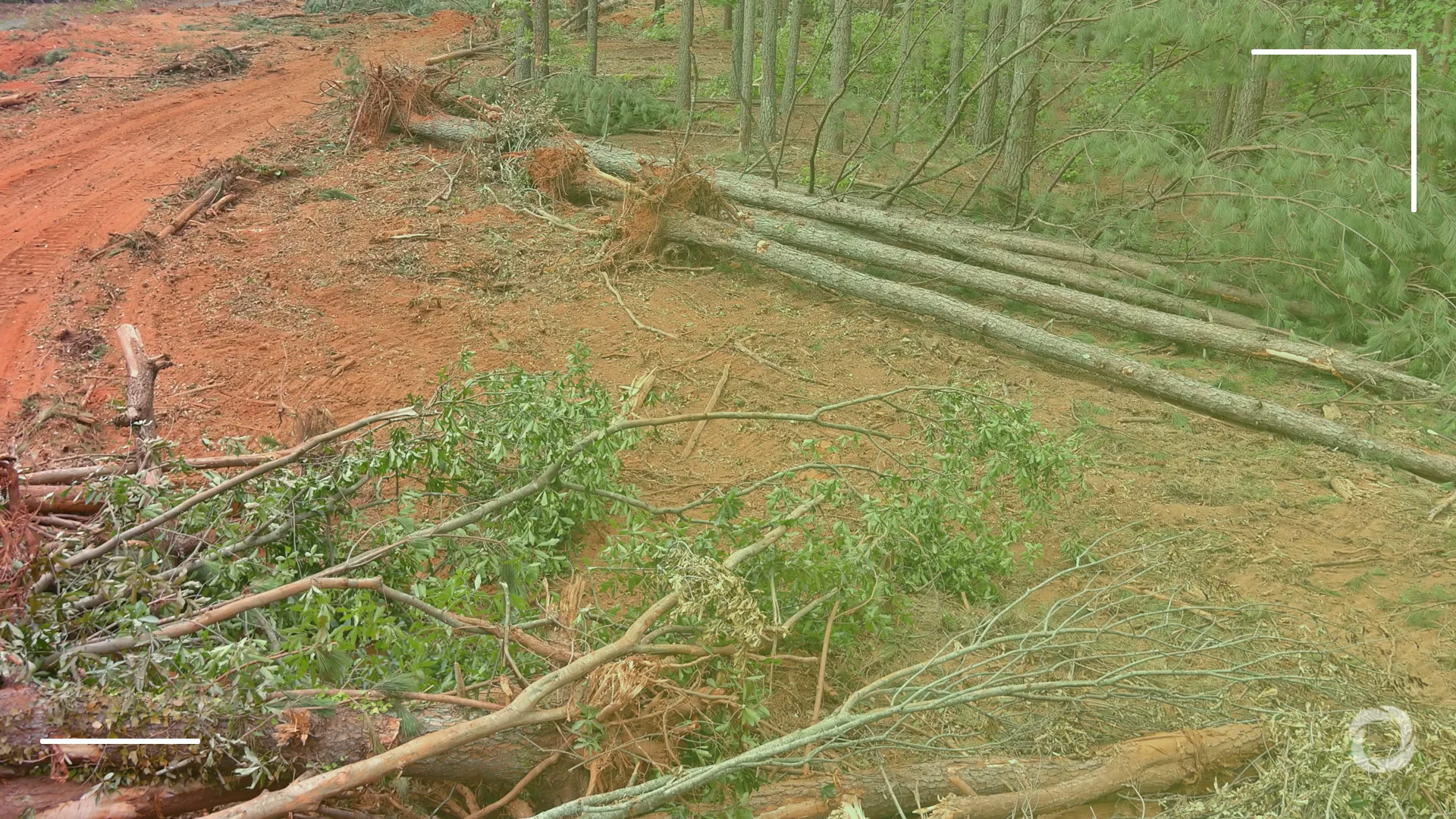
Africa is losing forests at a rate of more than 3 million hectares a year. This represents millions of hectares of livelihoods, biodiversity and carbon storage disappearing annually.
Against this backdrop, governments from 15 African countries met in Nairobi in February 2026 and pledged US$400 million for sustainable forest management, restoration and forest-based industrialization. Convened by the Forest Stewardship Council (FSC), the participants also launched a 10-year roadmap aiming to place 30 million hectares of forests under sustainable management and to restore 5 million hectares of degraded land.
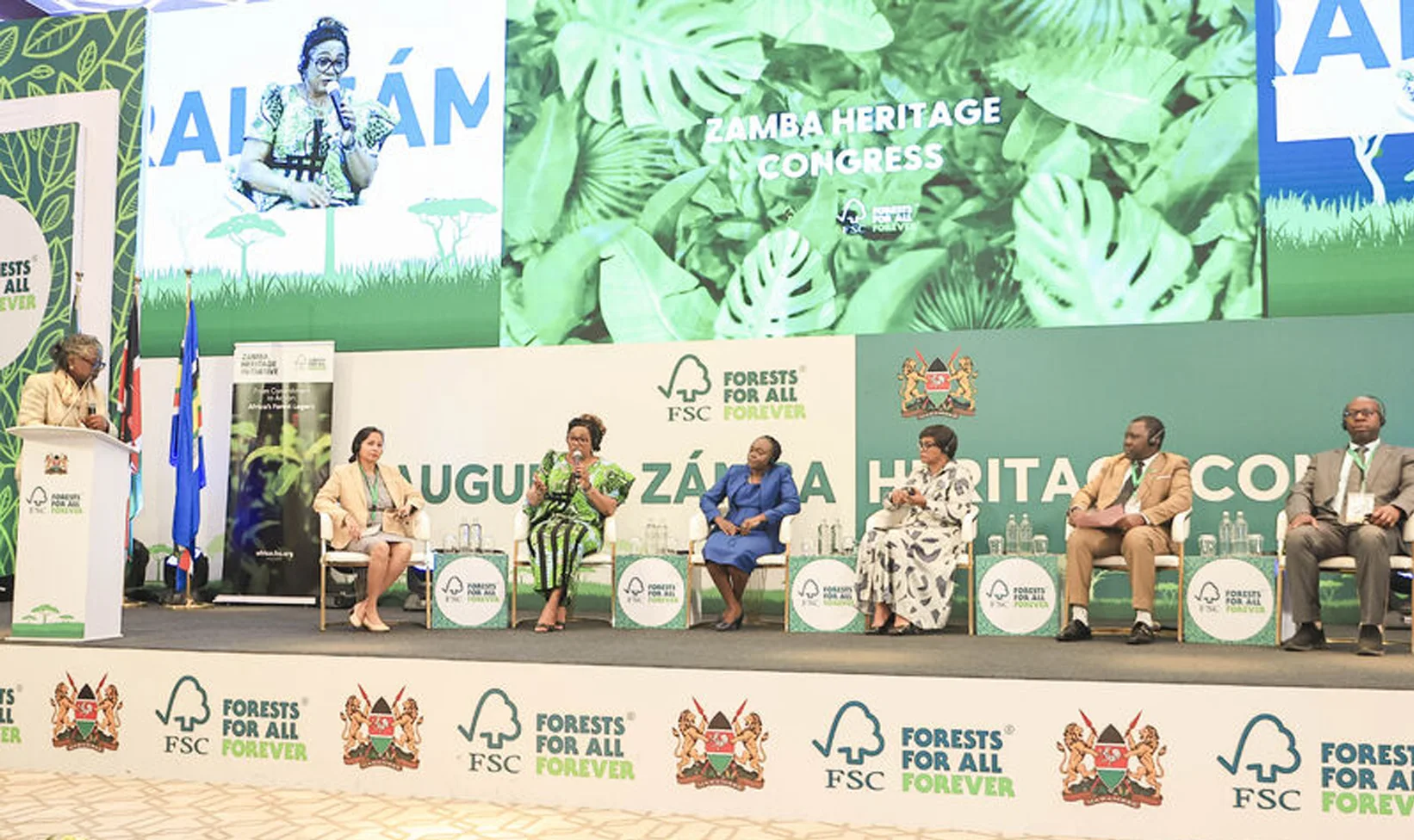
The mechanism at the center of this ambition is certification issued by FSC, an international forest-monitoring non-profit organization that is empowered to ensure certification is only granted provided that 10 FSC principles of responsible forest stewardship are met.
Subhra Bhattacharjee, FSC’s Director General, described the initiative as “Africa-led, Africa-owned”, which will require the mobilization of forces across the continent “to make responsible forest management work for communities, for businesses, for workers and for indigenous peoples,” she told DevelopmentAid.
The logic is simple. If forests are managed responsibly and verified under international standards, the products derived from them can gain access to premium global markets. Buyers in the EU, the USA and Australia increasingly demand proof that timber and forest products are not linked to deforestation or labor exploitation. FSC certification provides that proof.
But can a voluntary market tool significantly slow down deforestation?
The mismatch
Africa has approximately 674 million hectares of forest. As of 2025, only 11 million hectares, less than 2%, were FSC-certified, most of these being in the Congo Basin. Meanwhile, the Food and Agriculture Organization estimates annual forest loss in Africa to have been roughly 3.45 million hectares over the last decade, largely due to agricultural expansion, charcoal production, mining, and infrastructure development.
A 2025 Nature study found that between 2010 and 2017, the continent’s forests shifted from absorbing carbon to emitting more than they captured. The gap is stark. Even if the Nairobi roadmap succeeds in expanding to 30 million hectares over 10 years, the majority of Africa’s forests would still remain outside formal certification systems.
The economic case
Supporters argue that certification aligns conservation with economic incentives rather than treating forests purely as protected areas.
Zambia’s Permanent Secretary for the Ministry of Green Economy and Environment, Dr. Douty Chibamba, views certification as a way to strengthen the credibility and pricing of carbon credits for the country’s ongoing forest carbon projects.
“If the carbon credits have high integrity, they are going to fetch a higher price in the global markets. That is our main goal, since FSC has higher requirements, and it is globally known,” Chibamba told DevelopmentAid.
In Uganda, timber growers report demand for certified wood that exceeds supply. Currently, only four of the 800 members of the Uganda Timber Growers Association (UTGA) are certified. “Once you have small growers certified, you enable the supply of a resource that is sustainably grown and small growers are able to maximize the revenue from the trees,” UTGA head Dennis Kavuma told DevelopmentAid.
In Gabon, officials see certification being linked to ecotourism. Researcher Jeff Ossanda, a Gabon delegate, told DevelopmentAid that certifying national parks would open up the country as an ecotourism destination and this would help with forest protection and conservation activities.
According to Dr. Peter O. Alele, FSC Africa Regional Director, the priority is to expand certifiable, sustainable forest management on the continent and for that to work successfully, forest communities must be actively involved.
“You cannot undertake restoration or sustainable forest management without benefiting the communities. One of the key reasons across Africa why people destroy or unsustainably use forest resources is because they are looking for livelihoods,” Alele told DevelopmentAid.
Why does certification matter? Tropical timber case
Demand for certified timber is likely to increase significantly in the coming years, particularly in Europe. One reason for this is the European Union Deforestation Regulation (EUDR), which is due to partly come into force from 30 December 2026. This regulation requires that furniture, among other timber products sold in the EU, is sourced sustainably and not have contributed to forest degradation or deforestation anywhere in the world.
For African exporters, this could reshape market access. Certification schemes such as FSC can help producers to demonstrate traceability and responsible sourcing to international buyers.
The stakes are high. African timber is highly valued globally for furniture, musical instruments, boats and artisanal products. Yet, estimates suggest that between 50% and 90% of the continent’s tropical timber trade may be illegal, depending on the country and the species of tree involved.
The cost barrier
However, certification is not easily accessible to everyone. According to Dr. Alele, certification remains a long, technically demanding and often costly process, particularly for small producers.
According to data from American Green Consulting, certification fees can start at US$2,595 for qualifying grower groups or organizations. However, the full costs vary depending on forest size, compliance requirements and auditing complexity.
To be able to cover these costs, small tree growers are often encouraged to band together and apply for certification collectively. Uganda provides one such example of this. Timber Growers began pursuing a group certification scheme in 2019, allowing multiple growers to share the administrative and auditing costs.
Part of a broader solution
Forest certification works when the companies or communities that manage forests voluntarily allow audits by independent inspectors and comply with verified sustainability standards. This is one approach among several mechanisms that can encourage communities to protect forest resources.
Another approach increasingly linked to certification is the payment for ecosystem services (PES). In these schemes, forest communities receive payments – often financed through carbon credit markets or by the downstream beneficiaries of forest products – in exchange for protecting forests and watersheds, and conserving biodiversity. A frequently cited example comes from Kenya, where farmers near Lake Naivasha were paid to plant trees in upper catchment areas to reduce soil erosion and sedimentation in the lake.
Although certification alone will not halt deforestation in Africa, it may nevertheless play a vital role when combined with market incentives, community livelihoods, stronger governance, sustainable agriculture and local economic alternatives. Approached from this multifaceted perspective, certification could help shift forests from being viewed as land to be cleared into assets worth preserving.