
Add us as your preferred source on Google to see more of our content in Search.
 Add to Preferred Sources
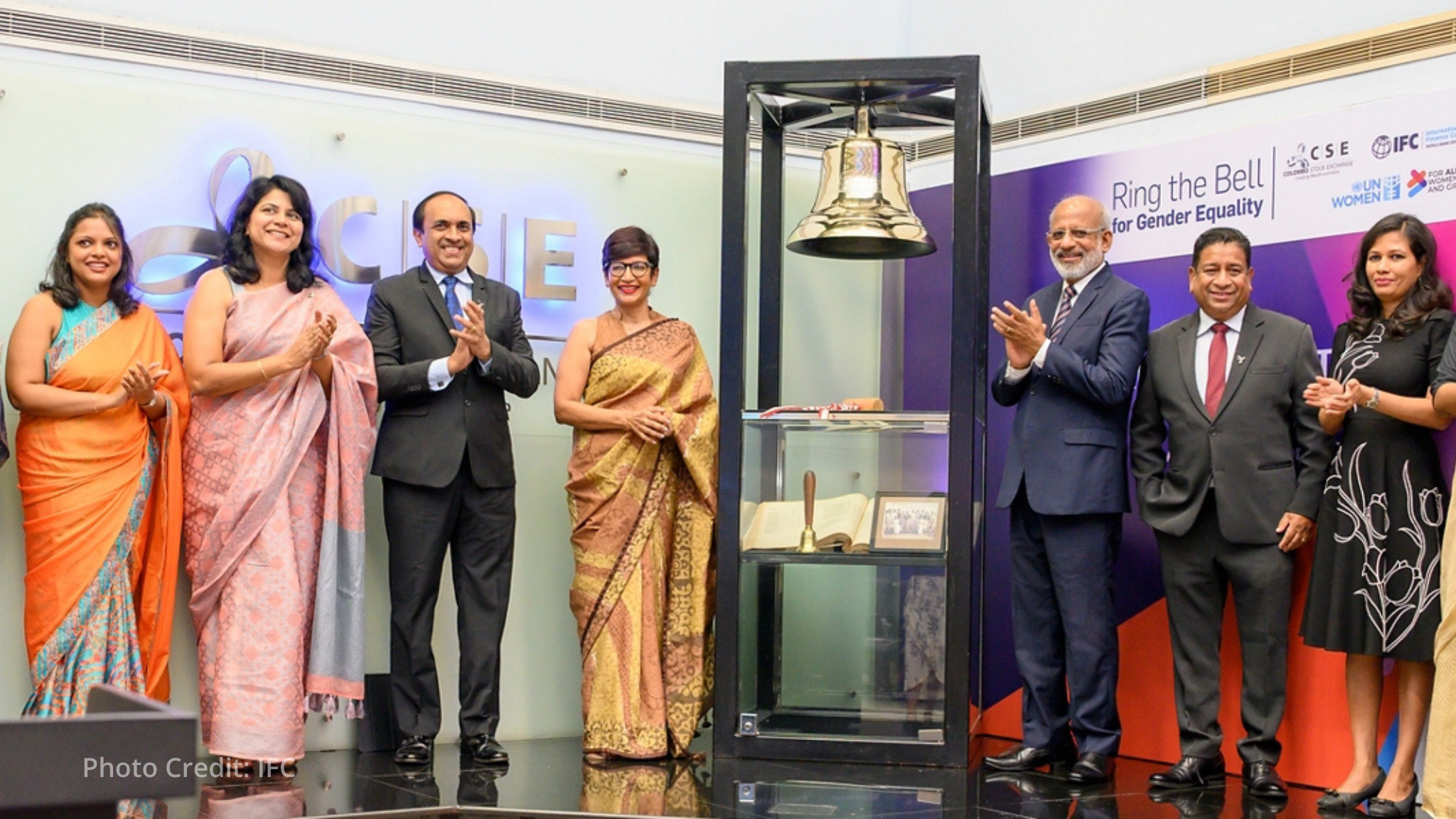
The Colombo Stock Exchange (CSE), the International Finance Corporation (IFC) — a member of the World Bank Group — and global partners including UN Women and the United Nations Global Compact gathered this week for a ceremonial opening bell ringing to champion women’s economic participation in Sri Lanka, as announced in an official statement published by the IFC. The annual event, timed to International Women’s Day, brought renewed attention to both the progress made and the distance still to travel on women’s leadership in Sri Lankan business. This year, women’s representation on CSE-listed boards reached 13.7% — a nudge forward from last year’s 13.4%, but still a number that tells its own story.
Sri Lanka has made incremental gains in corporate gender representation, but the pace remains slow against the scale of the opportunity. Research consistently shows that companies with balanced leadership make better decisions, manage risk more effectively, and generate stronger long-term value — yet the barriers keeping women out of boardrooms and senior management remain firmly in place across much of the private sector.
CSE Chief Regulatory Officer Nilupa Perera put the stakes plainly: “Women who enter any space of employment ask themselves if there is a place for them, both in the company and in the company leadership. Our answer — through our actions, our leadership, and events like this one — is a resounding yes.” World Bank Group Country Manager Gevorg Sargsyan was equally direct, arguing that inclusive growth is “only possible when the economy works for both men and women,” and that for the Bank’s job creation mission to succeed, “women must be at the very center of the workforce.”
The event is part of the global Ring the Bell for Gender Equality Initiative, a partnership spanning IFC, UN Women, the UN Global Compact, the UN Sustainable Stock Exchanges Initiative, and the World Federation of Exchanges — with 114 stock exchanges and central counterparty clearinghouses participating this year. World Federation of Exchanges CEO Nandini Sukumar highlighted the role markets can play, noting that exchanges are uniquely placed to connect companies, investors, and policymakers in pushing the private sector to expand women’s economic participation.
The broader message from the gathering was clear: symbolic moments matter, but they need to be backed by structural change. Dismantling discriminatory laws, strengthening legal protections, and shifting social norms that limit women’s career growth are not optional extras — they are the foundation on which real progress is built, and the private sector has both the incentive and the responsibility to help get there.