

Add us as your preferred source on Google to see more of our content in Search.
 Add to Preferred Sources
Key reasons to read this article:
- Families in Gaza are rebuilding their lives brick by brick, but will international deals determine their future before they do?
- With jobs gone, infrastructure shattered and lives uprooted, the question is not just how war-torn Gaza will rebuild, but who the rebuilding is really for.
- Local experts warn that without transparency and local leadership, billions intended to rebuild the territory could primarily benefit outside contractors.
- One thing is sure: the decisions made now about funding, priorities and oversight could shape the economy and daily lives in Gaza for decades.
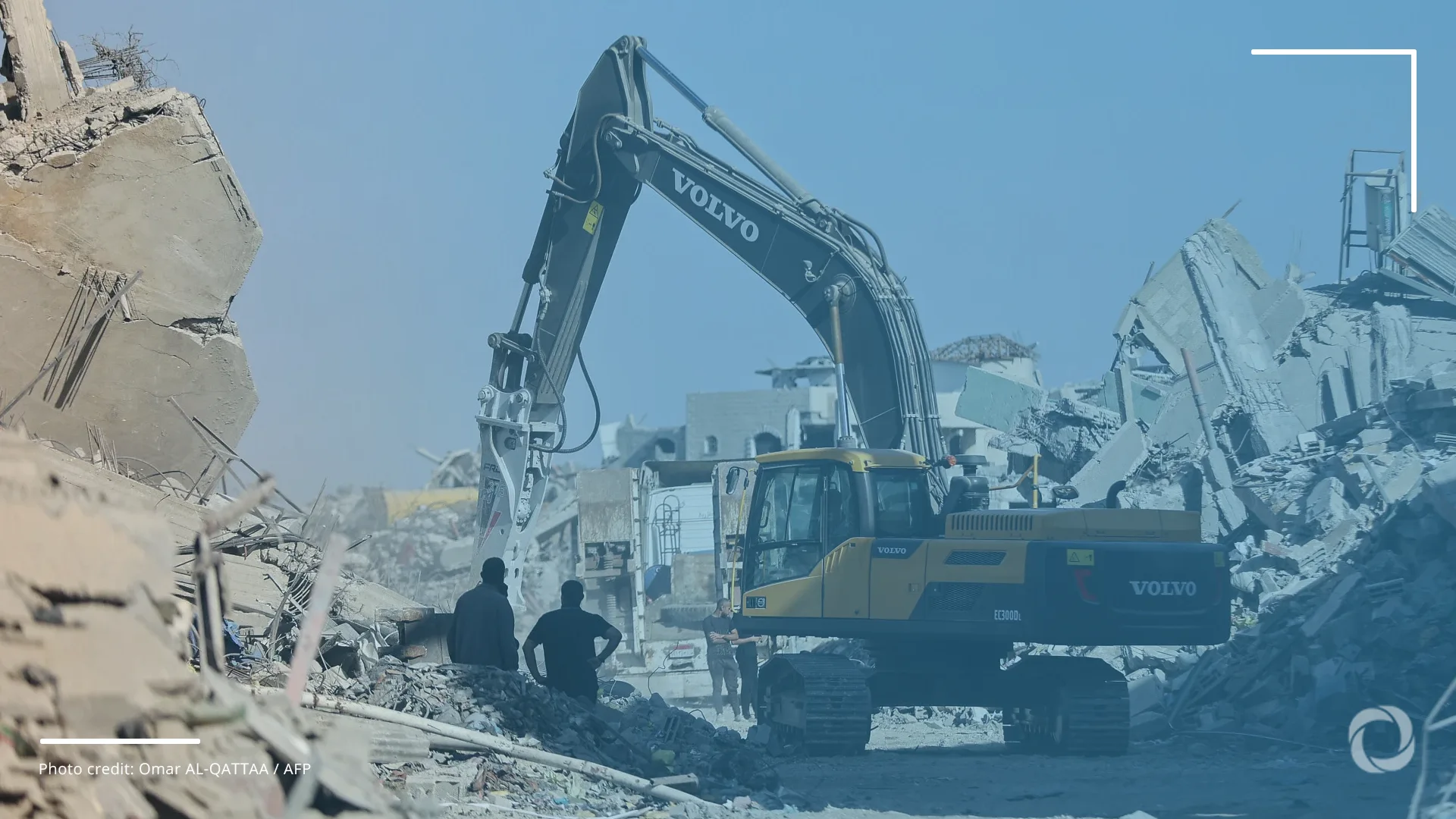
Over the past five months, life in Gaza has been a tenuous mix of hope and hardship. Families are rebuilding amid piles of rubble, electricity remains sporadic, and access to clean water, healthcare, and schooling is limited. Yet, despite the devastation, residents cling to small but powerful dreams: safe homes, steady work, and a future where their voices shape the recovery of their homeland. The stark reality, however, is that reconstruction remains slow, resources are scarce, and the looming presence of international contractors and complex funding schemes is adding uncertainty as to whether Gaza’s revival will truly serve its people or primarily outside interests instead.
The scale of destruction
Gaza’s reconstruction carries a US$70 billion price tag as a minimum, according to UN and World Bank assessments, reflecting the scale of the physical damage and economic collapse the territory suffered during the 2023-2025 military conflict with Israel. The enclave’s economy contracted 87%, and over 50,000 jobs were wiped out, with unemployment hitting 57%. On top of that, 61 million tons of rubble hinder the delivery of aid and basic services.
As foreign investors express interest in large reconstruction projects under various build-operate-transfer schemes, a Business & Human Rights Resource Centre analysis has warned these risk “turning peace into profit” for foreign companies.
Local experts urge housing first, transparency
Experts at the Palestinian Economic Policy Research Institute (MAS) told Development Aid that stronger local governance and sequencing priorities so as to put housing first in the reconstruction process could help to ensure that recovery efforts do benefit Gaza’s residents rather than ensure profit for foreign companies.
MAS General Director, Raja Al-Khalidi, noted that reconstruction should be carried out by local workers, engineers, contractors, potentially with support from neighboring countries, particularly Egypt. He added that although private sector participation in Gaza’s reconstruction, including Palestinian, regional, and international investment, is common in development projects, economic initiatives alone cannot resolve the underlying political issues.
Musaif Musaif, Economic Researcher at MAS, argued that reconstruction should be funded mainly through international grants rather than loans to avoid placing a long-term debt burden on the territory. According to him, “shelter and housing must remain the utmost priority, alongside social, health, and educational services, followed by infrastructure and essential facilities for service delivery”.
Musaif advocated for safeguards to ensure foreign investments in infrastructure projects benefit the local economy. He suggested that hybrid funding could be managed through an internationally supported reconstruction fund with robust oversight.
What the international community does
United Nations experts have emphasised that reconstruction should comply with international law and human rights standards.
“The right of Palestinians to self-determination is inalienable. Leaders must stop speculating about Gaza as a real estate paradise and see it for what it is – the war-ravaged homeland of its residents”.
The United Nations Development Program (UNDP) noted that recovery efforts are already supporting employment opportunities in health, education and private sector work, which are vital to stabilize livelihoods in Gaza.
The World Bank has underscored the need for coordinated international financing frameworks, combining public aid with sustainable investment. World Bank President Ajay Banga announced plans to use its top credit rating to raise additional funds from investors through bonds to support Gaza’s reconstruction alongside donor contributions.
So, who are the profits for?
As Gaza faces the task of rebuilding, residents continue to navigate daily challenges amid lingering uncertainty. The hope of returning to safe homes and secure livelihoods, and having a voice in shaping their future remains fragile. With international contractors and investors increasingly involved, the debate over who will truly benefit from the reconstruction is far from settled. For Gazans, the coming months will test whether the recovery efforts prioritize their needs, safeguard local labor and services, and ensure that rebuilding the enclave serves its people first, not just the interests of outside companies.