
Add us as your preferred source on Google to see more of our content in Search.
 Add to Preferred Sources
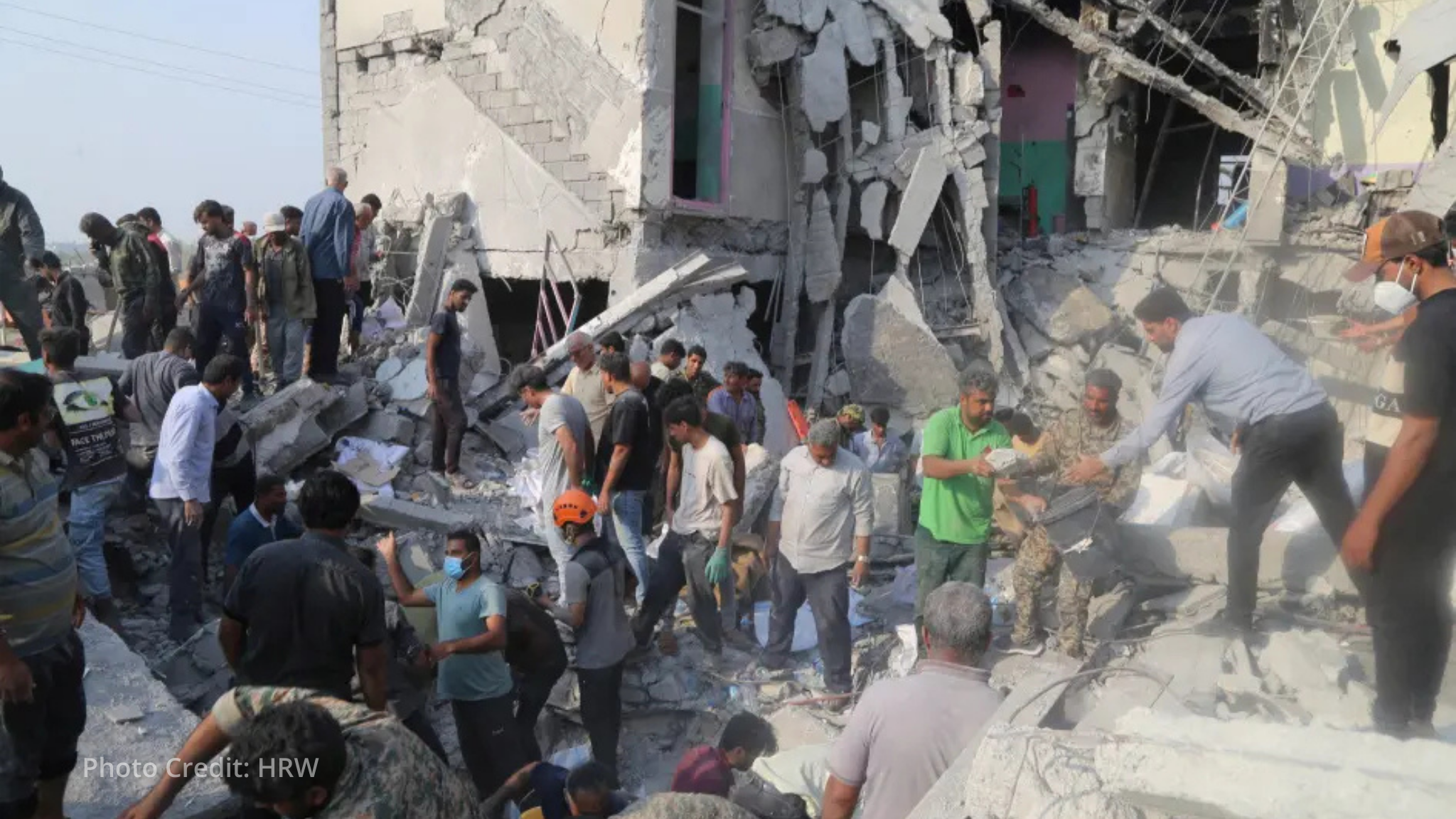
A preliminary US military investigation has found that American forces were responsible for a Tomahawk missile strike that killed at least 175 people — including scores of children — at a girls’ primary school in Minab, Iran, on February 28, as reported in a news release by Human Rights Watch (HRW). According to findings first reported by The New York Times on March 11, US Central Command officers struck the Shajareh Tayyebeh Primary School using outdated targeting coordinates, apparently believing the site was part of a nearby Islamic Revolutionary Guard Corps naval base. HRW is now calling for full accountability, public disclosure of the investigation’s findings, and urgent reform of US military targeting processes.
The attack hit while classes were in session. Iranian authorities say at least 175 people were killed, and HRW independently reviewed lists of victims — matching names with ages and identifying information from body bags and caskets — confirming that children were among the dead.
HRW Washington Director Sarah Yager was unsparing in her assessment: “The findings of the US military investigation into the Minab school attack show a violation of the laws of war that cannot be boiled down to a blameless mistake.” Under international humanitarian law, attacking forces are obligated to take all feasible precautions to verify targets before striking — and to cancel or suspend attacks if a target turns out not to be a military objective. No evidence has emerged suggesting any military objective was present on or near the school grounds at the time of the strike. If the harm to civilians was disproportionate to any anticipated military gain, the attack may also constitute a violation of the prohibition on disproportionate strikes.
HRW is explicit that serious, reckless violations of the laws of war can constitute war crimes, and that investigations must examine not just what went wrong technically, but what those responsible knew — or should have known — about the school before authorizing the strike on a school day. The organization is also raising alarms about the role of artificial intelligence in military targeting, calling on the US Congress to hold dedicated hearings on how automated systems factor into strike decisions and what oversight exists.
The US military had previously strengthened its civilian harm mitigation processes, including multi-source intelligence verification and pre-strike legal reviews. If those safeguards broke down in Minab — whether through reliance on stale data or reduced oversight — Yager argues that identifying and fixing those failures is not optional: “Accountability is not just about acknowledging what went wrong, but about ensuring that failures in intelligence, target verification, or decision-making are identified and fixed so this never happens again.”