
Add us as your preferred source on Google to see more of our content in Search.
 Add to Preferred Sources
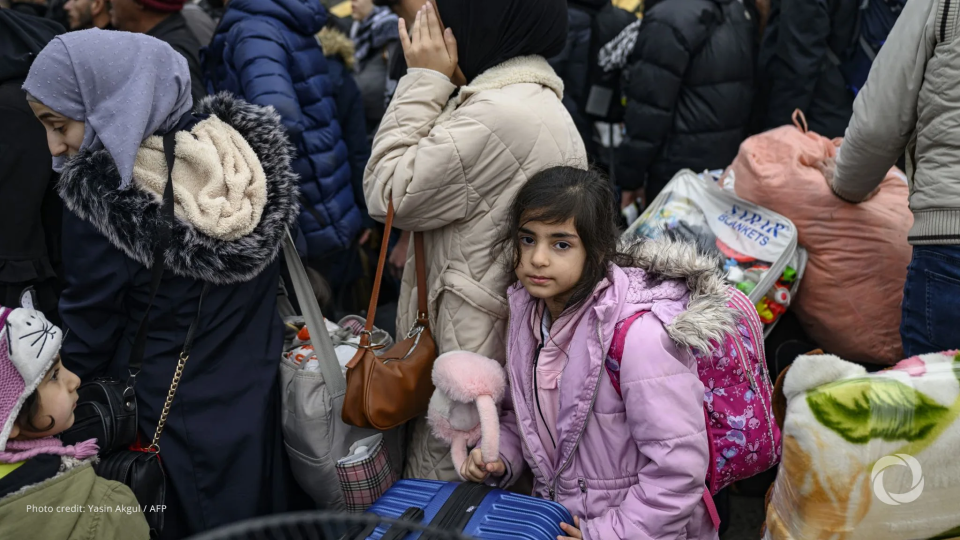
As of March 17, 2026, more than 125,000 people have crossed from Lebanon into Syria, with around half being children, according to a press release by the International Organization for Migration (IOM). Most are Syrian nationals, while approximately 7,000 are Lebanese, underscoring the widening regional impact of the conflict. IOM is calling on the international community to urgently increase support to meet immediate needs and prevent further deterioration of an already fragile situation.
Syria’s infrastructure and public services remain weakened after more than a decade of crisis. The growing number of crossings is placing mounting pressure on key destinations, including Ar-Raqqa, Damascus, and Homs. A further increase in arrivals risks overwhelming local capacity and triggering new internal displacement. Arrivals to Syria from Lebanon are widespread across both remote and urban areas. Ar-Raqqa alone has received around 21 per cent of all arrivals, many in areas where access to food, water, and healthcare is limited.
Families are arriving with little or no resources across all locations. Cash assistance is among the most urgent needs, alongside food, shelter, and healthcare. Many have already exhausted their coping mechanisms. The high proportion of children among those crossing makes a protection-centred response especially critical. IOM underscores that movements must be safe, voluntary, and dignified.
IOM Director General Amy Pope warned of the scale and urgency of the situation.
“The risk of a much larger displacement crisis is real and growing,” she said. “Needs are rising quickly and require a rapid scale-up in response capacities, both inside Syria and across the region. Without urgent support, critical assistance will fall short at a moment when families have already lost so much. The international community must act now to prevent this crisis from deepening further.”
IOM’s Displacement Tracking Matrix in Syria continues to monitor the scope and pace of crossings. The scale and profile of arrivals — particularly the high number of children — requires an urgent, protection-centred response. IOM is calling for strengthened preparedness in addition to immediate humanitarian action. Support is needed both inside Syria and across the broader region. The situation remains fluid, and the risk of further deterioration is real and growing.