
U.S.-Israeli attacks on Iran: The impact on international law, order and cooperation | Experts’ Opinions

Add us as your preferred source on Google to see more of our content in Search.
 Add to Preferred Sources
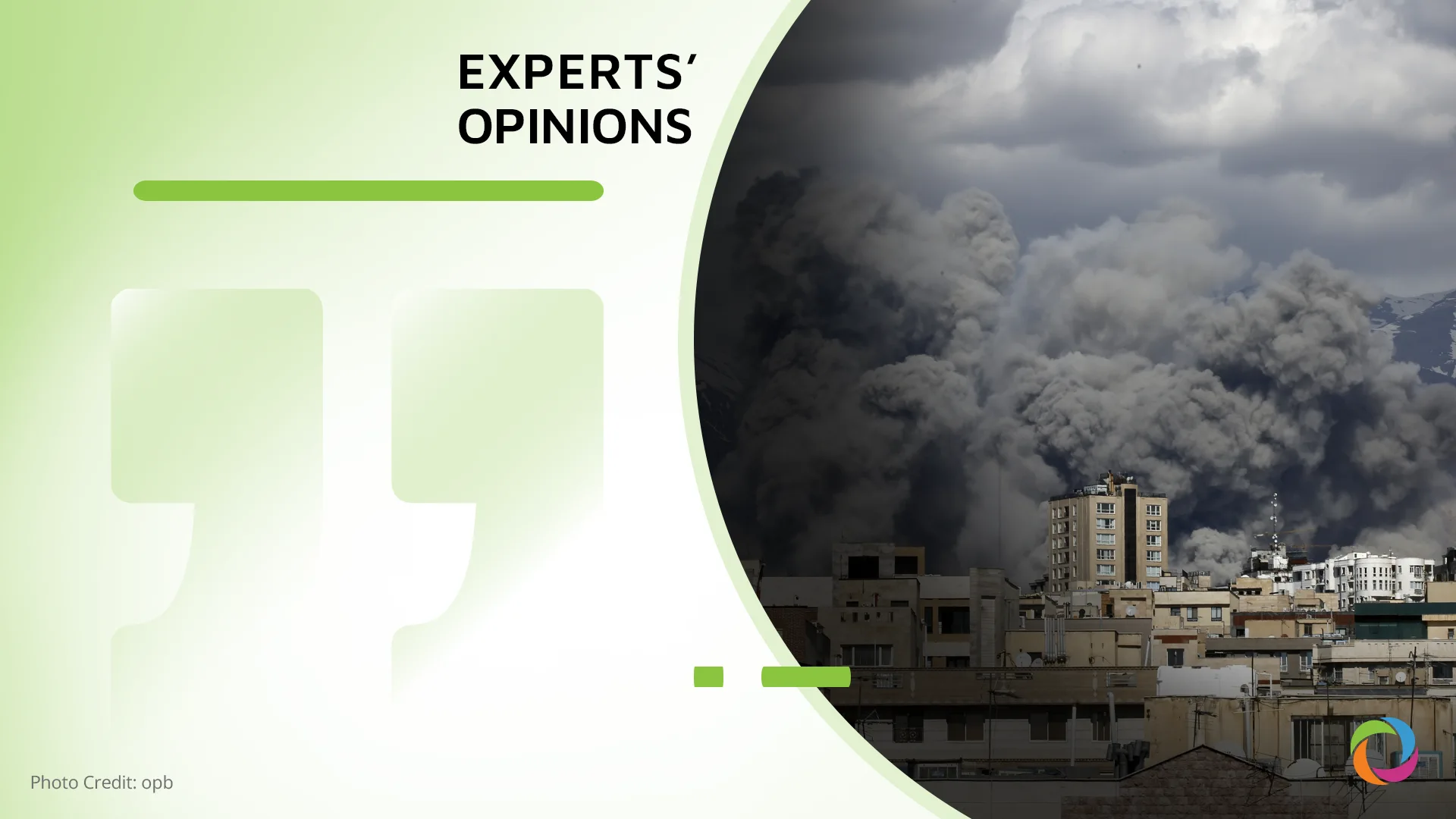
As the international community looked forward to a just peace agreement being reached in the Russia-Ukraine war, the focus abruptly shifted to the Middle East, where the U.S. and Israeli strikes on Iran intensified the existing tensions in the region. In response, Tehran fired missiles and drones on its neighbors and regional U.S. military bases, and blocked the Strait of Hormuz – a vital shipping route for world oil supplies. Ongoing daily strikes are leading to hundreds of human tragedies, inflicting colossal damage not only on the nations involved but on the rest of the world as well. The conflict has also triggered protests in several countries that challenge the United Nations raison d’etre – if the UN’s primary mandate is to maintain international peace and security, how can it be trusted when superpowers fail to follow the rules? As the conflict unfolds, check out some expert opinions on this as well as the potential geo-economic consequences of the conflict.
Key Takeaways:
- On February 28, Iran was hit by a massive missile strike by the United States and Israel with several cities and targets across the country being bombed.
- Anti-war demonstrations have arisen in Europe, Africa, and the Americas at embassies and United Nations premises.
- The UN and humanitarian and development actors face heightened risks, with attacks undermining safety, restricting operational space, and challenging the neutrality required to reach vulnerable populations.
- The immediate geo-economic consequences are mainly around spikes in global oil prices and supply, and international financial market instability.
DevelopmentAid: How could the recent U.S. and Israel strikes on Iran reshape the role and credibility of the United Nations and humanitarian organizations in conflict prevention and mediation?

“One need not be a supporter of the Islamic Republic and IRGC to see the U.S./Israeli attacks in Iran (conducted without a UN Security Council resolution and therefore illegal under international law) as another nail in the coffin of multilateralism and a further blow to the UN’s raison d’être. However, the ultimate impact on humanitarian and peacebuilding activities remains unclear. Much also depends on popular reaction to the war in Iran and the USA.”
“In my opinion, the recent U.S. and Israeli strikes on Iran exemplify the constructive chaos that is shaping the Middle East today. Iran, facing what it perceives to be an existential threat, seems intent on drawing Sunni countries into a wider conflict – a dynamic that ironically benefits Israel and the United States, potentially advancing a vision of a ‘Greater Israel’ from the Nile to the Euphrates.”
DevelopmentAid: How might attacks on UN premises affect the safety, neutrality, and operational space of humanitarian and development actors?
“The Israeli government’s demolition of the UNRWA premises in Gaza, and other attacks on/hostility towards UN/humanitarian activities there, are indeed unfortunate, particularly for those Palestinians whose lives and livelihoods critically depend on this support. However, it should be remembered that the UN presence in Gaza has certain sui generis characteristics (i.e., not generally found elsewhere), and that humanitarian and peacebuilding activities everywhere require the support of host governments. This may limit the broader fallout from recent developments.”
“These developments put multilateral institutions like the United Nations under intense scrutiny. When UN premises are targeted during protests, the credibility of those organizations as neutral mediators is weakened, and their ability to prevent or resolve conflicts is jeopardized. Humanitarian and development actors face heightened risks, with attacks undermining safety, restricting operational space, and challenging the neutrality required to reach vulnerable populations.”

“Over the past 80 years, the United Nations has experienced both significant achievements and growing criticism, with recent failures overshadowing earlier successes. In the last year, key principles in the Charter – especially Articles 1 and 2 – have been ignored by permanent members of the Security Council. When Israel and the U.S. targeted military sites in Iran and the country’s leadership in February 2026, their actions were unauthorized and unlawful under the UN Charter, highlighting failures in global policy enforcement.”
DevelopmentAid: What could the economic consequences be of escalating U.S.–Israel–Iran tensions, both for the Middle East and South Asia and for the global economy?
“The most immediate consequences lie in higher global energy and food prices, in shocks to transport connectivity, and in the international financial market instability precipitated by the most recent U.S.-Israeli attacks on Iran. Should they continue, these trends could further weaken the global economy, and increase poverty and hardship – especially in countries that are heavily reliant on energy and food imports. On the other hand, higher prices could be a boon for energy and food exporters. Among other aspects, these prices seem likely to increase the export revenues of the Russian Federation, and finance its war against Ukraine, thereby further weakening Moscow’s incentives to scale back its aggression. Likewise, many energy-importing countries are likely to accelerate their green energy transitions in order to strengthen national energy security.”
“Economically, escalating tensions could destabilize Middle Eastern energy markets, disrupt the trade routes that are vital to South Asia, and exacerbate global inflation and supply chain vulnerabilities. Development experts warn that without robust diplomatic engagement and protection for humanitarian personnel, the region risks not only immediate human suffering but also long-term economic and political instability, with the consequences extending far beyond the Middle East.”
See also: Should United Nations agencies merge in 2026? | Experts’ Opinions
International humanitarian actors have a new challenge to overcome and that is to prove their worth in the role of peacekeeping and mediation. In this evolving landscape, stronger professional networks and increased access to opportunities are more important than ever. A DevelopmentAid Individual Professional Membership connects professionals with job openings, tenders, grants, and news to help them to stay engaged, informed, and better prepared to respond to global challenges.