

Add us as your preferred source on Google to see more of our content in Search.
 Add to Preferred Sources
South Africans are grappling with escalating floods due to the heavy and prolonged rainfall of the 2025/2026 rainy season. Causing significant humanitarian crises, the floods have already led to at least 30 fatalities and significant damage to infrastructure throughout the country.
In the Southern African region, extreme heavy rainfall has caused at least 280 deaths and impacted over a million people since December 2025. Furthermore, across the region, nations such as Eswatini, Madagascar, Zimbabwe, and Mozambique have been severely impacted by heavy rains, with almost 150,000 people being displaced and over 105,000 hectares of land destroyed.
Research by the World Weather Attribution has found that the heavy rainfall in South Africa is due to a warming weather and La Niña climate pattern that has resulted in both environmental disaster and a core humanitarian crisis.
The heavy rains have disproportionately affected low-income and marginalized communities in both rural and urban regions of South Africa. A high percentage of urban dwellers living in informal settlements are vulnerable to floods due to poor urban planning and massive urban expansion. In this DevelopmentAid article, we explore the humanitarian impact of climate-change-induced floods in South Africa, with a focus on economic losses, displacement, deaths, and humanitarian interventions.
Statistics on the humanitarian impacts of floods caused by climate change
Surging climate change-caused floods in South Africa
The 2026 World Weather Attribution study suggests that periods of heavy rainfall in Southern Africa are 40% more intense today compared to the pre-industrial period. In some areas across South Africa, Zimbabwe, Mozambique, and Eswatini, the level of precipitation can exceed 200 mm in 24 hours.
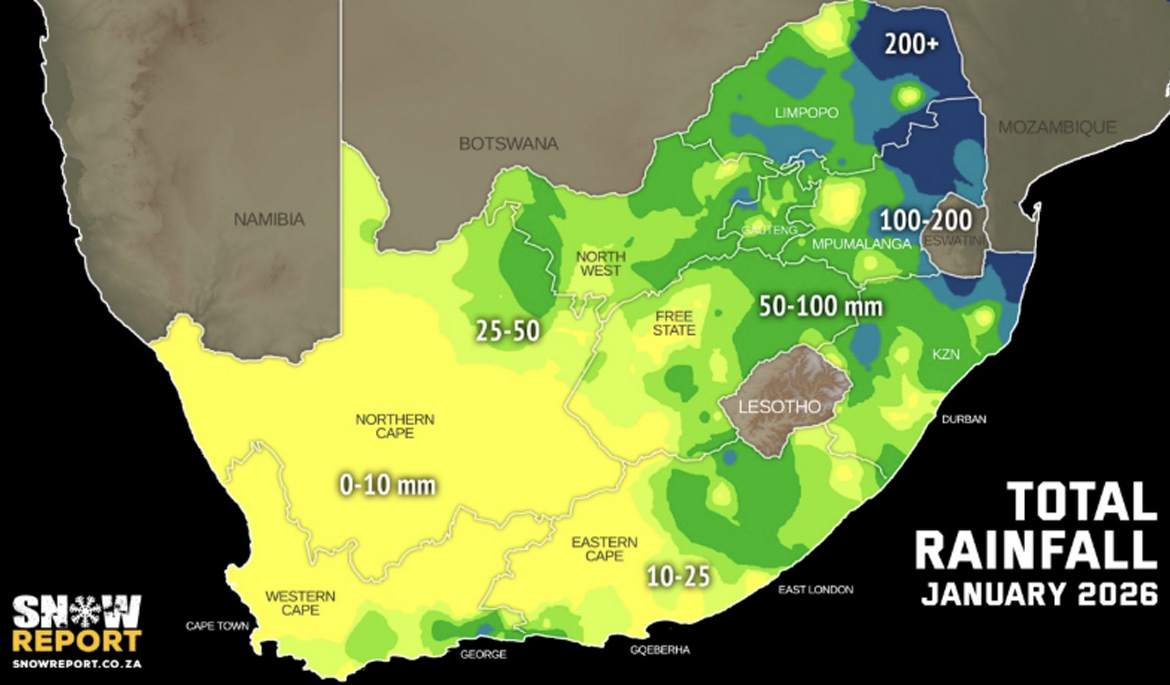
In South Africa, regions experiencing more than 50 mm of rain between January 11-13 were widespread, with some provinces such as Limpopo having 200 mm (Figure 1). These extreme conditions mean that the floods are more severe and frequent in prone areas such as KwaZulu-Natal and the Kruger National Park. Warmer ocean temperatures and atmospheric pressure are increasing the moisture levels, causing heavy downpours. The El Niño- Southern Oscillation, a naturally occurring weather pattern affecting global temperatures, is also influencing South Africa’s heavy rainfall.
Figure 1: Rainfall levels across South Africa as of January 2026
Source: Southern Africa Snow report 2026
Increasing death toll from the floods
Severe downpours in Southern Africa have devastated communities, displaced thousands, and destroyed civilian infrastructure. The heavy rainfall is overwhelming rivers, causing floods that are worsening the humanitarian impact in South Africa, Mozambique, and Zimbabwe.
In the Southern Africa region, floods caused at least 100 deaths in early 2026. In South Africa, fatalities due to heavy floods reached 39, with other provinces like Limpopo and Mpumalanga also being severely impacted. The floods are also triggering a massive surge of water-borne and water-related diseases such as cholera and malaria.
Massive displacement and humanitarian crises
The floods in South Africa are displacing vulnerable populations on a massive scale with more than 1,950 households affected in Limpopo.
In all the affected regions, the climate-change-triggered floods are damaging vital civilian infrastructure. According to the UNOCHA and World Health Organization (WHO) report released in 2026, the floods have affected at least 1.3 million people in Southern Africa, destroying roads, bridges, and health clinics. This destruction hampers the delivery of aid to the most remote areas, increasing the humanitarian crisis.
The floods have also led to a surge in malaria, with more than 314 cases in Mpumalanga province, roughly a 355% increase compared to 2025. There is also the threat of a cholera outbreak in South Africa due to damaged water and sanitation infrastructure and a rising number of cholera cases in neighboring Mozambique.
Humanitarian initiatives and interventions to address the devastating effects of floods in South Africa
🔸 Gift of the Givers Foundation: This organization provides relief to vulnerable families in terms of food, medical supplies, shelter, and disaster response. Staff visited over 130 families in Mpumalanga province and distributed foodstuff in partnership with disaster teams despite the damage to infrastructure and also assisted with rescue missions and disaster management responses to ensure a sustained emergency response.
🔸 International Federation of Red Cross (IFRC): This organization allocated a grant of almost 500,000 Swiss francs from its Disaster Response Emergency Fund to help more than 10,000 flood victims across Limpopo, Mpumalanga, and KwaZulu-Natal provinces of South Africa. The organization also provided first aid and psychosocial support, and distributed water treatment equipment.
🔸 SADC Emergency Response Team (ERT): The Southern African Development Community (SADC) deployed its ERT in South Africa to assist with recovery operations, the emergency response, and the consolidation of a regional humanitarian aid based on changing impact evaluation. This helped the South African government to develop a detailed understanding of the humanitarian situation, priority needs, and response capacities.
🔸 ForAfrika Initiative: This initiative provides life-saving humanitarian aid to South African flood victims, mostly in seriously affected provinces such as KwaZulu-Natal. The organization has provided essential non-food items to protect vulnerable households with more than 100 blankets, 50 bags of clothing, and 30 tarpaulins being donated in early 2026 to over 80 flood-hit families in the Limpopo province.
🔸 The South African National Parks (SANParks): The South African government created the Kruger Recovery Fund to facilitate recovery and restoration interventions at the park following the floods. The administration of the funds is based on strict oversight and transparency in order to attract local and international donors. As a result, SANParks Knysna donated almost US$6,000 (R100 000) to support rehabilitation initiatives at national parks, thus preserving ecosystems.
🔸 Oxfam International Relief: In collaboration with City Hope Disaster, this organization has provided humanitarian relief, including water, foodstuffs, and hygiene kits to flood victims. In addition, it has mobilized resources for recovery by advocating for climate-resilient infrastructure and has also supported women-led households to improve community resilience.
Wrap up
Climate change-induced disasters such as those in South Africa are disrupting livelihoods, destroying infrastructure, and fueling humanitarian crises. The destruction of sanitation infrastructure by recent heavy downpours is also exposing victims to water-borne diseases. Therefore, strengthening climate resilience and coordinating humanitarian aid are essential to reduce climate change-induced crises in the future.