
Add us as your preferred source on Google to see more of our content in Search.
 Add to Preferred Sources
Five East African countries are taking concrete steps to protect urban communities from deadly flash floods, following a three-day regional workshop on the Urban Flash Flood Forecasting System (UFFFS) held in Kampala, Uganda on March 23–25, 2026, according to a project update from the World Meteorological Organization (WMO). The workshop was organized under the Water at the Heart of Climate Action (WHCA) project, funded by the Netherlands Ministry of Foreign Affairs and implemented across Ethiopia, Rwanda, South Sudan, Sudan, and Uganda. The initiative aims to scale up action against water-related risks and strengthen climate resilience in some of the region’s most vulnerable communities.
The UFFFS combines satellite observations with a PySTEPS nowcasting algorithm to generate impact-based flood warnings for National Meteorological and Hydrological Services (NMHSs). Once operational, the system will feed into the East Africa Hazard Watch, a regional visualization platform that tracks hazards across the continent. The five pilot cities where the system is being deployed are Addis Ababa, Juba, Kampala, Kigali, and Khartoum — all rapidly expanding urban centers where flash flooding poses a growing threat to lives and infrastructure.
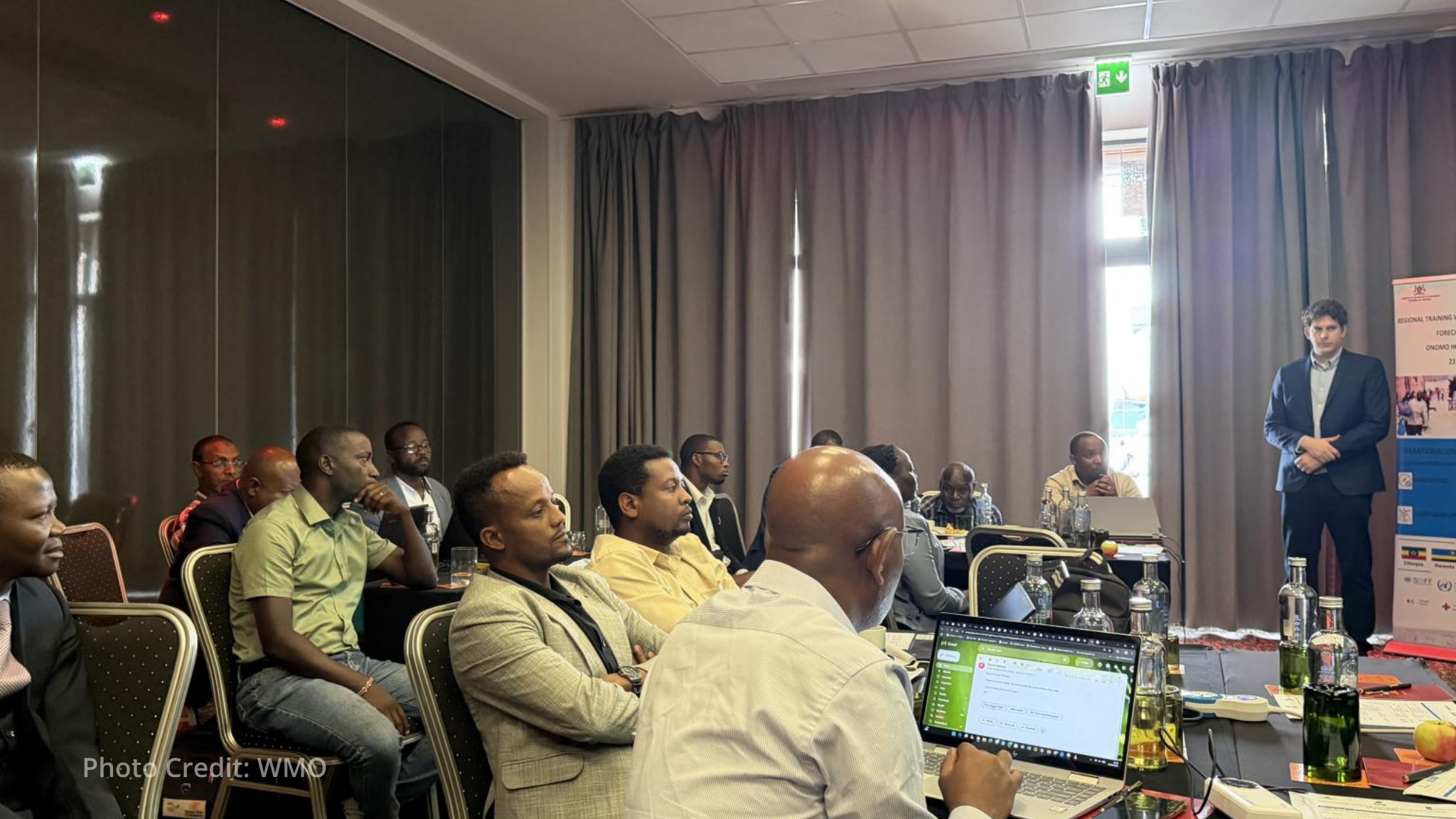
More than 20 forecasters and NMHS staff from the five countries gathered in Kampala to share knowledge on hydro-meteorological monitoring and early warning services, and to gain hands-on experience with existing flood modelling tools. The workshop was led by WMO partners HKV and Deltares, who guided participants through practical exercises using nowcasting and impact-based forecasting products from other regions. Participants also mapped out what local infrastructure data will be needed to fully develop UFFFS products, and identified the key support required from hydrological agencies across each country.
The UFFFS work is part of WMO’s broader contribution to the global Early Warnings for All initiative, which aims to ensure that every person on Earth is protected by an early warning system by 2027. Through WHCA, WMO is also supporting the development of multi-hydrological models and impact-based forecasting tools for both riverine and urban flood scenarios, built jointly with national services. The Kampala workshop marks a significant step forward in translating that global commitment into locally owned, operationally ready flood forecasting capacity across East Africa.