
Add us as your preferred source on Google to see more of our content in Search.
 Add to Preferred Sources
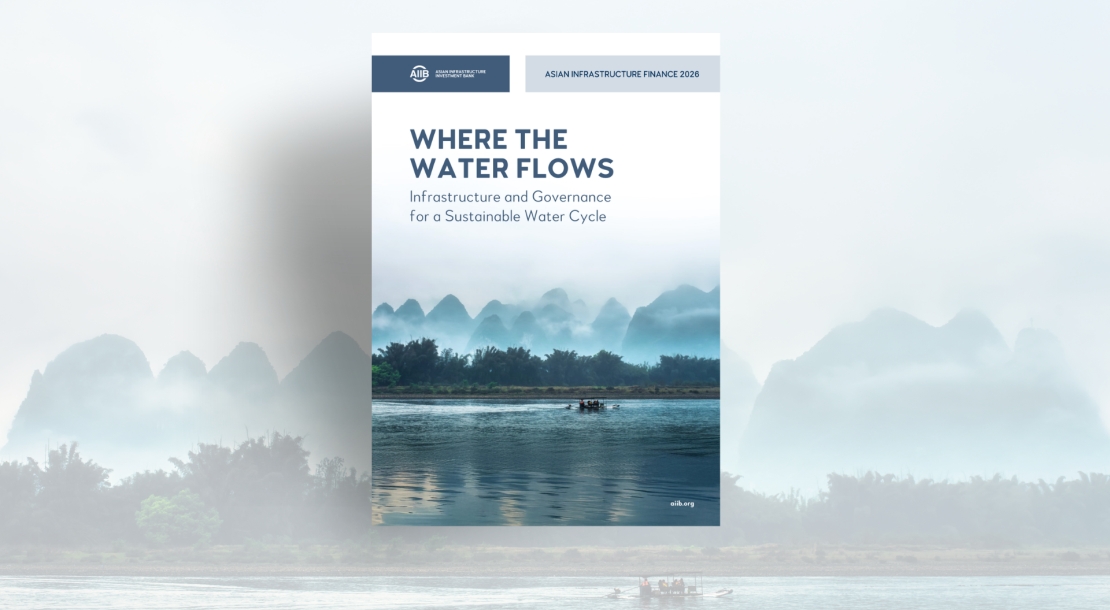
The Asian Infrastructure Investment Bank (AIIB) launched new research on April 16, 2026, in Washington, D.C., examining how the hydrological cycle is being destabilized by climate change and the impact this is having on water security, food systems, and economic performance worldwide, according to a press release. The report, titled Where the Water Flows, is AIIB’s 2026 Asian Infrastructure Finance report. It argues that the water cycle functions as infrastructure, storing, renewing, and moving water across borders and economies. However, a lack of investment and governance is failing to protect its integrity. The report sets out recommendations to increase funding, reform governance, and leverage technology.
Water-related projects commanded about 10% of total development finance in 2020, down from roughly 30% in 2000. The report outlines the critical role multilateral development banks can play in strengthening the water cycle, from underpinning the natural infrastructure of the hydrological cycle to mobilizing private capital for natural and hybrid infrastructure solutions. It also highlights a clear global divide in what it calls the “virtual water trade” — the hidden flow of water in food and other commodities. The biggest water exporters are often emerging economies with strong agricultural sectors and a high dependence on water-intensive exports. In contrast, major importers such as the United States, Japan, Germany, and the United Kingdom are high-income nations that increasingly outsource water-intensive production.
AIIB President Zou Jiayi stressed the systemic nature of the water challenge and the need for targeted investment. “Water underpins biodiversity and ecological resilience, economic performance and social stability, yet it is rarely understood and managed as the interconnected system it is,” she said. “As climate change continues to reshape the water cycle, more attention must be given to generate investment for mitigation and adaptation measures.” The report calls for investment in both natural infrastructure that regulates water flows and maintains quality, and in engineered systems that manage storage, supply, and protection. Aligning these two approaches, the report concludes, creates an opportunity to shift from a growing global water crisis toward a more resilient and investable future.
AIIB Chief Economist Erik Berglof described the hydrological cycle in broader environmental terms. “The hydrological cycle acts as a powerful environmental pump, with forests transpiring moisture and replenishing giant atmospheric rivers of freshwater,” he said. “It is a global thermostat, regulating climate through evaporation and cloud formation.” He added that scientists, policymakers, and the financial world must now urgently come together to safeguard what he called a critical global life-support system. The report frames this challenge as a transformation — from water bankruptcy into water bankability, and from systemic risk into a foundation for sustainable development.