
Add us as your preferred source on Google to see more of our content in Search.
 Add to Preferred Sources
The Food and Agriculture Organization (FAO), the World Food Programme (WFP) and UNICEF warned on 28 April 2026 that a deepening hunger crisis in South Sudan is pushing 7.8 million people into high levels of acute food insecurity (IPC Phase 3 or above) between April and July 2026, according to a press release issued jointly by the three agencies. The figure represents 56 percent of the population—one of the highest levels of acute food insecurity in the world today. The agencies also flagged a credible risk of famine in four counties across Upper Nile and Jonglei states. Conflict, displacement, and climate shocks are fueling the crisis. Nearly 700,000 children are at risk of severe and deadly malnutrition.
The latest Integrated Food Security Phase Classification (IPC) analysis shows 73,300 people facing Catastrophe (IPC Phase 5)—a 160 percent increase from the previous estimate. Another 2.5 million people are in Emergency (IPC Phase 4) and 5.3 million in Crisis (IPC Phase 3). Escalating conflict, mass displacement, economic decline, climate shocks, flooding, and below-capacity agricultural production are driving the deterioration. In Jonglei alone, nearly 300,000 people have been displaced, leaving many communities cut off from humanitarian assistance. Rising food prices, disrupted markets, and weak household purchasing power are deepening food insecurity.
Acute malnutrition is being exacerbated by a lack of access to health and nutrition services, where facilities have been damaged or closed due to conflict. Shortages of supplies and funding have reduced access to life-saving treatment. Disease outbreaks, including cholera, malaria, and measles, are compounding the crisis, particularly among vulnerable and already acutely malnourished children. The IPC projects 11 counties across Upper Nile, Unity, and Jonglei states to face IPC Acute Malnutrition Phase 5 (Extremely Critical) outcomes. Humanitarian assistance is being scaled up in some areas, but coverage remains uneven.
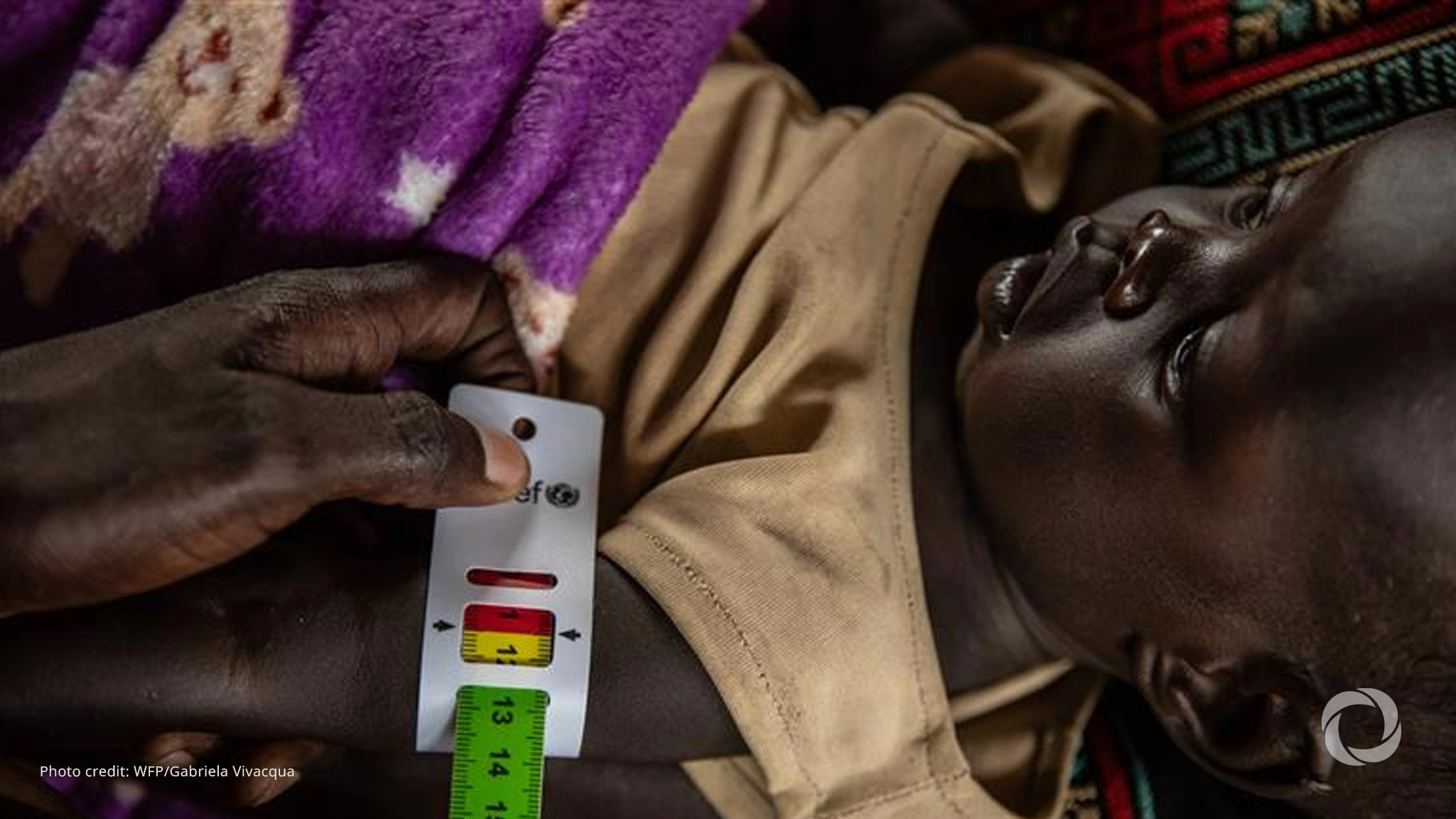
Currently, 2.2 million children aged 6 months to five years old are suffering from acute malnutrition, an increase of 100,000 cases compared with six months ago. Through July this year, 700,000 children are projected to face severe acute malnutrition, the deadliest form. In addition, 1.2 million pregnant and breastfeeding women are acutely malnourished, placing both mothers and infants at heightened risk.
“We are witnessing a deadly downward spiral with 2.2 million children suffering from acute malnutrition and nearly 700,000 among them are at grave risk of dying from severe wasting,” said Lucia Elmi, UNICEF Director of Emergencies. She urged all parties to grant timely, safe access to conflict-affected areas and scale up nutrition interventions.
FAO, WFP and UNICEF—along with the Nutrition and WASH clusters—are calling on the international community and governments to act immediately. Sustained funding for food assistance, nutrition programmes, clean water and sanitation, and health services is critical to prevent further deterioration. The agencies are urging all parties to the conflict to protect civilians and enable the delivery of life-saving assistance. Parties must ensure safe, rapid, and unfettered humanitarian access to all affected areas without delay. Without rapid, large-scale intervention, the people of South Sudan risk facing an irreversible humanitarian catastrophe.