
Add us as your preferred source on Google to see more of our content in Search.
 Add to Preferred Sources
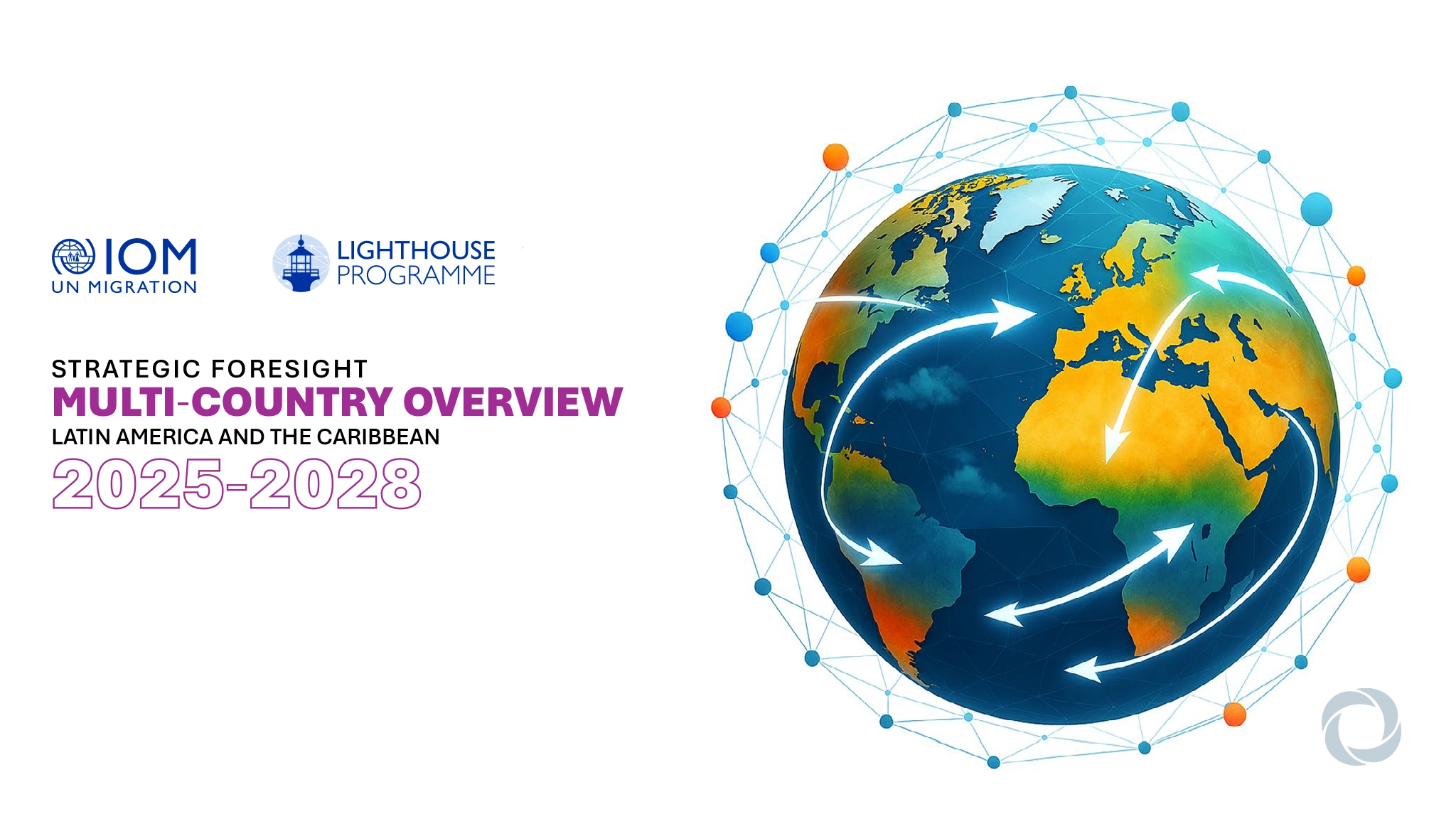
Violence linked to organized crime, economic shifts, changing migration policies, rising returns and deportations, and the growing impact of climate-related hazards are set to reshape migration across Latin America and the Caribbean, according to a new press release by the International Organization for Migration (IOM). The announcement was made in Panama City on 30 April 2026. The findings are drawn from the Strategic Foresight Multi-Country Overview for Latin America and the Caribbean. The report examines how migration dynamics are evolving and identifies emerging trends that will influence population movements in the coming years. It aims to support smarter planning amid an increasingly uncertain regional context.
Migration across the region is becoming increasingly complex and fast-changing. Movements are no longer driven primarily by traditional patterns, but are now more diverse, multidirectional and dynamic. New routes are emerging, with growing pressure on border areas and urban centers. The analysis is based on foresight exercises conducted in seven countries across the region. It examines emerging signals that could reshape migration between 2025 and 2028.
According to the report, approximately 78.7 million international migrants currently reside in the region. In 2024 alone, 14.5 million internal displacements were recorded, primarily due to disasters, while displacement linked to conflict and violence reached nearly 1.5 million. Intraregional migration remains a defining feature, including continued movements from the Bolivarian Republic of Venezuela. Around 6.9 million Venezuelans are living across Latin America and the Caribbean, mainly in Colombia, Peru, Brazil, Chile and Ecuador. These trends interact and reinforce one another, creating a more volatile and complex migration environment.
The methodology combines data analysis, review of global trends, and participatory workshops with experts and national stakeholders. Rather than forecasting exact outcomes, it develops plausible scenarios and highlights practical implications for planning, coordination, and resource allocation.
“This is not about predicting the future, but about preparing for different possible scenarios,” said Ana Durán Salvatierra, IOM Deputy Regional Director for Latin America and the Caribbean. “In a rapidly changing environment, anticipation is essential for effective migration governance. Migration will continue to evolve. The key question is whether we react too late or prepare in advance.”
Beyond identifying risks, the report aims to strengthen anticipatory capacity. In a context marked by uncertainty, a foresight approach helps move beyond reactive responses and supports more effective preparedness. IOM is increasingly integrating foresight into its planning, disaster risk reduction and policy development efforts. The agency seeks to support more timely, coordinated and evidence-based responses. Through this regional analysis, IOM aims to support governments and communities in making more informed decisions by embedding anticipation into planning and preparedness efforts.