
Add us as your preferred source on Google to see more of our content in Search.
 Add to Preferred Sources
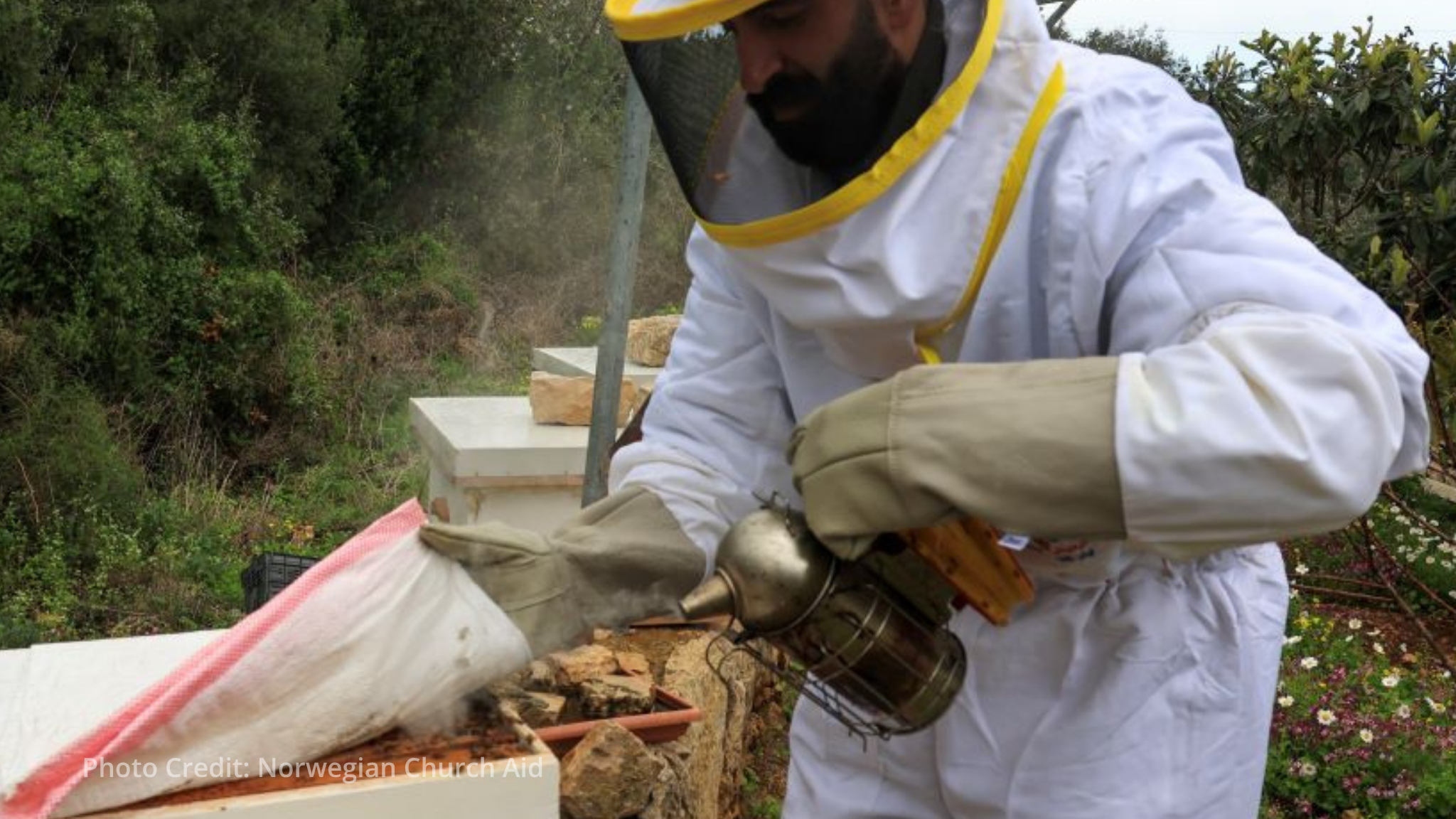
In the mountains above Tripoli, 35-year-old Philippe Abboud is turning beekeeping into a source of stable income as attacks on Lebanon drive food prices sharply upward, according to a press release by Norwegian Church Aid. Over the past month, the prices of several food items have risen by as much as 20 percent. Abboud is one of 180 young people trained in honey production through a project run by Norwegian Church Aid together with its partner, the Rene Moawad Foundation. The initiative equips participants with the skills and tools to earn a living through beekeeping. It reflects a broader effort to strengthen food security and economic resilience in Lebanon.
Lebanon has faced successive shocks in recent years, including the pandemic, the Beirut explosion, inflation, unemployment, and ongoing conflicts. Over the past month, the country has been under heavy attacks from Israel. The war involving Iran has further pushed up prices for gas, diesel, and food. The World Food Programme (WFP) warns that Lebanon is rapidly heading toward a serious food security crisis following Israel’s military offensive against Hezbollah, linked to the broader conflict around Iran. These pressures have intensified hardships for young people already struggling to make ends meet.
Vegetable prices have increased by more than 20 percent and bread prices by 17 percent since the beginning of March. Some markets, especially in the south, have almost completely collapsed, while markets in Beirut are under heavy pressure. Norwegian Church Aid combines emergency assistance with long-term support and advocacy to help people earn a living and secure stable access to food. The organization’s program in Lebanon focuses on combating poverty, hunger, and the growing consequences of climate change. Economic development and food security remain key priority areas for the organization in the country.
Abboud grew up around bees, as his father kept beehives, making the project a natural fit. Through the initiative, he received training, bees, equipment, and hives. He has learned how a hive works, about maintenance and handling, diseases, and how different plants, trees, and flowers shape the taste and quality of honey. He is particularly enthusiastic about the rich flavor that beech trees give the honey. “Being able to produce honey and having my own hives gives me a real opportunity to be financially independent,” Abboud said.
Håvard Hovdhaugen, Area Director for Norwegian Church Aid in Lebanon and Syria, highlighted the urgency of strengthening livelihoods amid the crisis. “The past month’s attacks show just how vulnerable people are when access to food is disrupted,” he said. He added that empowering people to support themselves and ensuring food on the table is absolutely essential. For Abboud, the bees in his garden offer hope of a stable income in difficult times. His story illustrates how targeted training and resources can help communities cope with mounting economic and security pressures.