

Add us as your preferred source on Google to see more of our content in Search.
 Add to Preferred Sources
Key reasons to read this article
- Discover which South Asian regions are on track to surpass the limits of human survivability by 2050.
- Learn how extreme heat is causing over 200,000 deaths annually in the region, triggering everything from high acid levels to life-threatening heatstroke.
- Explore why air conditioning is becoming a desperate health necessity and what puts it out of reach for millions.
- Understand why South Asian megacities are heating up to 7°C faster than the countryside.
- Find out what to expect as ‘cooling poverty’ grows.
Among the concrete buildings of the 37-million-populated New Delhi, the air simply does not move, it vibrates. By mid-morning in June 2025, temperatures had already climbed to an extreme 48°C, but for Sana, a street sugarcane juice vendor, the reality was much harsher. For the whole day, she stood on black asphalt, which acts as a thermal battery, pushing ground temperatures several degrees higher.
“Some mornings, I can’t even stand,” she explained, pointing to feet so swollen that they bulged over her sandals. “My whole-body aches from working all day at the juicer. The doctor said my uric acid is high. But who has the time or money when missing work means no food?”
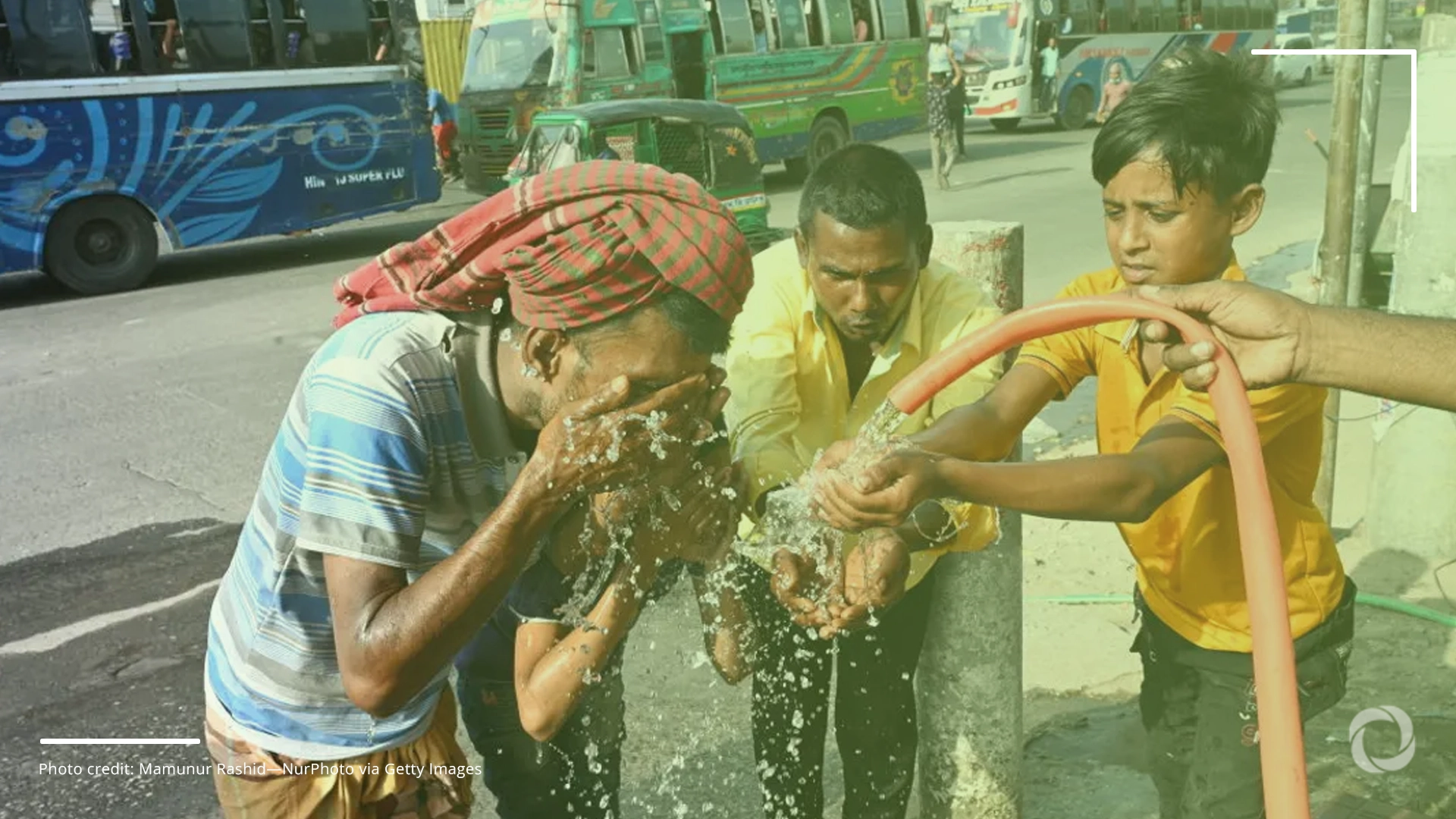
For Sana and millions like her, the rising temperatures that the World Meteorological Organization has warned of bring physical strain – dehydration thickens the blood, the kidneys are overworked and fail to flush out toxins, and the whole body struggles to regulate heat.
Sana has one of the 34 million full-time jobs the International Labour Organization warns India might lose by 2030 due to heat stress.
The cooling divide: Survival as a luxury
As the heat intensifies, South Asian cities are being split into two distinct classes: those who can buy relief and those who cannot afford to.
In Mumbai, 48-year-old domestic worker Swati Yeshi recently found herself forced to choose. When her cooler broke down, her ability to work was threatened. “The heat messes with my health, worsens my acidity, and my head starts spinning. You can’t live without a cooler,” Yeshi explained. To cope, she bought a new air conditioner on an instalment plan, despite it costing almost twice her monthly salary.
For workers like Swati, keeping cool is no longer simply a convenience but represents a financial burden. Rising demand has driven air conditioner prices up by 5% to 15%, deepening what researchers increasingly describe as ‘cooling poverty’, where the poor have to choose between financial ruin or heatstroke.
Across Bangladesh, Pakistan and Nepal, the pattern is similar. The wealthy treat cooling as a utility; the poor experience it as debt.
The productivity drain
In Bangladesh’s capital city, Dhaka, heating is not only a health crisis, but also an economic one. Every year, the city loses an estimated US$6 billion worth in labor productivity due to heat stress. This accounts for over 8% of the city’s annual losses in labor productivity, a figure that is projected to hit 10% by 2050.
Nationally, heat-related illnesses cost Bangladesh an estimated US$1.78 billion in 2024 and caused 250 million lost workdays, according to the World Bank. Abida Begum, a cleaner in Dhaka, felt this personally when extreme heat led to her two-year-old son contracting pneumonia, resulting in her spending all her savings, 50,000 taka (around US$400), on his treatment.
Across the region, the economic toll is staggering. Studies indicate that India lost approximately US$194 billion in economic output in 2024 as the country lost 247 billion potential labor hours to heat stress. Pakistan registered an estimated 26 billion lost potential labor hours in 2022, which caused US$16 billion in lost income. In 2024, the number of lost working hours amounted to 33 billion, the Lancet Countdown reported.
A forecast of unlivable cities
Sparse tree cover, asphalt pavements, dense concrete, expanding traffic, factories, and widespread air conditioner use all contribute to the ‘urban heat island effect’, with cities absorbing and retaining heat. This results in areas that are up to 10°C warmer than in the suburbs and rural areas.
As temperatures rise, the prospects for South Asia grow even more grim. Bangladesh is likely to see average temperature in its biggest cities rise by up to 4.5°C, while Pakistan’s cities could witness an increase in average temperature of up to 5°C by 2100.
As for India, the highest summer temperatures are already exceeding 50°C, and the India Energy & Climate Center at the University of California, Berkeley, predicts that temperatures will surpass the limits of human survivability by 2050.
Without radical intervention, heat-related deaths, currently exceeding 200,000 annually, are expected to double.
The price of mitigation
In February 2026, the Rockefeller Foundation and the charity foundation Wellcome pledged US$11.5 million to address the extreme heat in South Asia.
Welcoming the initiative, the Secretary-General of the World Meteorological Organization, Celeste Saulo, noted that “every death primarily due to excess heat can be prevented”. Yet, as the gap between the ‘cooled’ and the ‘burning’ widens, a vital question remains: will these investments reach people like Sana and Swait, or will relief remain out of reach for those who need it most?