
Add us as your preferred source on Google to see more of our content in Search.
 Add to Preferred Sources
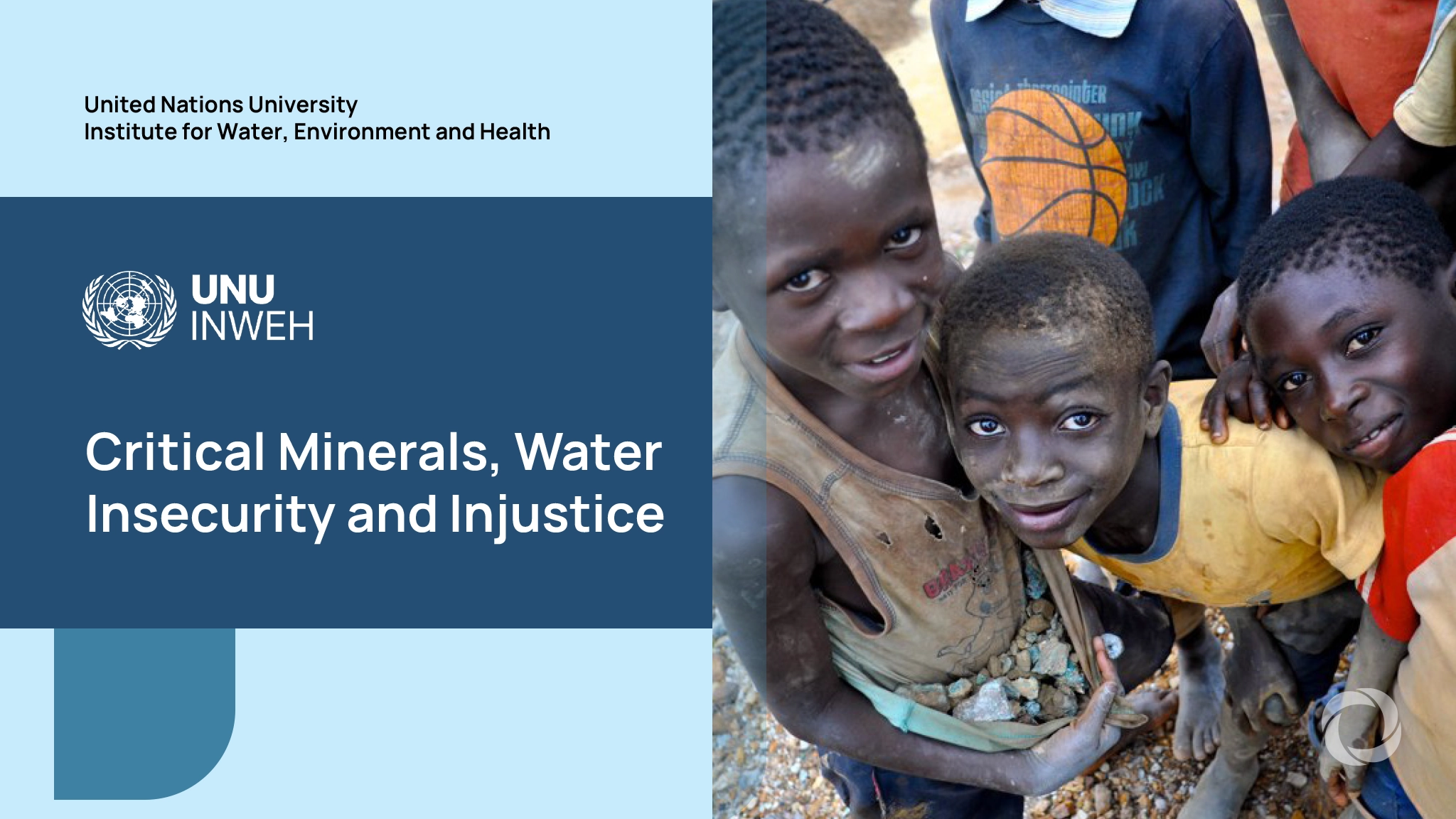
The United Nations University Institute for Water, Environment and Health (UNU-INWEH) has released a new report examining the contradictions at the heart of global sustainability transitions, with a particular focus on water, according to a press release published on 11 May 2026. The analysis finds that rising demand for minerals used in electric vehicles, renewable energy and digital infrastructure is driving significant water use, pollution and health risks. The report cautions that these impacts fall disproportionately on vulnerable communities. It urges stronger governance to prevent the energy transition from replicating long-standing inequalities. The findings position water at the center of the debate over how the world sources critical minerals.
The report frames the surge in mineral extraction as a defining challenge for sustainability policy. It situates this trend within ongoing global efforts to scale up clean energy and digital technologies. The analysis draws on evidence from major mining regions to illustrate emerging risks. It highlights how extraction pressures intersect with existing water stress. The framing positions water security and justice as inseparable from the minerals agenda.
According to the report, global lithium production consumed an estimated 456 billion litres of water in 2024. That volume is equivalent to the annual domestic needs of 62 million people in sub-Saharan Africa. The report also finds that around 16 per cent of critical mineral extraction occurs in areas already facing high water stress. These figures underline the scale of resource pressure linked to the energy transition. They form the empirical backbone of the report’s warnings.
Evidence drawn from major mining regions shows declining water tables and contamination of drinking water. The report further documents pressures on agriculture and livelihoods in affected areas. It warns that, without stronger governance, the energy transition risks replicating patterns of inequality seen in fossil fuel extraction. This concern threads through the report’s assessment of social and environmental impacts. It signals that technical fixes alone will not resolve the underlying injustices.
The report calls for binding international standards to address these risks. It urges stricter pollution and wastewater controls across the mineral supply chain. It also presses for greater transparency to ensure that water resources and affected communities are protected. UNU-INWEH presents these recommendations as essential safeguards for a just transition. The publication is available through the institute’s website.