
Add us as your preferred source on Google to see more of our content in Search.
 Add to Preferred Sources
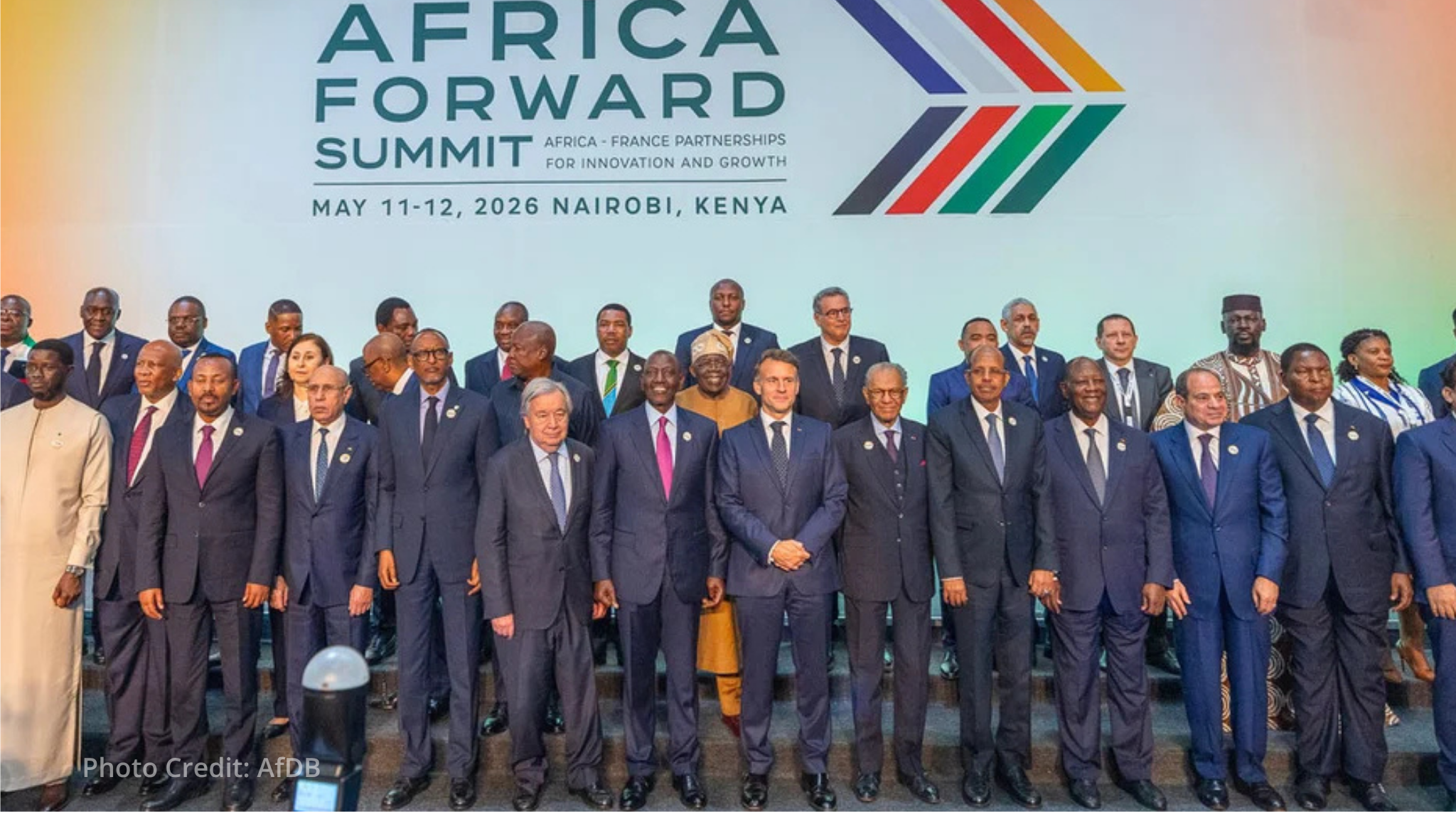
The African Development Bank Group (AfDB) secured political momentum for the New African Financial Architecture for Development (NAFAD) at the Africa Forward Summit, held in Nairobi on 12 May 2026 under the joint leadership of President William Ruto and President Emmanuel Macron, according to a press release. African leaders, international partners and development institutions rallied behind a pan-African guarantee mechanism designed to unlock investment, lower the cost of capital and accelerate job creation. The Summit brought together Heads of State and Government, multilateral institutions, global investors and private sector leaders. An estimated 5,000 participants attended the event. Discussions focused on repositioning Africa at the centre of global growth through co-investment, sovereign equality and African-led financial solutions.
NAFAD was endorsed by African Heads of State during the African Union Summit earlier this year and further anchored through the Abidjan Consensus adopted last month. Under the framework, the African Development Bank Group will leverage its triple-A balance sheet, convening power and partnerships to strengthen African financial institutions capable of mobilising investment at scale. At the centre of this first phase stands ATIDI, the Nairobi-based pan-African investment and credit insurer identified as the flagship institution to anchor Africa’s continental guarantee architecture. The initiative reflects a shift beyond traditional aid paradigms. It aims to mobilise African savings, attract institutional capital and scale private investment into infrastructure, energy, industrialisation and job creation.
African Development Bank Group President Dr Sidi Ould Tah presented NAFAD as a response to the continent’s inability to transform liquidity into investable capital at scale. He noted that Africa faces an annual development financing gap exceeding $400 billion while holding nearly $4 trillion in domestic savings. Yet Africa attracts only 1% of global institutional capital and just 4% of global foreign direct investment. He highlighted that between 12 and 15 million young Africans enter the labour market every year while only around 3 million formal jobs are created. He identified a critical annual guarantee and insurance gap estimated at $40–$50 billion.
President Ruto called for the recapitalisation of ATIDI as “a critical pillar of the new Africa financial architecture for development,” stressing that Africa must increasingly finance itself through stronger continental institutions. President Macron announced France’s intention to support the scaling of ATIDI and endorsed the development of a continental first-loss guarantee strategy. He described the initiative as part of “a new financial paradigm” capable of advancing Africa’s prosperity and strategic autonomy. United Nations Secretary-General António Guterres praised the Bank Group’s role in “mobilising African resources for African priorities and prosperity.” President Ould Tah stated, “Africa is not capital poor. Africa is risk-transformation poor.”
President Ould Tah underscored that NAFAD is a coordination framework aligning African and international financial actors around four principles: subsidiarity, complementarity, coordination and disciplined risk transformation. Referencing ATIDI as the first concrete deliverable, he stressed that Africa has the institutional platform and political momentum to accelerate implementation.
“The political moment is now. The institution exists. The approach is endorsed. The capital pathway is mapped,” he said.
The outcomes of the Africa Forward Summit are expected to feed into upcoming global discussions on international financial reform, including the G7 Leaders’ Summit in Evian, France. Broader efforts will focus on reshaping development finance around investment, risk-sharing, institutional coordination and economic sovereignty.