

Add us as your preferred source on Google to see more of our content in Search.
 Add to Preferred Sources
Key reasons to read this article
- Discover how a single bottleneck that handles 25% of the world’s seaborne oil trade is triggering economic shocks far beyond the energy sector.
- Read about the radical shift in global shipping rules that has turned routine trade routes into high-stakes reckonings.
- Learn why long-standing corporate legal safety nets are failing in regional courts, leaving major energy suppliers completely exposed.
- See how a devastating geopolitical crisis is fast-tracking a post-oil transformation across the Gulf.
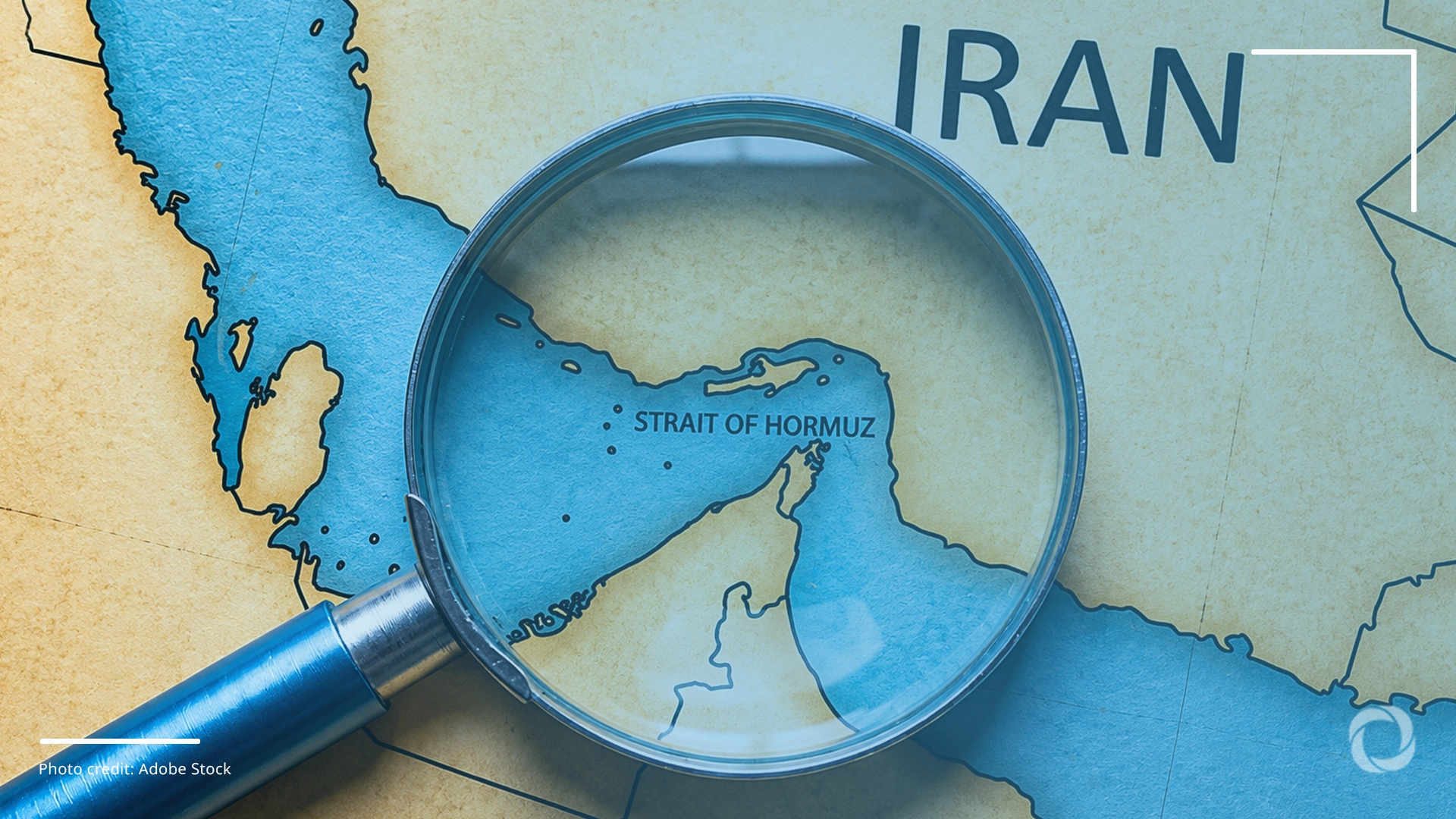
The ongoing US-Israel war against Iran and the subsequent disruption in the Strait of Hormuz, one of the world’s most critical maritime chokepoints, are reshaping economies across the Middle East. In peacetime, about 20 million barrels of oil pass daily through the strait, which accounts for 25% of the world’s seaborne oil trade.
The current instability has exposed the vulnerability of economies that are heavily dependent on energy exports, maritime trade, and global supply chains, while also placing increasing pressure on jobs, growth, and living standards across the region.
As governments and businesses struggle with rising costs, weaker growth, and an increased risk of poverty, the conflict is accelerating structural reforms across the Gulf countries that are now shifting away from models centered primarily on hydrocarbon revenues and toward economies that are built around resilience, diversification, and strategic security.
Economic shock spreads beyond energy
The economic slowdown triggered by the conflict is becoming increasingly visible across the Gulf Cooperation Council (GCC) economies and the wider Middle East. The World Bank has downgraded growth in the GCC by 3.1% since January, predicting a regional slowdown from 4.4% in 2025 to 1.3% in 2026.
Concurrently, data from the analytical firm Kamco Invest has revealed that GCC contract awards dropped by 9.7% in the first quarter of 2026 compared to the same period in 2025.
The escalation is also undermining progress in human development. The United Nations Development Programme (UNDP) estimates that the conflict could wipe out 3.6 million jobs, more than the total number of jobs created across the region in 2025, worsening living standards, and threatening to push around 4 million people below the poverty line.
Shipping and trade under pressure
Much of this pressure is being caused by disruptions to the maritime trade and shipping routes linked to the Strait of Hormuz, which have sharply increased global shipping costs. By late March 2026, the German shipping giant Hapag Lloyd was incurring $40 to $50 million in additional weekly costs, a burden that CEO Rolf Habben Jansen described as “not sustainable for a long time”.
Compounding this, war-risk insurance premiums have surged from less than 1% of a ship’s hull value to 3% – 8%, according to Marsh Risk.
Insurance brokers at McGill and Partners report that some insurers are refusing insurance cover completely, forcing freight quotes that were once valid for 7 to 30 days to expire in 12 hours for the high-risk Strait of Hormuz route. “Each underwriter is invariably increasing rates or, in some instances, for vessels passing through the Strait of Hormuz, even declining to offer terms right now,” said David Smith, the global head of marine and cargo at McGill and Partners.
Businesses and consumers absorb the costs
The rising costs of shipping and insurance are filtering through supply chains into the wider economy, affecting businesses and consumers alike.
Small and medium-sized enterprises (SMEs), particularly those operating on thin profit margins, are among the hardest hit. Lekha Chakraborty, a Senior Economist at the National Institute of Public Finance and Policy in India, noted that SMEs working on margins of only 5% to 8% cannot absorb sharp spikes in freight charges, insurance costs, and delays.
Construction, a booming sector among the GCC countries, has likewise been impacted. In Saudi Arabia, the cost of imported construction materials has risen by 25% to 40% since late February 2026, increasing pressure on developers and contractors who are already dealing with supply disruptions.
Legal frameworks revised
As operational disruptions intensified, companies and governments also began to reassess the legal frameworks governing trade and energy exports. Several Gulf countries, including Kuwait, Qatar, and Bahrain, have invoked force majeure clauses to avoid liability for delayed energy exports, arguing that the war has prevented companies from fulfilling their contractual obligations.
However, invoking this clause no longer offers guaranteed legal protection. A landmark 2023 Dubai court ruling established that force majeure cannot automatically excuse breaches or exempt pre-existing contractual obligations.
Legal experts note that this precedent holds regional suppliers accountable if they attempt to use the conflict as an excuse for sub-standard goods, pre-existing delays or failed factory testing before shipping. It also forces companies to issue immediate formal breach notices rather than relying on informal crisis workarounds.
Gulf economies shift toward long-term resilience
In April, the World Bank predicted growth in the Middle East would slow to 1.8% in 2026, down from 4% the previous year, warning that the conflict could leave long-term economic “scarring” through damaged infrastructure, disrupted trade, and weakened investor confidence.
In response, the Gulf economies, identified as being particularly exposed because of their dependence on oil and gas exports, are increasingly investing in sectors that are viewed to be strategically important for a post-oil future, particularly artificial intelligence, mining, logistics, and infrastructure.
Saudi Arabia has committed billions of dollars to AI and rare earth mineral development, while the UAE is expanding pipeline capacity to bypass the Strait of Hormuz entirely. Regional governments are increasingly treating transport, energy, and digital infrastructure as matters of national resilience as much as economic development.
A conflict reshaping economic priorities
The Strait of Hormuz crisis has revealed how deeply conflict can disrupt trade, energy systems, legal frameworks, and long-term investment planning. Yet it has also accelerated changes that were already underway.
Governments and businesses across the Middle East are increasingly prioritizing economic diversification, supply-chain resilience, infrastructure security, and strategic industries that are less vulnerable to geopolitical shocks.
As Abdallah Al Dardari, UN Assistant Secretary-General and Director of the Regional Bureau for Arab States at UNDP, observed, the crisis underscores “the pressing need to strengthen regional collaboration to diversify economies — beyond reliance on growth driven by hydrocarbons — and to secure trade and logistics systems against future shocks and conflicts.”