
Beyond livelihoods: What has UN humanitarian aid changed? - A case study of social transformation of rural women in Bamyan, Afghanistan | Associate Writer

Add us as your preferred source on Google to see more of our content in Search.
 Add to Preferred Sources
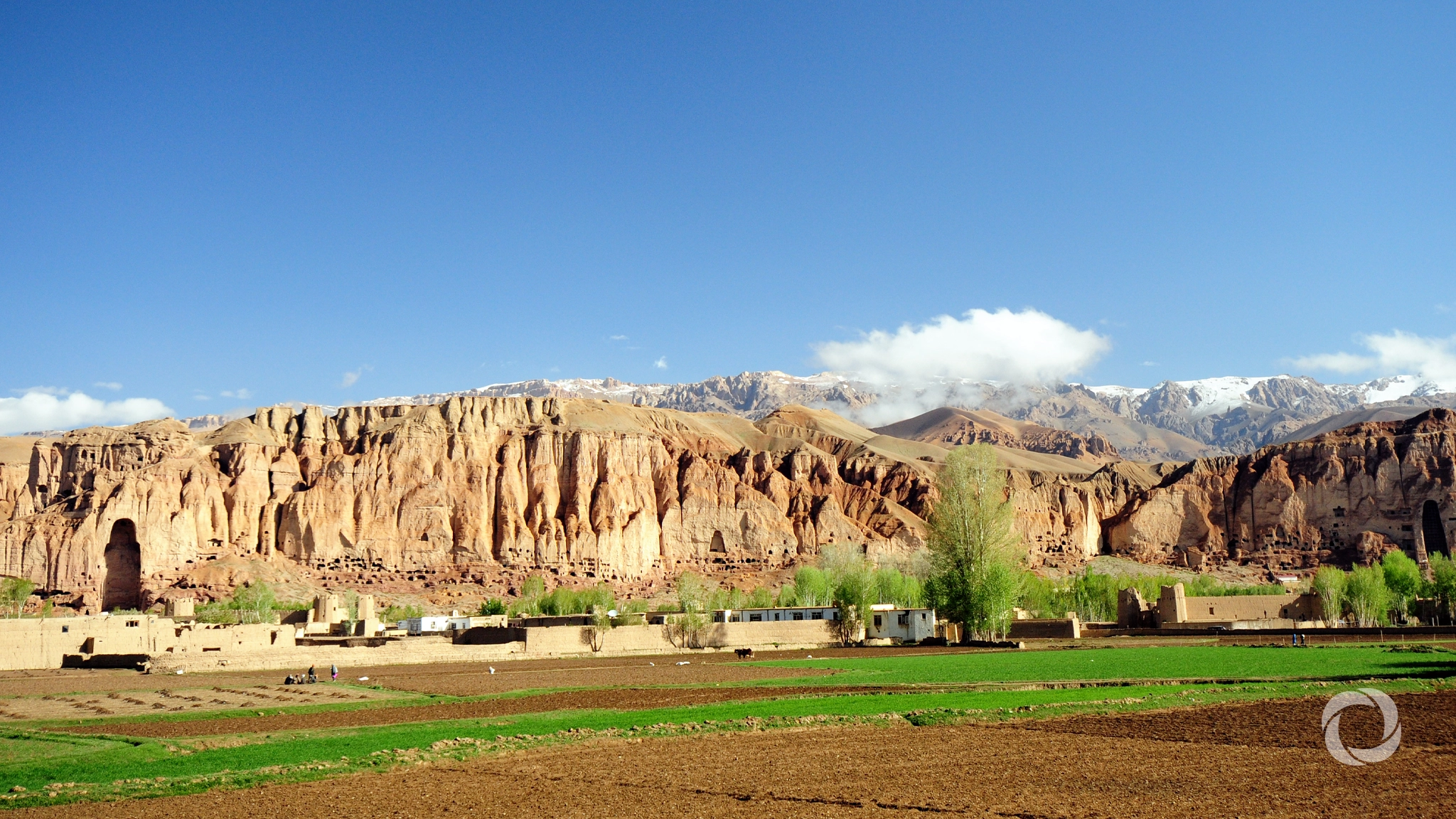
As a cultural and economic center on the ancient Silk Road, Bamyan is known for its breathtaking landscapes and ancient cave grottoes. As a major Buddhist hub at one point in history, it once housed dozens of shrines and over a thousand monks. Today, it remains a UNESCO World Heritage site, linking Afghanistan with China, the East, and the West through the Silk Road for more than 1,500 years.
In 2019 and 2020, I had the opportunity to work with the United Nations (UN) in Afghanistan and witnessed in person this mysterious cultural site and how development aid brings changes to the locals.
Today’s Bamyan
Bamyan is often described by local people as an Afghan paradise. With majestic mountains, rivers, green trees, vast pastures, fruit orchards, and fertile farmland, the province enjoys clean cities and a relatively peaceful life. Compared to the typical Afghanistan with extreme dry lands and frequent conflicts, Bamyan is rich in water resources and is, in fact, the source of all five river basins in the country. Agriculture drives the rural economy, with families growing wheat, potatoes, and fruits such as apples, walnuts, and sweet cherries, alongside raising livestock and poultry.
However, despite its relative abundance of water, a severe drought in 2018 severely affected smallholder farmers. Many families lost their crops, and large areas of land remained uncultivated due to a lack of agricultural inputs and water.
Beneath this beautiful landscape, the lives of rural women remained largely invisible – until a small UN project began to change that.
In response, the Food and Agriculture Organization of the United Nations (FAO) stepped in to support the most vulnerable rural households. It provided timely seeds, fertilizers, and cash-for-work opportunities, helping local farmers and herders – especially rural women – protect their agricultural livelihoods during the drought.
Before the UN project: Invisible and silent female labors
For most rural women in Bamyan and Afghanistan at large, life before the FAO intervention followed a narrow path.
In summer, they helped men in the fields – planting, weeding, harvesting. In winter, they wove carpets at home. Their labor was essential but unrecognized as “work.” They had no independent income. They rarely left the village without a male companion. Decisions about spending, children’s education, and marriage were made by husbands or fathers.
Hunger was one problem. The deeper problem was powerlessness. There was nothing women could do about it – no savings to fall back on, no group to turn to, no skill that could be turned into cash.
This was not poverty alone. It was a condition of social invisibility.
What the project delivered: More than numbers on paper
FAO has invested USD 7 million – with funding from Switzerland – over the past three years to support 9,283 households and 500 Common Interest Group (CIGs) in Bamyan.
In the village of Ekhtyaran, within the Shibarto Community of Bamyan, 26 women from 200 families in the village were selected to form a Common Interest Group (CIG). Each member of the CIG received two female sheep and two lambs. A trainer visited the village twice a month to teach local women how to immunize the animals, milk them, and produce dairy products. The group also elected a leader, who coordinates with a local trader to sell their milk and dairy products.
In addition to livestock training, local women also learned basic reading and writing skills, and a savings and credit scheme through a revolving fund. As a common practice within the CIG, members could borrow without interest for small businesses or emergencies, and no interest is charged on loans to members.
Empowering women through a Common Interest Group (CIG)
A young woman named Jamila Husainy became one of the key beneficiaries of this project.
“We (the CIG Group) have saved about 135,000 Afghanis (approximately USD 1,800) in our revolving fund,” Jamila said proudly. “We can lend money to any member whenever needed – for example, to start a small business. The repayment rate is 100%.
A second chance for livelihoods
Rahima Nazari is another remarkable woman in the same CIG. Before the project, her family relied mostly on carpet weaving during the winter. In summer, she had little to do except help the men in the fields. Last year’s severe drought made things even worse – they could not plant crops at all. “We went hungry almost every day,” Rahima recalled, with sorrow in her eyes.
Now, with the sheep and lambs she has received, Rahima stays busy throughout the summer. “This year, our household income has increased considerably through the sale of cheese!” she explained, her face lighting up with a beautiful smile.
What the numbers do not capture
By any standard development metric, this was a successful project. As the beneficiaries exclaimed,
“The number of sheep has multiplied, our milk production has increased”.
But what is unique of this UN intervention is the financial skills these women beneficiaries learned through managing the funds and running the business. It brings income to rural women, which makes the most transformative change in their lives.
But if you stop at income and assets, you miss the point.
Change #1: From “his money” to “our money” – and then to “my money”
Before the project, any cash that entered Rahima’s household was controlled by her husband. After she started selling cheese, she earned her own income for the first time.
“I use the money to buy food, daily necessities for the family, and medicines,” she explained. Then came a sentence that reveals the true shift: “I can nowadays even keep some income as my savings now!”
This is not just about savings. It is about a woman deciding, for herself, what to keep.
Change #2: From silence to a voice
The CIG did not just distribute sheep. It required the women to meet regularly, make collective decisions, and elect a leader from among themselves.
For women who had never been asked their opinions on community affairs, this was a profound experience. Learning to speak to strangers, in public and in a group – to disagree, to propose, to vote – is not a skill that appears on any project logframe. But it changes a person.
Change #3: From isolation to a group identity
One of the most underreported effects of rural poverty is isolation. Women work alone, at home or in fields. They have no collective space.
The CIG became that space. Twenty-six women met, learned, saved, and sold together. They developed a shared identity as “CIG members” – a status that carried respect within the village.
When Jamila says “we” – “we have saved,” “we can lend,” “our income” – the pronoun carries weight. It did not exist before.
Change #4: From a fixed fate to an open future
Perhaps the most important change is the hardest to measure.
Before the project, the women of Ekhtyaran village could not imagine a different life. Their mothers had lived the same way. Their daughters would, too.
Now, all 26 CIG members are asking for the project to be expanded to cover all 200 households. They want better training in animal health and crop management. They want market linkages. They want solutions to water shortages.
This act of wanting – of expecting that things can and should change – is the essence of social transformation.
What humanitarian aid can and cannot do
The Bamyan project is a perfect model of the ‘UN-donor-government-community’ collaboration: FAO provides technical support, the donor country offered humanitarian funds, while the recipient national and provincial governments implement the project for livelihoods improvement and social mobilization.
The UN project in Bamyan did not end patriarchy. It did not erase poverty. It did not solve Afghanistan’s deeper crises.
But it did something that many larger, more expensive programs fail to do: it created a structured space in which rural women could discover their own agency.
The sheep provided the economic entry point. The training provided skills. The savings fund provided a tool. But the transformation came from what the women built together using those tools.
Humanitarian aid, at its best, does not “empower” anyone from the outside. It creates conditions – resources, relationships, routines – inside which people empower themselves.
That is what happened in Bamyan.
A different kind of evidence
If you evaluate the Bamyan project only by income growth or asset accumulation, you will call it effective. And you would be right.
But if you look closer – at how women now speak, save, decide, and imagine – you see something else. You see small but meaningful shifts in who holds authority, who has a voice, and who believes their future can be different.
That is not just livelihood improvement. That is social transformation.
The women of Afghanistan still face enormous challenges. Drought may return. Markets may fail. The broader political situation remains fragile. But they have crossed a line that cannot easily be un-crossed: they have seen themselves as agents, not just recipients.
That is what UN humanitarian aid changed.