

Add us as your preferred source on Google to see more of our content in Search.
 Add to Preferred Sources
Key reasons to read the article
- Discover how a single ton of discarded smartphones contains up to 100 times more gold than a ton of traditionally mined rock ore.
- Learn how short device lifespan and unfixable design faults are driving the global waste crisis.
- Uncover the toxic reality of the global electronic trade.
- Explore how “urban mining” generates up to 80% fewer CO2 emissions.
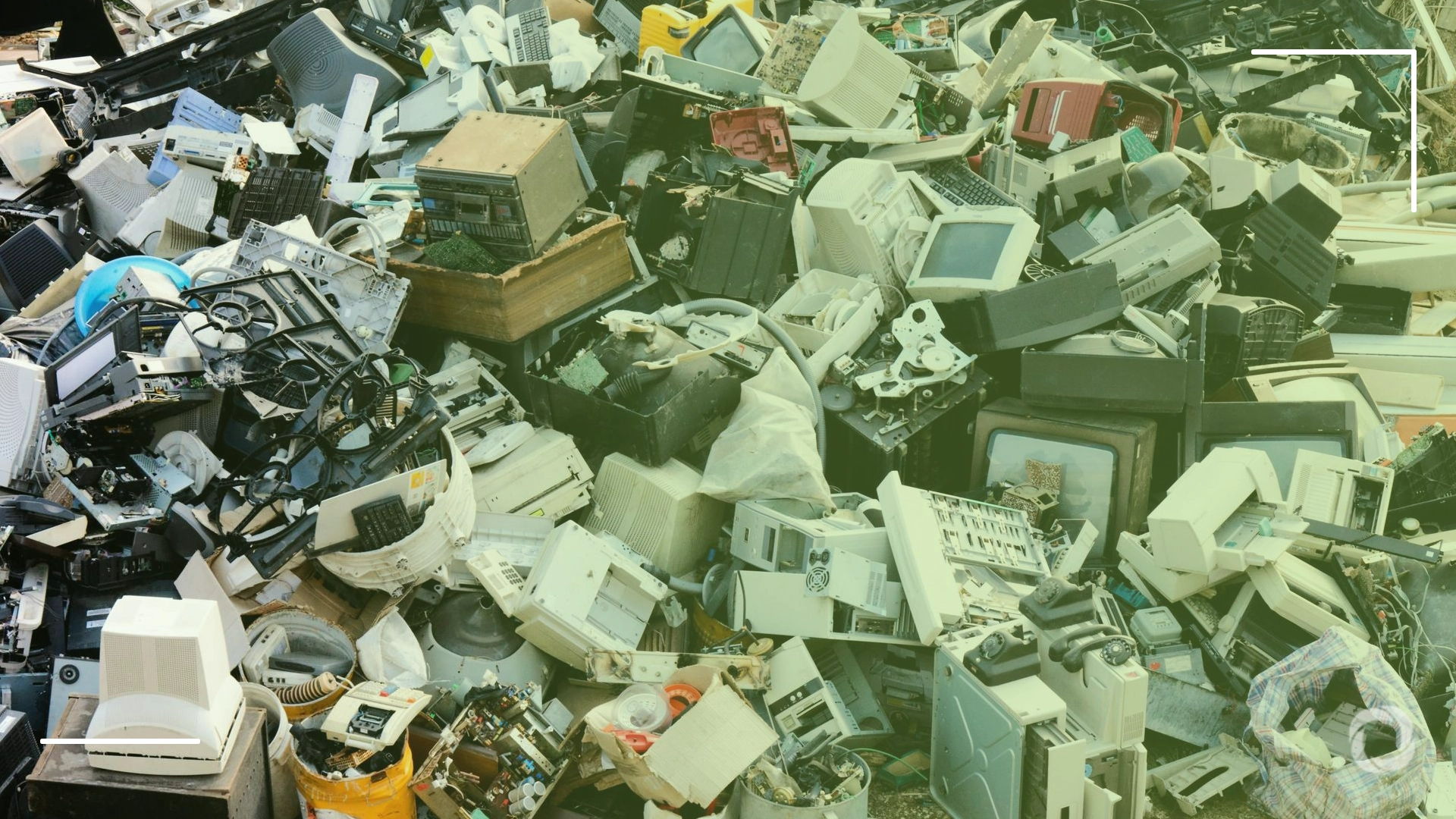
Deep within the bustling tech stalls of Banex in Abuja, Nigeria, lies an invisible fortune. While local traders watch a graveyard of unfixable, discarded electronics being shipped in daily, urban mining experts see this a prime gold reserve. A single ton of discarded smartphones contains hundreds of grams of gold, up to 100 times more than can be found in a ton of mined ore. Yet, the vast majority of the old chargers, laptops, smartphones routinely tossed away are treated simply as trash.
Researchers estimate that global e-waste contains 6,800 tons of gold and 60,000 tons of silver, roughly 16% and 22% of the world’s known reserves, but barely one in five devices is recycled properly. In 2022, the world produced 62 million tons of e‑waste, enough to fill over a million huge trucks. That’s 82% more than in 2010 and on track to climb to 82 million tons by 2030.
In other words, over three-quarters of our old phones, computers, and appliances end up being dumped, with their US$60+ billion worth of metals being squandered. This is where urban mining comes in.
The material math: Traditional vs urban mining
To understand why electronic recycling is transforming the global commodities market, consider the raw economic and environmental advantages it holds over traditional extraction:
Dumping grounds
So where does this e-waste go? You might assume it is safely recycled, but less than 23% of it actually is. The rest is buried, burnt, shipped across oceans, or abandoned in informal dumps in countries with few resources to manage it safely.
Developed countries often export broken TVs, phones and laptops to Africa and Asia, bypassing waste rules by mislabeling them or mixing old and new goods. Places like Agbogbloshie in Ghana or Odo-Iyalaro in Nigeria have become the planet’s largest e-waste dumping grounds.
Nigeria now receives tens of thousands of tons of used electronics each year, much of it fraudulently declared as “donations”.
The human cost on the ground
The human cost of this illegal trade is devastating. According to an informal worker in Agbogbloshie in Ghana, workers have long had to dismantle appliances with hammers and burn components over open fires to salvage metal. Residents describe persistent coughs and black rain from the smoke.
A 2024 study published in the International Journal of Hygiene and Environmental Health found that over 77% of Agbogbloshie workers had levels of lead in their blood in the pathological range. A 2022 NGO survey found this waste has led local soil lead levels to be 50 times the global safe limits, with farmers reporting stunted crops in nearby fields.
Despite these dangers, many rely on e-waste income as they have to “work like this or starve”, a recycler confessed. The cycle is self-reinforcing as few alternatives exist for low-skilled laborers, yet each day of exposure multiplies the health risks.
In Nigeria, most of this e-waste is sold as second-hand goods. It is taken into homes and used, which means the toxic metals are released into those homes. According to Joshua, a young Nigerian living alone, he wanted to cut costs, so he bought a second-hand tabletop cooker. He explained that the appliance started to smoke on the first day of use, and the second burner would just make a noise and then switch off, leaving only one of the two burners functional.
There are many in Nigeria and Ghana like Joshua. Unbeknown to them, these overused electronics are toxic waste that is being moved from place to place. Medical teams in Lagos treating informal recyclers routinely report chronic lead poisoning and lung damage. According to an environmental official, “Nigeria is now on a par with Ghana as a magnet for e-waste”.
Repair and reuse
So why aren’t gadgets being fixed and reused more often? Part of the problem is that devices today are built to be thrown away. Tiny, slim phones and laptops are often glued shut or fastened with proprietary screws, making repair virtually impossible. The consequence is super-short lifespans for phones, laptops and even appliances.
Fortunately, some rules are being introduced to change this. Thanks to the right-to-repair movement, the EU now requires smartphone makers to sell spare parts and share repair information for 7 years after a device has been discontinued.
Repair cafés, community workshops where volunteers fix broken gadgets, are sprouting up worldwide. They are low-tech but powerful. In one UK cafe, for instance, volunteers have helped visitors to avoid throwing away four tons of waste and saved 35. 5 tons of CO₂ through fixes and refurbs while also saving people money.
The Digital Product Passport (DPP) is also a new tool from the EU, introduced under the Ecodesign for Sustainable Products Regulation (ESPR). It acts like a QR code for products, detailing their composition, origin, manufacturing process, and end-of-life options such as repair and recycling.
From 2026, DPPs will be implemented for electronics, prioritizing smartphones and laptops. This initiative aims to provide essential information for consumers and recyclers, enhancing decision-making for repairs and recycling. The effectiveness of the DPP will depend on the quality of the data provided by companies, paving the way for a comprehensive record of products’ materials and end-of-life pathways. Similar initiatives are emerging elsewhere, although without the same legislative backing as in the EU.
The circular path forward
Urban mining turns the e-waste crisis into an opportunity. It dramatically reduces the environmental footprint of resource use and treats the material in our gadgets as a valuable commodity. But realizing this needs broken global systems to be fixed by stopping illegal exports, cleaning up dumpsites, and making devices repairable.
The combination of community action, such as repair cafés and green design, corporate responsibility (circular supply chains), and strict policy (EPR, product passport, enforcement) can break the cycle.
As one UN report warns, “Business as usual can’t continue.” By adopting circular practices now, we can protect people and the planet, transforming landfills back into “urban mines” for the future.