

Add us as your preferred source on Google to see more of our content in Search.
 Add to Preferred Sources
Key reasons to read this article:
- Discover why global food insecurity is worsening despite decades of development efforts.
- Learn why despite smallholder farmers producing much of the food consumed in developing countries, they remain among the most vulnerable.
- Explore how drastic cuts to bilateral aid are reshaping the global food security landscape.
- Find out how multilateral financial institutions can step up support for vulnerable groups.
- Understand why investing in women and young farmers could boost productivity, resilience and food security worldwide.
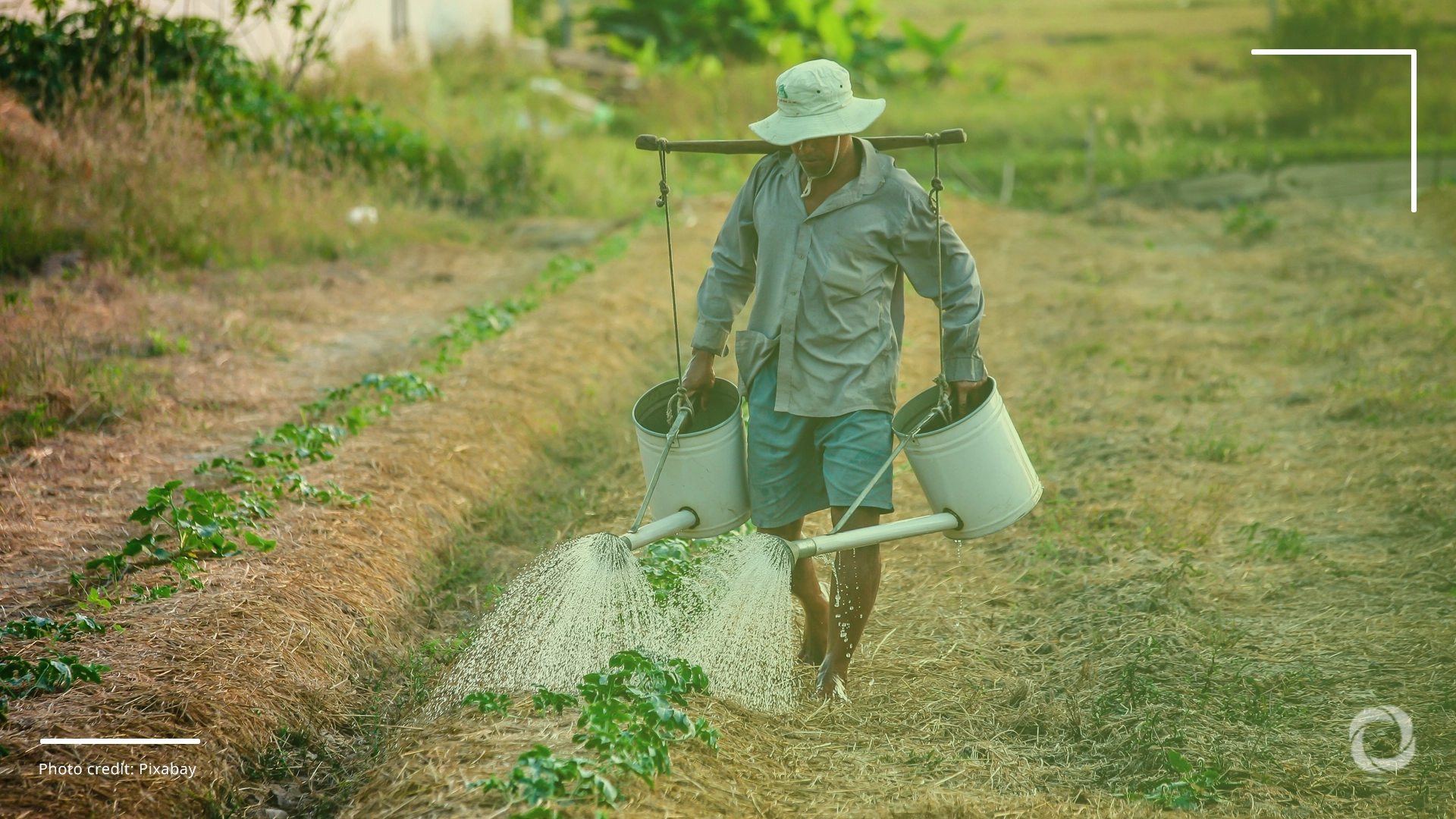
For millions of smallholder farmers across the developing world, a failed harvest is more than just a bad season. It often means less food on the table, children pulled out of school, livestock being sold to cover basic expenses, or the total loss of a family’s source of income. Many operate on narrow margins with little access to insurance, savings, or formal credit, leaving them greatly exposed to droughts and floods.
Yet, paradoxically, although smallholder farmers make up the majority of the world’s poor, they produce up to 70% of the food consumed across low and middle-income countries, according to IFAD. Therefore, supporting smallholder agriculture is not only a poverty-reduction strategy but also a food security issue.
Nevertheless, as climate shocks become more frequent and food insecurity worsens, the international aid that has long supported vulnerable communities is shrinking.
Lower bilateral aid vs higher hunger rates
According to the OECD, total Official Development Assistance (ODA) fell by 6% in 2024 and by a further 23% in 2025, the steepest annual drop on record. Bilateral aid to the world’s least-developed countries and to sub-Saharan Africa fell by roughly 25% in 2025.
Governments across Europe and North America that were once major donors are increasingly directing public funds toward addressing domestic fiscal pressures, defense spending, refugee support, and geopolitical conflicts. The U.S. led the cut when its ODA plunged by 56.9% in 2025. Germany and the UK followed with 17.4% and 10.8%, respectively.
As hunger indicators are on the rise, the timing is significant. About 318 million people faced acute hunger in 2025, up from 295 million in 2024. An estimated 363 million people could face acute hunger in 2026.
Multilateral funds step in
The urgency of the situation was underscored on 13 May 2026, when the World Bank-hosted Global Agriculture and Food Security Program (GAFSP) launched a US$163 million call for grant proposals to help smallholders in the least developed countries to adapt to climate change, improve productivity, and strengthen food security.
At a time when bilateral aid budgets are shrinking, this initiative highlights the growing importance of multilateral financing mechanisms. OECD analysts note that multilateral institutions have a unique ability to continue operating in countries and sectors from which bilateral providers withdraw, helping to preserve concessional support for the poorest and most fragile economies.
However, development economists caution that multilateral funding is not a complete substitute for bilateral aid. They argue that large institutions can face lengthy approval processes and administrative constraints that could slow the delivery of support to vulnerable communities.
Multilaterals’ role in agricultural development
Nevertheless, unlike many bilateral donors that are reducing aid budgets, multilateral institutions can pool resources from multiple contributors and sustain long-term investments. This is particularly important for agricultural development, where projects often require years of support to generate results. To this end:
- GAFSP has mobilized over US$2.46 billion since 2010, including more than US$1.1 billion in fragile and conflict-affected states.
- IFAD has financed hundreds of rural development programs focused on small-scale farming, irrigation, rural credit, and climate resilience.
- The African Development Bank has increased investment in climate-smart agriculture through its “Feed Africa” strategy.
Multilateral institutions also tend to maintain a presence in some of the world’s most vulnerable regions. Agencies such as the UN’s Food and Agriculture Organization (FAO) and the World Food Programme continue to operate in war zones such as Yemen and South Sudan, implementing food security and resilience programs.
Supporters argue that technical expertise, extensive local partnerships, and experience across multiple countries make multilateral funds ideal vehicles for the delivery of long-term, well-aligned investments in smallholder communities. A number of initiatives financed by IFAD and other multilateral institutions have supported soil restoration, water management and the development of drought-resistant crops across Africa and Asia.
Investing in women farmers
Multilateral institutions are also increasingly targeting women and young farmers, who often face barriers to accessing land, finance and agricultural services. The FAO estimates that women comprise about 40–50% of the agricultural labor force in many low-income countries yet often have less access to land, credit, training and agricultural inputs than men.
Many recent programs have therefore included measures to expand women’s participation in agricultural production and rural enterprises, while creating opportunities for younger farmers through training and access to finance. The FAO, for instance, promotes gender-transformative approaches, noting that if women had equal access to productive resources, they could increase farm yields by 20–30%.
What’s next for vulnerable farming systems?
The growing role of multilateral agricultural financing reflects a profound shift in the global food security landscape. As hunger levels rise and traditional aid budgets contract, institutions such as GAFSP, IFAD, WFP, FAO, the World Bank, and regional development banks are assuming greater responsibility for supporting vulnerable farming systems. Their success will not eliminate the drivers of hunger but, as OECD analysts explain, it may help to determine whether millions of smallholder farmers are able to better withstand the climate, economic, and geopolitical shocks that increasingly threaten global food security.