
Add us as your preferred source on Google to see more of our content in Search.
 Add to Preferred Sources
Key reasons to read this article
- An Ebola treatment centre was burned down in Congo. The reason reveals a crisis few people see coming.
- The common threat is not biology; something else is prompting patients to avoid treatment and families to hide the sick.
- Why do communities reject lifesaving care during an outbreak? Is it legacy, ignorance or lack of trust?
- False information spreads faster than Ebola. Can public health keep up?
- What is happening in Congo may be a warning for the rest of the world, provided that we can listen.
In late May, residents in Mongbwalu, eastern Democratic Republic of Congo, set fire to an Ebola isolation tent run by Doctors Without Borders after rumours spread that health workers were injecting patients with the disease. The belief was reinforced by what people could see: the sick went in, and many did not come out. The clinical truth is that the Bundibugyo strain can kill up to half of those it infects and that deaths were caused by the virus rather than the treatment centre. Yet this truth had no distribution network to rival the rumour.
That single episode captures what health experts now describe as a parallel epidemic unfolding alongside Ebola itself. One is biological, driven by viral transmission. The other is informational, driven by rumour, historical distrust, and a rapidly evolving digital ecosystem that spreads fear faster than public health systems can correct it.
Distrust not ignorance
The narratives circulating in Mongbwalu and across the outbreak zone, that Ebola is not real, that it is a Western invention, a profit-making scheme for aid agencies, or a cover for organ harvesting, are not new. But dismissing them as ignorance is a category error.
As researcher Gregg Mitman told a US congressional briefing on Ebola, distrust of healthcare systems in Africa is not irrational; it is rooted in a documented history of biomedical experimentation, and chronic underinvestment in public health. In regions where health systems routinely fail to provide basic care, the sudden arrival of heavily foreign-funded Ebola response teams does not read as reassurance. It reads as suspicion confirmed.
The pattern is not unique to the DRC. Three years after Liberia’s 2014–16 Ebola epidemic, the largest in history, researchers found that many communities still believed the outbreak had been fabricated, shaped by long-standing mistrust of government and international institutions.
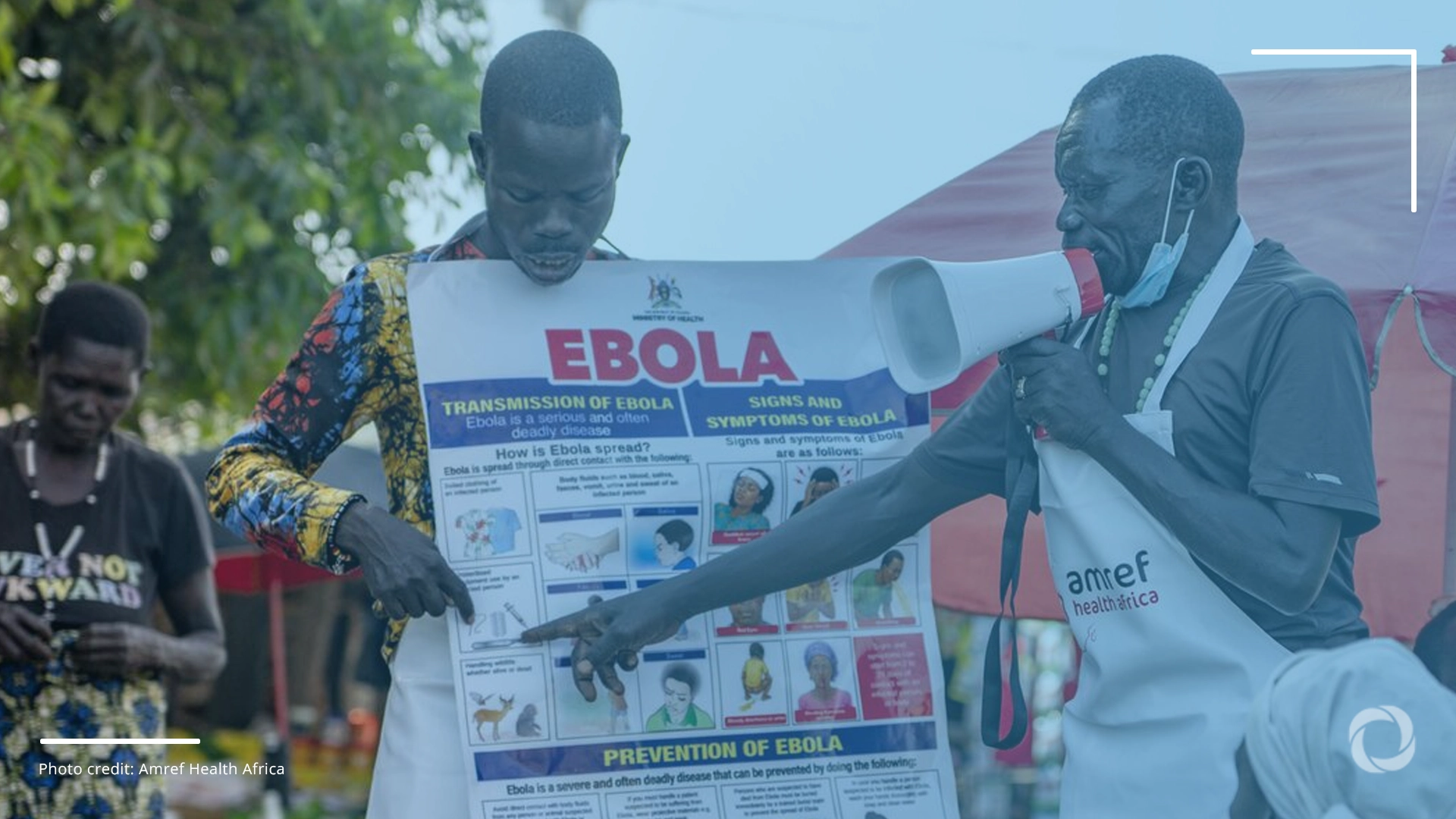
Cultural dimensions compound this. Safe burial protocols require Ebola victims to be handled by trained teams without the traditional rituals families regard as non-negotiable. When relatives watch strangers in protective suits remove a body, it does not communicate care. It communicates concealment.
The consequences are now measurable. Patients are avoiding and fleeing health facilities, and families are concealing sick relatives. In some areas, burial teams and aid workers have been attacked and forced to abandon bodies mid-collection.
Contact tracing systems are struggling to function, with only 62% of known contacts traced, well below the World Health Organization’s 90% target. ActionAid reports that one in three people in the outbreak’s epicentre does not believe Ebola is real. Yet since the outbreak was declared on 15 May, 676 confirmed cases and 136 deaths have been recorded, with officials saying the numbers could be higher.
The digital accelerant: from market gossip to social media warfare
What has changed in 2026 is not the nature of misinformation but the infrastructure through which it travels.
In previous outbreaks, rumours moved through markets, churches, and family networks at the speed of foot traffic. Today in DRC, they move through social media platforms in minutes, propelled by algorithms designed to maximize engagement rather than accuracy. Research consistently shows that false information spreads up to six times faster online than accurate information.
The deeper problem is that platforms do not merely transmit misinformation; they amplify the underlying grievances that make it credible. This vulnerability is compounded by the fact that high levels of institutional mistrust drive individuals to reject standardized messaging in favor of alternatives. Therefore, health information from the WHO does not simply compete with a rumour. It competes with an entire ecosystem of felt and lived distrust.
WHO Director-General Tedros Adhanom Ghebreyesus has stated plainly that misinformation is almost as dangerous as the virus itself and spreads just as fast.
At precisely the moment this information crisis is intensifying, the institutions responsible for confronting it are losing capacity. The dismantling of USAID and Washington’s withdrawal from the WHO have raised serious concerns among health experts about contracting support for risk communication and community engagement.
As disinformation expert Christopher Nehring has noted, when health funding is cut, health communication budgets are among the first casualties. The result is a structural asymmetry. Misinformation networks are expanding while the systems designed to counter them are shrinking.
What actually works
Liberia’s experience during the 2014-16 epidemic remains the clearest proof that this arc can bend. Early response efforts collapsed because communities felt excluded from decision-making. When authorities shifted to community-led approaches, empowering local leaders, religious figures, and survivors to shape the narratives rather than receive them, the dynamic changed.
The outbreak was ultimately contained not by top-down messaging but by survivors walking door to door, people whose bodies were living evidence that the disease was real and survivable. When they spoke, stigma collapsed, and compliance followed. Trust was the missing intervention.
Cameronian epidemiologist Hemes Nkwa frames the mechanism clearly: rumours fill a gap, giving people a way to make sense of fear and reclaim a sense of control in situations where they have none.
The solution is therefore not better messaging. It is rebuilding the condition that makes any message receivable: trust. That means training community ambassadors who communicate in local languages, making traditional healers and survivors genuine partners rather than targets of outreach.
An imbalance the virus exploits
The Covid-19 pandemic demonstrated that misinformation is now a permanent feature of global health emergencies, not an exceptional one. Yet preparedness systems remain overwhelmingly focused on vaccines, diagnostics, and treatment infrastructure. Risk communication and community engagement and trust are still treated as secondary concerns, the soft work and the work that gets cut first when budgets tighten.
Eastern Congo in 2026 exposes the cost of that hierarchy. A treatment centre cannot help patients who believe it is a killing chamber. A contact-tracing system cannot function when communities hide the sick. A vaccine, had one existed for the Bundibugyo strain, cannot succeed if people believe the disease is a fabrication. Every biomedical tool the response deploys is rendered less effective by a population that cannot be reached, tracked, or persuaded to come forward.
Trust is not the only constraint on the Ebola response. Conflict, displacement, poverty, and fragile healthcare infrastructure all limit what health authorities can achieve. But unlike many of these structural challenges, misinformation directly undermines every intervention designed to overcome them, making trust a prerequisite for the success of the response.
The world has invested heavily in fighting Ebola as a biological threat. It has invested far less in confronting Ebola as a crisis of trust. Until that imbalance is corrected, with sustained funding and genuine community partnership, the virus will continue to find its most dangerous ally not in its own lethality but in the information environment surrounding it.