
Add us as your preferred source on Google to see more of our content in Search.
 Add to Preferred Sources
In the Democratic Republic of the Congo (DRC), winning the race against Ebola depends first and foremost on earning the community’s trust, humanitarians said on Tuesday, according to United Nations News. Speaking to reporters in Geneva, Tarik Jašarević, spokesperson for the World Health Organization (WHO), confirmed that considerable progress has been made on testing capacities since the outbreak was declared on 15 May. Testing for the Bundibugyo virus responsible for the outbreak is now available in six locations across the country. These include Bunia and Mongbwalu in Ituri Province, Bukavu and Lwiro in South Kivu, Goma in North Kivu, and the capital Kinshasa. Yet officials warn that gaps in detection and deep-rooted community mistrust continue to threaten containment efforts.
Detection gaps and regional spread
Four additional laboratories have been activated in Uganda, where cases were imported from DRC, with 19 confirmed cases and one probable case to date.
“We have blind spots where we get a low number of alerts,” Mr. Jašarević said. “There may be transmission chains that are not being detected. There are still people who risk infecting other people, and we need to get them.”
The remarks underscore the difficulty of tracing infections in a vast and conflict-affected region.
See also: The second epidemic: how misinformation is undermining the Ebola response
Scepticism complicates the response
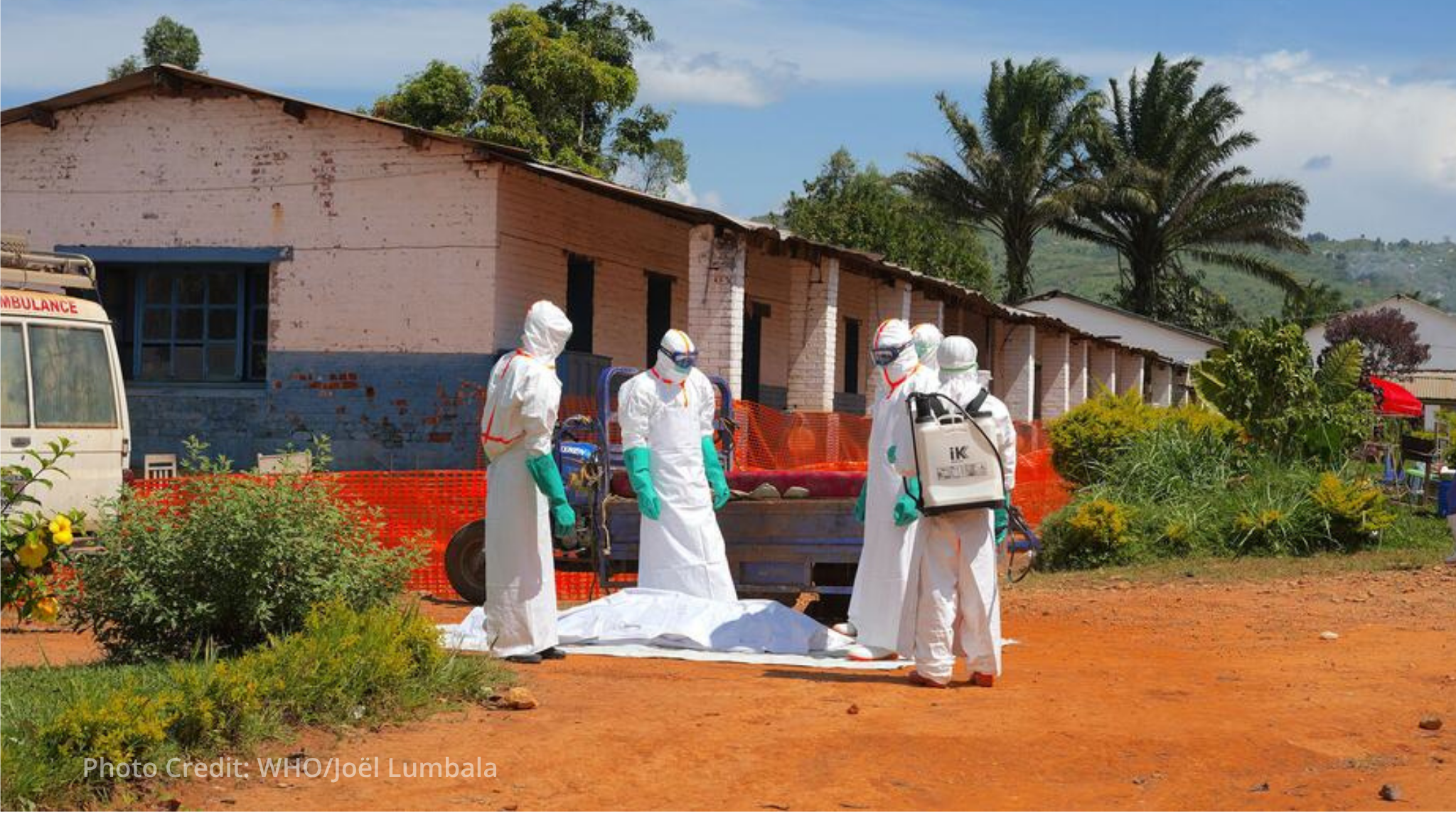
Bruno Michon, Operations Manager for the Ebola outbreak at the International Federation of the Red Cross and Red Crescent Societies (IFRC), said investment is needed not only in the medical response, but also in building trust. Speaking from Bunia, the epicentre of the crisis, he noted that “some people still question whether the disease is real” and believe the outbreak may have been “invented” to attract foreign aid. Others “see safe and dignified burials as an attack [on] culture and tradition, rather than a measure to protect families and communities.” In the early days of the outbreak, two treatment centres were set on fire in the region, with WHO linking the attacks to misinformation campaigns on social media. The area has also seen the displacement of more than 100,000 people amid intense fighting.
A respectful, community-led approach
Mr. Michon explained that trust is earned through measures designed to appease community concerns.
“Following community feedback, we started using body bags with a window so that the family can see the face of the deceased,” he said. “When communities told us they feared that chlorine was used to poison them, we did not argue. We demonstrated how disinfectants are prepared.” He concluded: “Trust is not a secondary activity in the Ebola response. Trust is central.”
Violence continues to hamper containment
As of 14 June, Congolese health authorities reported 808 Ebola cases across Ituri, North Kivu and South Kivu provinces, the UN humanitarian affairs office OCHA said on Monday. OCHA warned that escalating violence in the eastern DRC continues to take a heavy toll on civilians, constrain aid operations and complicate containment efforts. “Ongoing clashes and resulting displacement risk are increasing the risk of transmission of Ebola, particularly as people move to and from affected provinces,” the agency said. Despite the challenges, OCHA and humanitarian partners continue to support Congolese authorities through:
- Patient care
- Strengthened surveillance
- Prevention measures
- Risk communication
- Safe and dignified burials