

Add us as your preferred source on Google to see more of our content in Search.
 Add to Preferred Sources
Key reasons to read this article:
- Discover if governments can be held legally accountable for failing to tackle climate change.
- Learn why 141 countries have backed the climate opinion of the International Court of Justice while major emitters have opposed it.
- Find out if this landmark opinion could influence future climate lawsuits and climate finance.
- What happens next?
A large majority of United Nations member states have thrown their weight behind a landmark legal opinion that affirms governments have a legal obligation under international law to protect the climate system and may face consequences if they fail to do so.
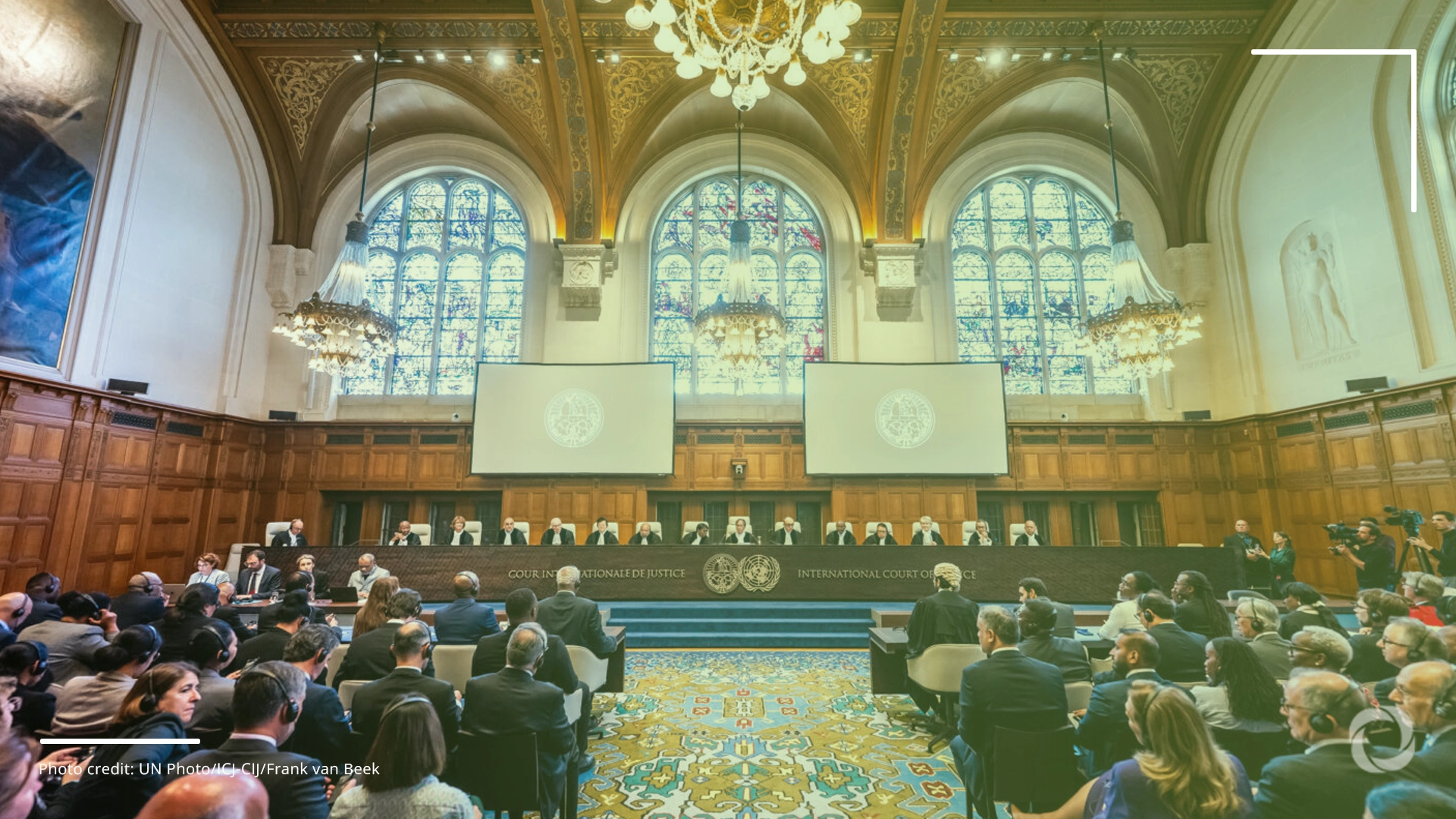
Last month, the UN General Assembly adopted a resolution welcoming an advisory opinion issued by the International Court of Justice (ICJ), the world’s highest court. The resolution was backed by 141 countries, while eight voted against it and 28 abstained.
The vote, seen as “a vital step forward”, marked a significant diplomatic victory for Vanuatu and other climate-vulnerable nations that have spent years pushing for the legal clarification of states’ responsibilities in the face of a worsening climate crisis. Climate advocates and experts have welcomed growing international support for the view that climate change is not only an environmental and political challenge but increasingly a matter of legal responsibility.
“This is a powerful affirmation of international law, climate justice, science, and the responsibility of states to protect people from the escalating climate crisis,” UN Secretary-General António Guterres commented following the vote.
What the ICJ found
The advisory opinion, delivered in July 2025 after a request initiated by Vanuatu and supported by a coalition of small island states, was the culmination of a campaign that began with Pacific Island law students seeking greater accountability for climate harm.
The court found that states’ climate-related obligations arise not only from climate treaties such as the UN Framework Convention on Climate Change, the Kyoto Protocol, and the Paris Agreement, but also from broader sources of international law, including international human rights law, environmental laws, the law of the sea, and customary international law.
Together, these legal frameworks require states to take appropriate measures to limit greenhouse gas emissions, cooperate internationally to keep global temperatures below 1.5°C, and prevent significant transboundary environmental harm. The rights at stake, including the rights to life, health, food, water, and a clean, healthy, and sustainable environment, are not merely policy aspirations, the court stated, but existing legal protections that are being threatened by climate change.
“The human right to a clean, healthy, and sustainable environment is essential for the enjoyment of other human rights,” ICJ President Judge Yuji Iwasawa explained when delivering the ruling.
Crucially, the court outlined the consequences for failure to comply. When a state’s inaction amounts to an internationally wrongful act, it may be required to cease that harmful conduct, provide guarantees against repetition, and, depending on the circumstances, pay reparations for the damage caused.
Why the UN resolution matters
The ICJ opinion is advisory and not legally binding. The General Assembly resolution itself also carries no binding force.
Yet climate law experts state the significance of the vote lies in the political legitimacy it confers. By endorsing the opinion with overwhelming support, member states have strengthened the authority of the court’s interpretation of international law and given additional weight to the arguments likely to feature in future climate negotiations, domestic court cases, and debates over climate finance.
Many of the arguments advanced by supporters of the ICJ opinion gained additional weight following the General Assembly’s endorsement of it. As Busra Seckin, a climate finance expert at the Frankfurt School of Finance and Management, put it, the ruling “reinforces the ‘polluter pays’ principle, strengthening the case for loss and damage financing and increasing pressure on international financial institutions to align concessional finance” with climate obligations.
Dr Grethel Aguilar, Director General of the International Union for Conservation of Nature, argued that the opinion fundamentally changes the accountability debate.
“Inaction or insufficient action on climate change is not simply a policy choice; it violates international law,” she said.
However, some experts have cautioned against overstating the immediate impact. Jason DuPont, a Foreign Service Officer, argued that while the ruling may reinforce accountability among cooperative states, “essentially keeping honest actors honest”, it is unlikely to compel action by governments that lack political will or resources, and some may even view it as an external attempt to hinder development.
The abstentions that matter most
The pattern of the vote also reveals the limits of the emerging consensus. India and Nigeria, both highly vulnerable to climate impacts and influential voices in the Global South, abstained. Their position reflects a long-standing tension in climate diplomacy. Researchers have noted that many developing countries support stronger climate action while remaining concerned that more expansive climate obligations could constrain development pathways, particularly when economies still rely on fossil fuels, or weaken longstanding principles that place greater responsibility on wealthier nations because of their historical emissions.
More striking was the opposition from the United States, Russia, and Saudi Arabia, all major emitters or major fossil fuel producers, whose participation will be essential to any meaningful reduction in global emissions.
Their resistance highlights one of the central challenges facing efforts to strengthen climate accountability. While the ICJ has clarified the legal obligations of states, actually translating those principles into emission reductions will depend on whether governments are willing to act on them. As ICJ Judge Georg Nolte observed in a declaration accompanying the opinion, addressing climate change ultimately requires the “political will and commitment of states”, with international cooperation remaining central and litigation playing a complementary role.
This dynamic sets the stage for COP31 in Antalya in November, when Turkey, an abstainer on the UNGA vote, will preside over the negotiations that are likely to be shaped by familiar divisions over climate finance, responsibility, and the pace of the global energy transition.
The beginning, not the end
The General Assembly resolution imposes no immediate obligations and guarantees no new climate finance. What it does do is set a process in motion. By requesting that the UN Secretary-General report on the options for reinforcing the opinion’s implementation by 2027, member states have signaled that they see the ICJ ruling not as a conclusion but as a foundation: the beginning of an accountability framework that has yet to be built.
The world’s highest court has clarified what international law requires, and a large majority of states have endorsed that interpretation. But some of the governments that are the most vital to reducing global emissions remain unconvinced. Whether legal momentum can overcome political resistance is the question that COP31, and every climate negotiation that follows, will now have to answer.