
Add us as your preferred source on Google to see more of our content in Search.
 Add to Preferred Sources
The African Development Bank (AfDB) has invested $843 million across 96 projects in The Gambia since 1974, transforming agriculture, infrastructure, and domestic revenue systems, according to a press release by the African Development Bank. The five-decade partnership has channeled financing into rice production programmes, the Senegambia Bridge, digital customs upgrades, and rural water systems. In December 2025, Gambian Finance Minister Seedy Keita pledged support for the seventeenth replenishment of the African Development Fund. The country’s contribution signals a government that has received concessional support for fifty years choosing to invest in the pool that funds others. Together, these investments target food security, connectivity, and self-reliant public finance.
Rice is the staple food in The Gambia, with per capita consumption of around 117 kilograms per year, more than twice the global average. Yet only around 19 percent is produced domestically. Structural constraints include dependence on rainfed agriculture, limited access to improved seeds, inadequate post-harvest infrastructure, and thin farmer-market links. The country imports most of what its people eat, despite having a river and millions of hectares of potentially irrigable lowland. Early Bank investments focused on roads, water, and basic agricultural infrastructure before evolving toward governance, value chains, and climate resilience.
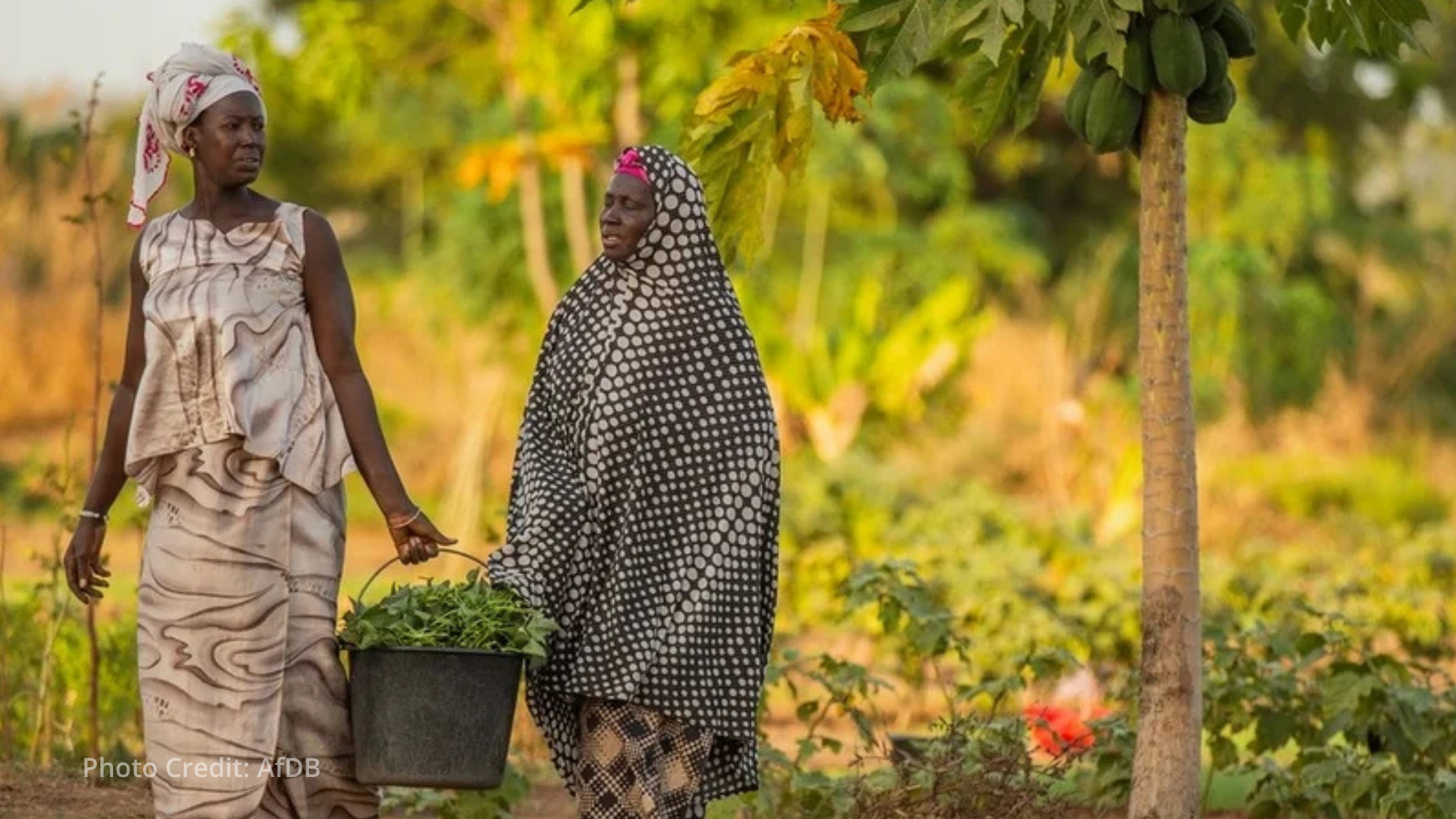
Under the Project 2 of the Programme to Strengthen Resilience to Food and Nutrition Insecurity in the Sahel (P2-P2RS), a $17.75 million initiative co-funded by the African Development Fund, farmers across 19 districts in the Lower River, Central River, and West Coast Regions are gaining access to improved seeds, mechanised ploughing, solar-powered irrigation, and climate-smart inputs. The programme serves 67,200 direct and indirect beneficiaries. Alongside it, the Regional West Africa Resilient Rice Value Chains Development Programme (REWARD), launched nationally in July 2025, targets 8,000 households and 120,000 indirect beneficiaries. The Global Agriculture and Food Security Program (GAFSP) links smallholder output to school meals for 39,397 children. Together, they represent the most concentrated agricultural investment the country has seen.
The Senegambia Bridge, completed in stages between 2019 and June 2025, ended a crossing bottleneck along the Trans-Gambia corridor. More than 15,000 vehicles now cross daily, up from 532 before the bridge opened. A digital customs system upgraded with Bank support helped lift customs revenue by 23 percent in 2023, and by 2024 it exceeded its target by more than 600 percent. That revenue funded the expansion of the National Social Registry to 258,196 households and inputs for more than 20,000 smallholder farmers.
“The rice I harvested is used to feed my family, provides income, and also gives me hope for the future,” said Jonyeh Dampha, a rice farmer in Jenoi village.
In Jarra Madina, the Climate Smart Rural WASH Development Project brought solar-powered clean water to a community where women had walked five kilometres before dawn to fetch water. The agricultural, connectivity, and revenue investments reinforce each other, placing farmers in a fundamentally different position. Every significant investment has addressed how a small, trade-dependent economy can build a productive base for its people. The tools have changed as knowledge has improved, but the direction has remained constant. Five decades of sustained investment, directed at the right problems, are now measured in harvests, meals, and time returned to households.