
Placebo or cure? Assessing the Net Zero reality of carbon credits with Paolo Vaggi | DevelopmentAid Dialogues

Add us as your preferred source on Google to see more of our content in Search.
 Add to Preferred Sources
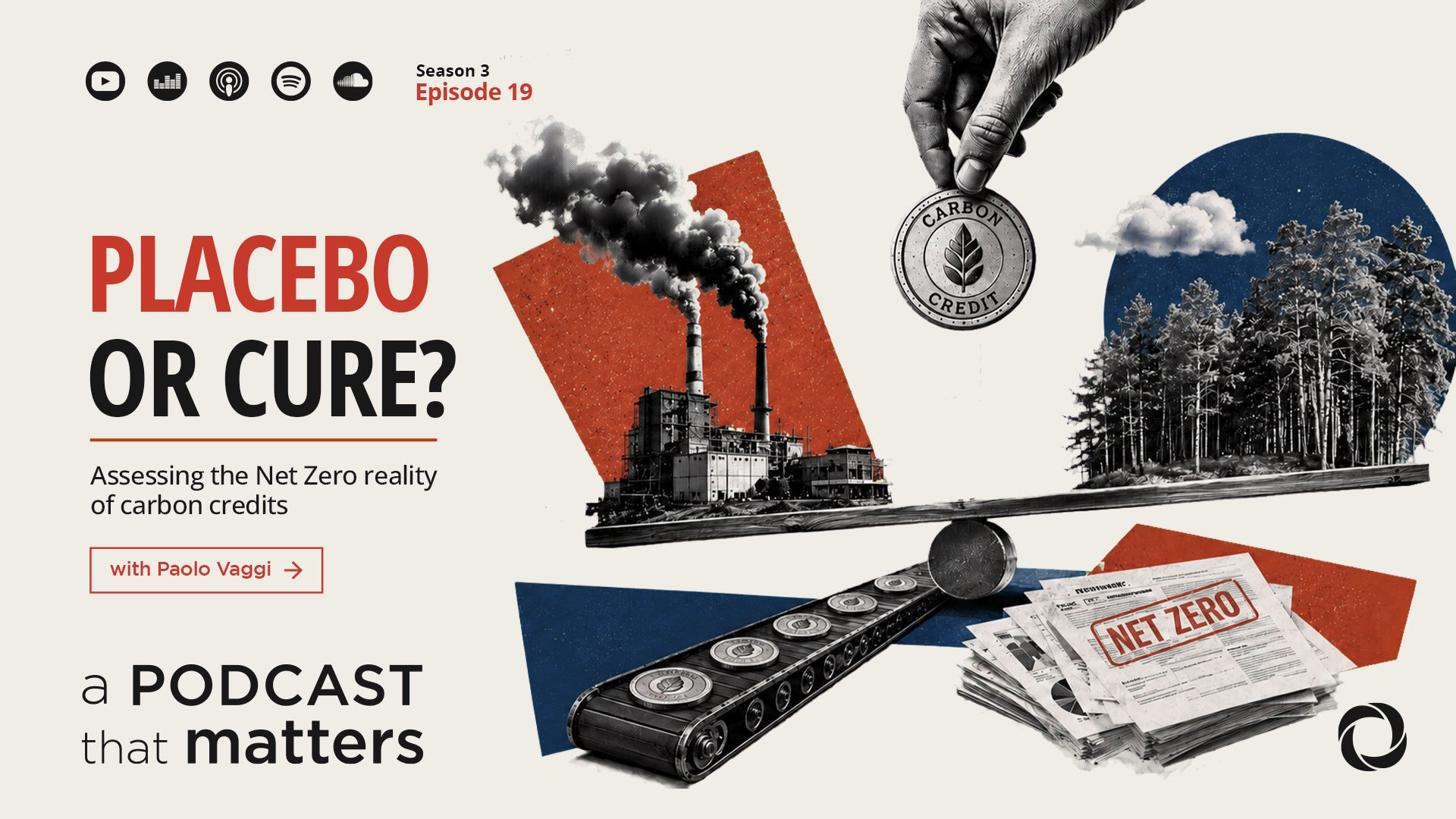
As carbon credits swell into a multi-billion-dollar global market, a persistent illusion keeps fueling it: that buying a credit erases the pollution a company – or a traveler – leaves behind. In this episode of the DevelopmentAid Dialogues podcast, host Hisham Allam speaks with Paolo Vaggi, Founder and Executive Advisor of BAIA Advisory, about what carbon credits can deliver – and the greenwashing that follows when they are asked to do more.
With over 15 years of international development experience across Southeast Asia and a base in Indonesia, one of the world’s richest reserves of natural carbon, Vaggi brings a practitioner’s view of a market caught between promise and hype.
Download the transcript of this episode.
The confusion, he says, starts with the very first purchase.
“Your flight still happens, so the pollution still happens. Climate change is not better off for it,” Vaggi explained. “A better way to think about it is that by purchasing a carbon credit, you have paid for the equivalent reduction or removal somewhere else.”
Whether that payment means anything depends on quality. Good credits, he said, play a positive role in the overall equation – “if not, they’re just nice pieces of paper.”
At the heart of his argument is a distinction he believes the market keeps missing.
A company that cuts its own emissions and then finances mangrove restoration or peatland protection creates real climate value, he explained. One that buys credits to keep polluting is “not a real benefit for the planet.”
So how does a buyer tell a credible credit from a worthless one? Vaggi offered three tests: is the reduction additional, is it durable, and is it unique?
“The credit cannot be sold twice,” he stressed, noting that registries and retirement mechanisms “have been improving the most in the market in the last 10 or even just five years, which is very encouraging.”
But for developing countries rich in forests, mangroves, and peatlands, a harder question looms: who captures the value?
“Oftentimes value may end up outside of the country that originated it,” he warned.
His verdict pairs hope with caution: the market’s turn toward integrity and transparency is real – but carbon credits “cannot replace the decarbonization processes.”
 Listen to the full episode with Paolo Vaggi on DevelopmentAid Dialogues.