
Add us as your preferred source on Google to see more of our content in Search.
 Add to Preferred Sources
The United Nations Convention to Combat Desertification (UNCCD) opened its COP17 conference on Monday in Ulaanbaatar, Mongolia, bringing together parties to strengthen drought resilience, sustainable agriculture and soil protection, according to United Nations (UN) on 17 August 2026. The two-week gathering seeks to address the accelerating degradation of land driven by rising temperatures, droughts and deforestation. UN Executive Yasmine Fouad framed the challenge in stark terms ahead of the meeting. Mongolia, a landlocked nation dominated by the Gobi Desert and semi-arid grassland, is hosting the talks. The conference aims to translate previous commitments into measurable outcomes.
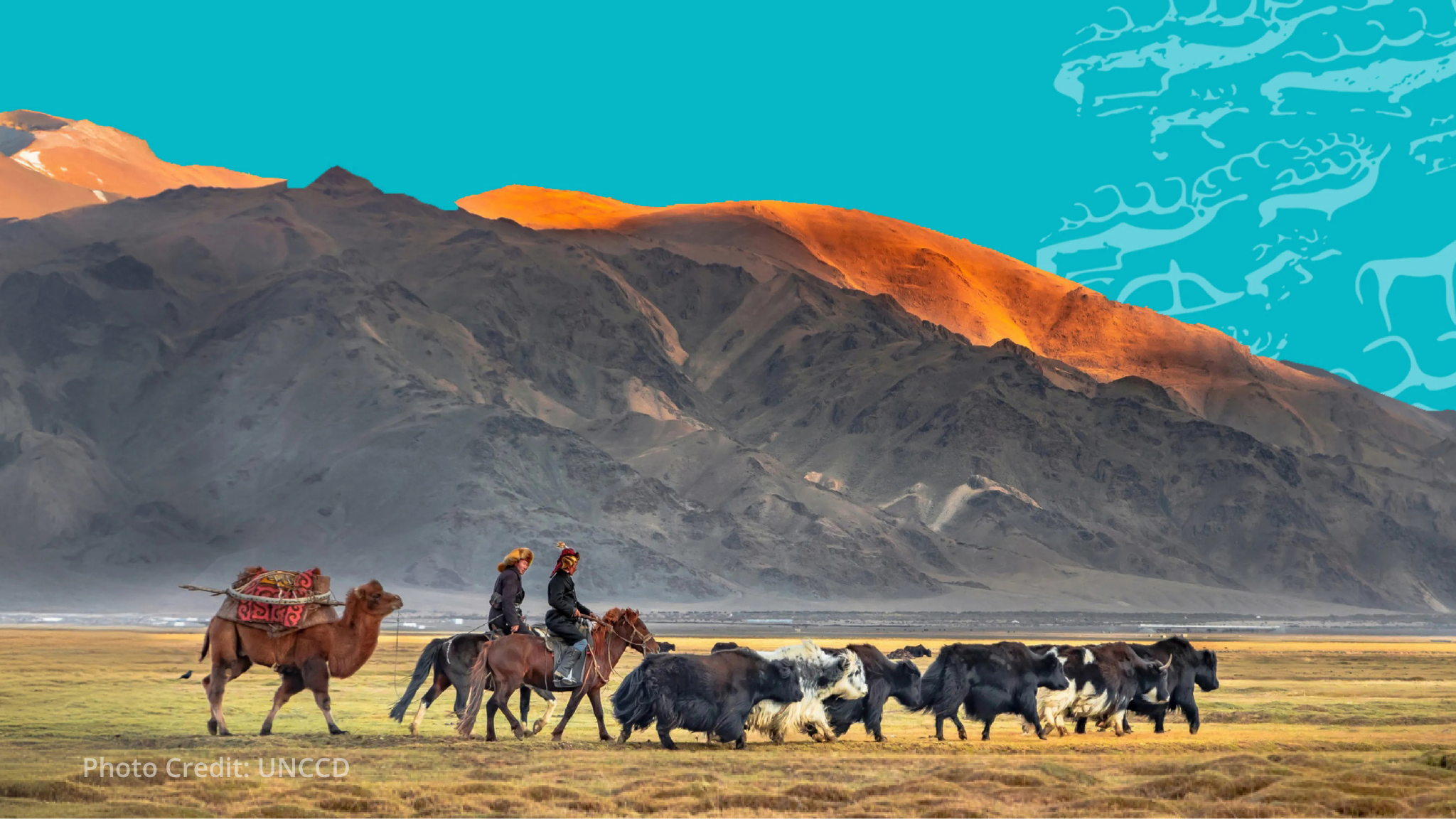
Desertification, the phenomenon whereby fertile land becomes unproductive and desert-like, is spreading across the globe. In Mongolia, around one third of the population depends on pastoralism, yet nearly 77 per cent of the country’s land is degraded. In 2023 and 2024, Mongolian farmers lost more than seven million livestock due to severe summer droughts followed by extremely cold dzud winters. The country lies sandwiched between Russia and China. COP17 builds on progress made at COP16 in Riyadh.
Globally, 40 per cent of the world’s land is currently facing land degradation and drought, threatening the livelihoods of 3.2 billion people. Rangelands, which provide vital food for nearly 70 per cent of the world’s livestock feed, are a particularly serious source of concern. Two billion people rely on them for food, and they are facing the brunt of land degradation and drought. Degradation and drought are currently costing the global economy nearly $900 billion every year. Droughts, which have increased by almost one-third since 2000, are estimated to cause $300 billion in losses yearly.
“Land is our most vital infrastructure — underpinning food security, water, livelihoods and stability,” stressed Ms. Fouad.
She warned that these issues “are no longer distant environmental concerns” and are already affecting food production, water supplies and economic resilience. Mongolia’s Minister for Foreign Affairs Battsetseg Batmunkh underscored that “the health of our land has direct consequences for people’s lives.” Prime Minister Nyam-Osoryn Uchral called for “a shift from talk to action, from targets to implementation, and from commitments to measurable results.” Discussions include early warning systems, vulnerability assessments and international cooperation.
A central priority of COP17 is mobilizing greater private sector investment to close a $278 billion finance gap. An estimated $355 billion is needed every year for land restoration and resilience-building, yet current investment stands at only $77 billion. The private sector currently provides only around six per cent of global land restoration and drought resilience funding. Organizers are seeking stronger collaboration through initiatives such as the Business4Land Forum. COP17 Chair Sandag-Ochir Tsend said he was confident the conference “will mark an important step towards stronger international cooperation and accelerated global action.”