
Add us as your preferred source on Google to see more of our content in Search.
 Add to Preferred Sources
At a United Nations (UN) desertification conference held this week in Ulaanbaatar, Mongolia, experts examined how the expansion of renewable energy can coexist with land protection and restoration efforts, according to a press release published by UN News on 19 August 2026. During a side-event, specialists spotlighted examples from around the world showing how clean energy infrastructure could double as a tool for repairing land. Cases included degraded mining land in South Africa repurposed for renewables, solar panels combined with vegetation and sand-control measures in China’s deserts, and solar irrigation supporting farmers in India. The gathering focused on aligning the clean energy transition with ecological restoration goals. The central question raised was whether renewables can leave landscapes, ecosystems, and people better off.
The transition away from fossil fuels will require significantly more solar, wind, and other renewable-energy infrastructure. The 500,000 hectares currently used for renewable-energy projects are expected to reach three million hectares by 2032. Julian Blanc, head of the Biodiversity and Land Branch at the UN Environment Programme (UNEP), described the shift as potentially “one of history’s largest land use transformations.” He stressed that renewable expansion is inevitable. The remaining challenge is how it unfolds across landscapes.
Experts emphasized that context determines whether renewables restore or harm land. Muralee Thummarukudy, Director of the UN Convention to Combat Desertification’s G20 Global Land Initiative, said careful siting is essential. “When you place it at the right location, solar is the solution, not only for energy but also for ecological restoration, but in another situation, that may not be the case,” he said. Solar development can require vegetation clearing, disturb wildlife, or alter water flows, sometimes increasing flood risk. In Malawi’s Shire River Basin, UNEP found that several hydropower plants could collectively pressure fisheries, biodiversity, and downstream communities.
Blanc argued that project planning should be reordered, examining the wider landscape’s biodiversity, water, communities, and exposure to floods or drought before selecting sites. Local knowledge must inform planning, since communities often understand risks that technical assessments miss. Gayathri Nair, a programme officer at the International Renewable Energy Agency (IRENA), pointed to a solar irrigation programme in India assisting farmers with small landholdings. A digital platform helped identify suitable land, while a local utility set up digital payments for surplus electricity. The pumps powered irrigation while providing farmers additional income.
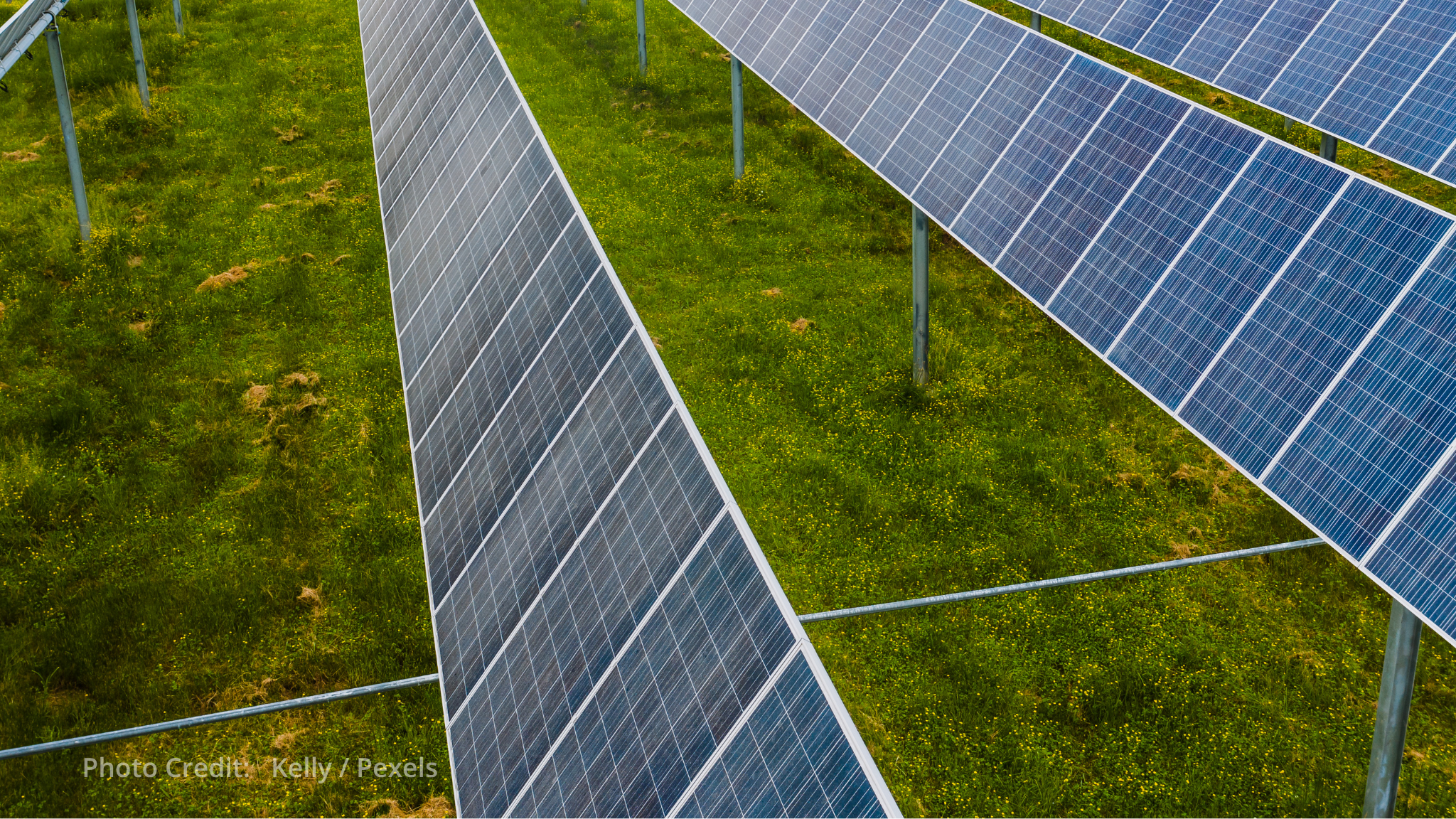
In China’s deserts, technology is already helping restore land through solar projects. He Jijiang, a researcher at Tsinghua University, said most desert photovoltaic bases have achieved sustainable ecological improvement compared with the pristine desert environment. In the Tengger Deserts, panels reduce evaporation and wind near the ground while shrubs hold drifting sand in place. UNEP will soon issue a global call for case studies on renewable-energy projects working with land, water, biodiversity, and communities. UN Secretary-General António Guterres has said the world must both “break our dependence on fossil fuels” and “protect and restore nature at scale.”