
Add us as your preferred source on Google to see more of our content in Search.
 Add to Preferred Sources
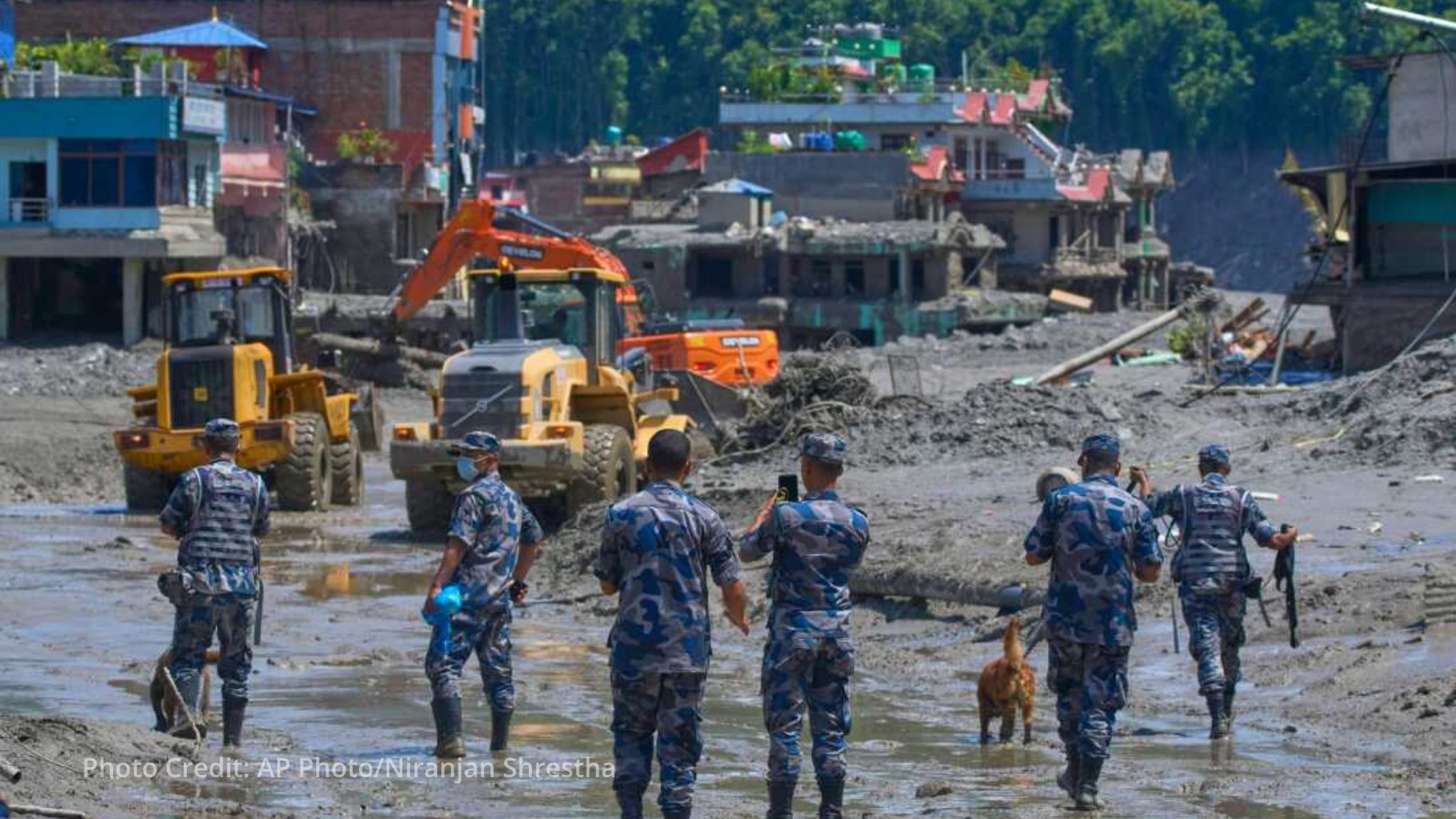
Hundreds of people are still missing in Nepal and China after a floodwater surge slammed into towns and villages on Wednesday, with aid teams working to reach communities cut off by the disaster, according to a press release by United Nations (UN) on 27 August 2026. UN emergency relief chief Tom Fletcher released an initial $2 million from the United Nations Global Emergency Fund (CERF) “to save lives with emergency medical care, shelter, water.” The World Health Organization (WHO) has dispatched medicines, supplies and tents in support of the response. UN Secretary-General António Guterres pledged swift support and the mobilization of humanitarian teams. Immediate humanitarian needs are huge across the worst-hit districts of Rasuwa, Nuwakot and Dhading.
A collapsed glacier high up in the steep-sided valleys of the Himalayas has been cited as a possible cause of the sudden flash-flooding and mudslides. The disaster has destroyed entire communities and washed away bridges and roads. Rasuwa district, some 80 kilometres north of Kathmandu in northern Nepal, was hit particularly hard, including the towns of Timure, Rasuwagadhi and Syabrubesi, a popular trekking destination near the Langtang valley. The same area was struck by a 7.8 magnitude earthquake in April 2015, which killed more than 8,800 people. Last October, torrential rains caused fast-moving floods and landslides across eastern and central Nepal, affecting more than 30,000 people.
At least 17,000 children have been impacted by the flash floods that tore through Nepal’s Rasuwa, Nuwakot and Dhading districts, UNICEF said on Thursday. Roads, bridges, hydropower facilities, water systems and telecommunications networks have been badly damaged, leaving affected areas largely inaccessible and hampering the delivery of lifesaving aid. Families face loss, displacement and disruption to essential services. In China, around 560 people remain missing, according to the authorities. The UN country office on Wednesday reported damage and significant numbers of casualties and destruction in the Tibet autonomous region of China.
“Children across Rasuwa and Dhading saw their lives being literally washed away in front of their eyes in a very short span of time, with homes, classrooms, and medical facilities damaged,” said Alice Akunga, UNICEF Representative to Nepal.
She warned that surviving children now face heightened risks of disease, malnutrition, violence and exploitation. WHO has dispatched an interagency emergency health kit containing medicines and supplies sufficient to provide basic health services for up to 10,000 people. The agency has also provided six multipurpose tents to help sustain health service delivery in affected communities. The UN World Food Programme (WFP) and UNICEF planned to start deploying staff and trucks carrying relief supplies on Thursday.
Efforts continued to rapidly assess the scale of the disaster, drawing on secure satellite imagery provided through UN-SPIDER, managed by the UN Office for Outer Space Affairs (UNOOSA). UNDRR, the lead UN agency for the coordination of disaster risk reduction, projects that the world will experience 560 medium to large-scale disasters annually by 2030. “Global disasters are projected to increase by 40 per cent between 2015 and 2030, driven by climate change and systemic underestimations of risk,” the agency said. The annual cost of such disasters is $2.29 trillion and rising when indirect and ecosystem impacts are factored in, nearly 10 times the annual direct losses reported in official figures. UN agencies stand ready to do more in support of the government-led response.