
Add us as your preferred source on Google to see more of our content in Search.
 Add to Preferred Sources
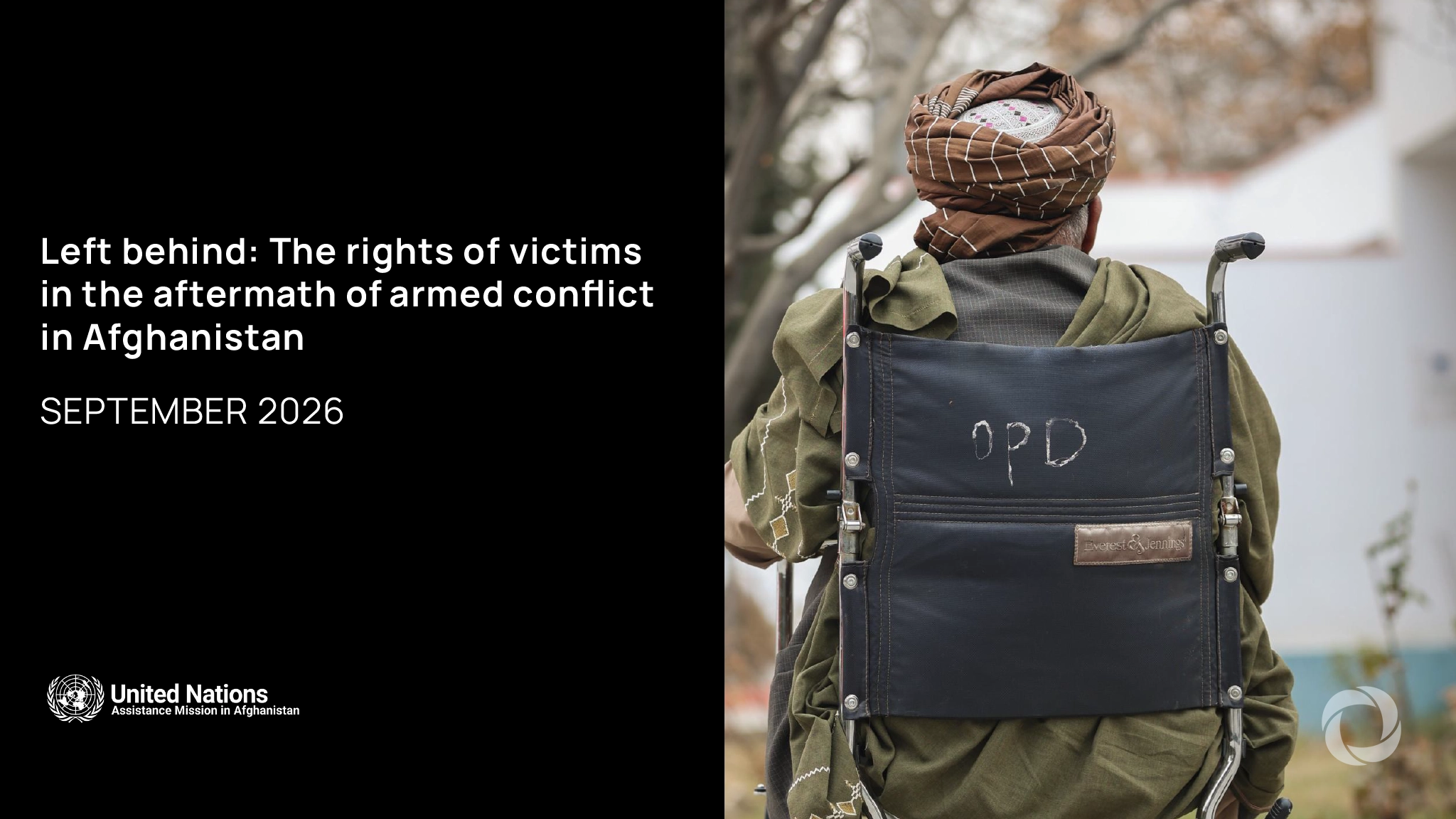
Victims of Afghanistan’s decades-long armed conflict continue to suffer profound physical, psychological, social and economic consequences, often without access to justice, reparation or formal acknowledgement of the harm done to them, according to a new report issued on 1 September 2026 by the United Nations Assistance Mission in Afghanistan (UNAMA). The report draws on interviews with nearly 200 victims of armed conflict and their relatives. It covers the period from 2009 up to the Taliban takeover in 2021. During those years, UNAMA documented more than 40,000 civilians killed and over 77,000 wounded. The findings point to enduring trauma affecting Afghan society across generations.
Afghanistan has endured more than 40 years of continuous warfare, causing widespread death, displacement and destruction. The 2009–2021 period examined by UNAMA was marked by fighting between coalition and coalition-backed Government forces, the Taliban and other militants. Civilians bore the brunt of the violence throughout this time. The report focuses specifically on those directly harmed by the conflict. It gathers their testimonies to document the lasting impact of the war.
Enduring physical and psychological harm
Some 95 percent of people interviewed experienced emotional or psychological harm, reporting depression, anxiety, memory loss, flashbacks and other trauma-related symptoms. Nearly 60 percent also experienced physical harm, with injuries continuing to affect them for months, years or even decades after the event. Many victims live with chronic pain and disabilities they struggle to address due to financial barriers or lack of available healthcare in Afghanistan. In some cases, injuries prevented victims from continuing their education and work, with serious economic consequences for them and their families. Relatives have also had to give up work or school to provide care.
No justice for the victims
More than half of those interviewed, 55 percent, had never attempted to seek compensation or any form of redress, often because they believe their concerns would not be taken seriously or because they feared retaliation. Among those who did try, 64 percent reported that their efforts were unsuccessful, citing bureaucratic obstacles, lack of response, perceived discrimination and limited transparency. Women widowed by the conflict face particular economic insecurity, as restrictions imposed by Afghanistan’s de facto authorities limit their access to employment. When asked about their needs, victims identified financial compensation (81 percent), access to justice (48 percent) and personal security guarantees (47 percent).
“The interviews we conducted highlight the depth and breadth of collective trauma that continues within Afghan society,” said Georgette Gagnon, a UNAMA official.
Gagnon stressed that “key to addressing the needs of victims is an acknowledgement of the harm done and a genuine commitment to putting victims’ voices and rights at the center.” The report underscores that decades of conflict have left survivors without formal recognition of the harm they suffered. It highlights the barriers victims face in seeking justice and reparation. The findings call attention to the ongoing social and economic burden carried by affected families. UNAMA’s documentation frames the victims’ experiences as central to any meaningful response to Afghanistan’s long war.