
Add us as your preferred source on Google to see more of our content in Search.
 Add to Preferred Sources
Tackling air pollution and climate change together can save millions of lives, cut global warming and generate roughly $15 in economic benefits for every $1 spent, according to a new report released on 7 September 2026 by the UN Environment Programme (UNEP) and the Climate and Clean Air Coalition (CCAC), as reported by UN News. The assessment outlines 25 proven measures and policy reforms spanning renewable energy, electric vehicles and clean cooking fuels. It was launched on the International Day of Clean Air for blue skies, observed annually on 7 September. The findings show that coordinated action can improve public health, strengthen economies and accelerate climate goals. Combined efforts deliver higher returns than addressing the two crises separately.
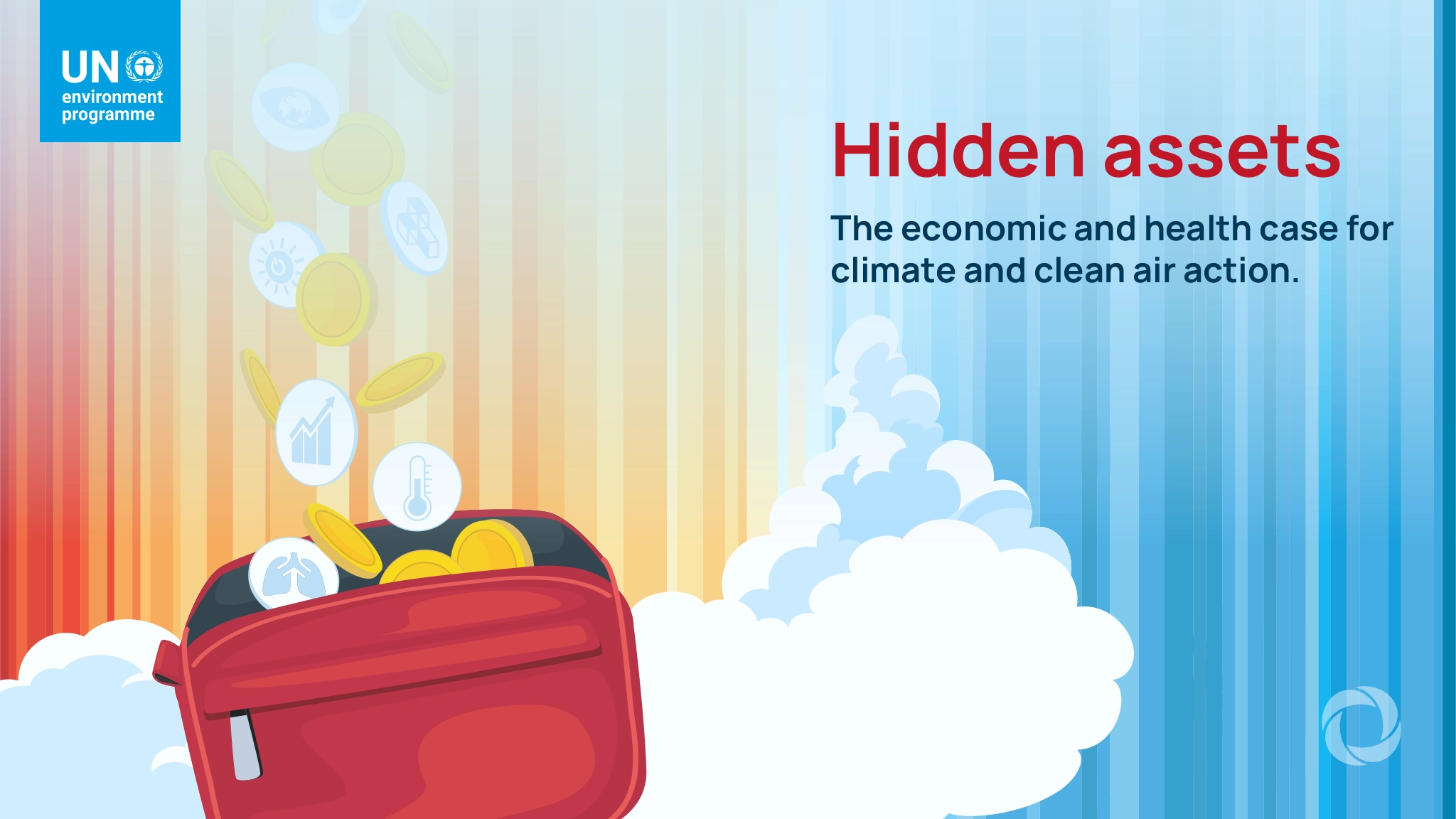
Titled Hidden assets: The economic and health case for climate and clean air action, the report notes that many of the same sectors and pollutants drive both climate change and air pollution. Annual benefits from implementing the 25 measures would equal 2.8 percent of global GDP in 2035, 4.5 percent in 2050 and 11.4 percent in 2100. By comparison, explicit fossil fuel subsidies represented 2.18 percent of global GDP in 2022, while healthcare spending reached 9.3 percent in 2023. Even excluding non-market welfare gains, the measures still return about $4 for every dollar invested. UN Secretary-General António Guterres said accelerating the transition away from fossil fuels is one of the fastest ways to clean the air while tackling the climate crisis.
The health stakes are severe. In 2025, exposure to human-caused outdoor air pollution, including PM2.5 and ozone, was linked to 6.4 million premature deaths worldwide. Household air pollution was linked to a further two million premature deaths, including around 300,000 children. Outdoor air pollution also contributed to 5.5 million new cases of childhood asthma, two million new cases of dementia and millions of cases of heart attack, pulmonary disease, diabetes, stroke and lung cancer. By 2050, full implementation could prevent 144 million premature deaths, including 96 million from ambient air pollution alone.
“For too long, we have treated climate action as a cost to be managed and air pollution as the unfortunate outcome of development,” said Inger Andersen, Executive Director of UNEP. Elliott Harris, independent co-chair of the assessment, said the benefit-cost ratio would attract capital instantly in almost any other sector. “Every year of delay costs the world more than $1.5 trillion in benefits we will not get back,” he said.
The measures span six sectors: energy and fossil fuel systems, industry, transport, agriculture and food systems, residential cooking and heating, and waste management. Many actions would also curb super pollutants including methane, black carbon and hydrofluorocarbons.
Immediate implementation would halve global carbon dioxide emissions by 2050, cut methane emissions by 60 percent and reduce major air pollutants by around 70 percent. The measures would avoid approximately 0.34°C of global warming by 2050 and 1.4°C by 2100. The report identifies fragmented decision-making, limited enforcement capacity and weak government coordination as major barriers that could delay full action by almost eight years globally. It calls for integrated climate, air-quality, health and economic planning, stronger institutions and better alignment of public and private finance.
“When we modelled them together, the returns were larger than each could show alone,” said Simon Dietz, co-chair of the assessment.