
Add us as your preferred source on Google to see more of our content in Search.
 Add to Preferred Sources
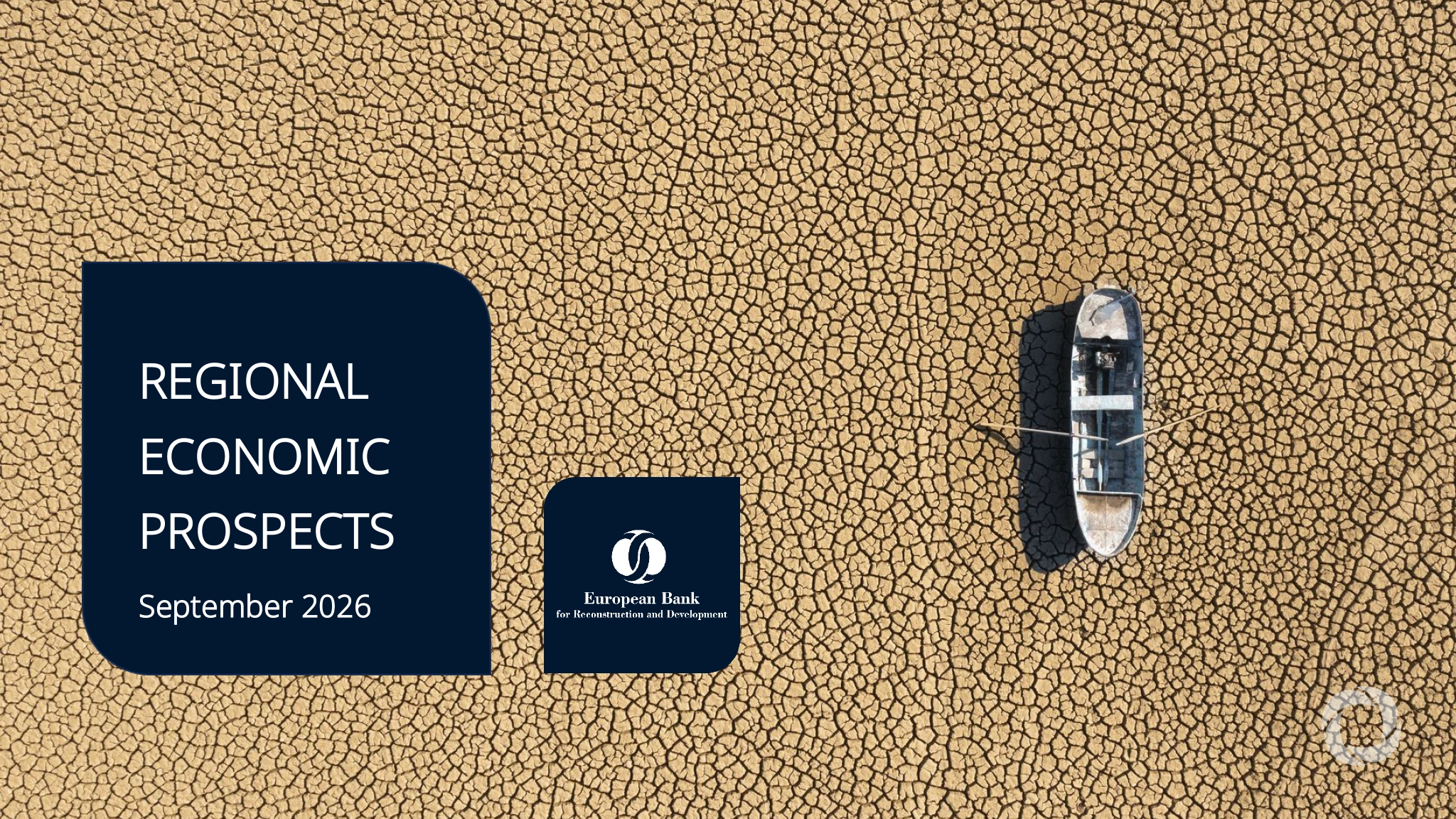
The European Bank for Reconstruction and Development (EBRD) has revised down its 2026 growth forecast for the economies where it invests to 2.5 per cent, before an expected pick-up to 4.0 per cent in 2027, according to a press release published on 24 September 2026. The 2026 projection has been cut by 0.6 percentage points relative to the June forecast, while the 2027 outlook has been raised by 0.4 percentage points. The findings appear in the Bank’s latest Regional Economic Prospects report, titled “Running dry”. It flags tighter financing conditions, persistent inflation and pressure on energy and water resources. Together, these forces are exposing vulnerabilities across the EBRD regions.
The revisions largely reflect a deep recession in Iraq, where oil exports have collapsed, followed by an anticipated rebound once shipments normalize. Excluding Iraq, this year’s forecast has been trimmed by 0.1 percentage point. Contributing factors include tighter financing conditions, drought in Europe and the Black Sea shipping blockade. Oil prices climbed from around US$ 65 a barrel before the conflict in the Middle East to more than US$ 100 by April 2026, as seaborne crude exports from the region halved. Prices remain 30 to 60 per cent above their pre-conflict level.
Gas markets have also tightened, with prices rising by more than 70 per cent since February and global seaborne liquefied natural gas exports falling by 40 per cent. Gas storage in the European Union was only 65 per cent full in August, its lowest August level in 15 years. Food supply chains have been affected as Black Sea grain shipments from Ukraine and Russia — which together account for around a quarter of global wheat exports — face severe disruption. Wheat prices have risen by more than a third and are expected to remain elevated through 2028. Drought has been particularly acute in central Europe and the Baltic states, where 38 per cent of land was at medium or high agricultural drought risk in 2026, compared with an average of 12 per cent since 2010.
Record-low water levels on the Danube and Rhine rivers have curbed industrial shipments and cut hydropower and nuclear output by around a third.
“The shocks facing economies across the EBRD regions show no sign of abating,” said Beata Javorcik, the EBRD’s Chief Economist. She added that “water scarcity, extreme weather and higher financing costs are compounding the effects of high energy costs, putting further pressure on growth.”
Average inflation in the EBRD regions has stabilized at around 6 per cent after reaching 6.7 per cent in April. Fiscal space is particularly constrained in Egypt and Kenya, where interest payments absorb more than 30 per cent of government revenue.
Regional projections vary widely across the EBRD’s footprint:
- Central Europe and the Baltic states: 2.9 per cent in 2026 and 2.5 per cent in 2027.
- South-eastern EU: 0.5 per cent in 2026 and 2.0 per cent in 2027.
- Western Balkans: 3.0 per cent in 2026 and 3.5 per cent in 2027.
- Central Asia: 5.8 per cent in 2026 and 5.3 per cent in 2027.
- Eastern Europe and the Caucasus: 2.5 per cent in 2026 and 3.1 per cent in 2027.
- Türkiye: 3.0 per cent in 2026 and 4.0 per cent in 2027.
- Southern and eastern Mediterranean: -0.7 per cent in 2026 and 7.1 per cent in 2027.
- Sub-Saharan Africa: 4.8 per cent in 2026 and 4.7 per cent in 2027.