
Nepal’s development gains face a tougher test as demographics and risks change | Exclusive interview
Add us as your preferred source on Google to see more of our content in Search.
 Add to Preferred Sources
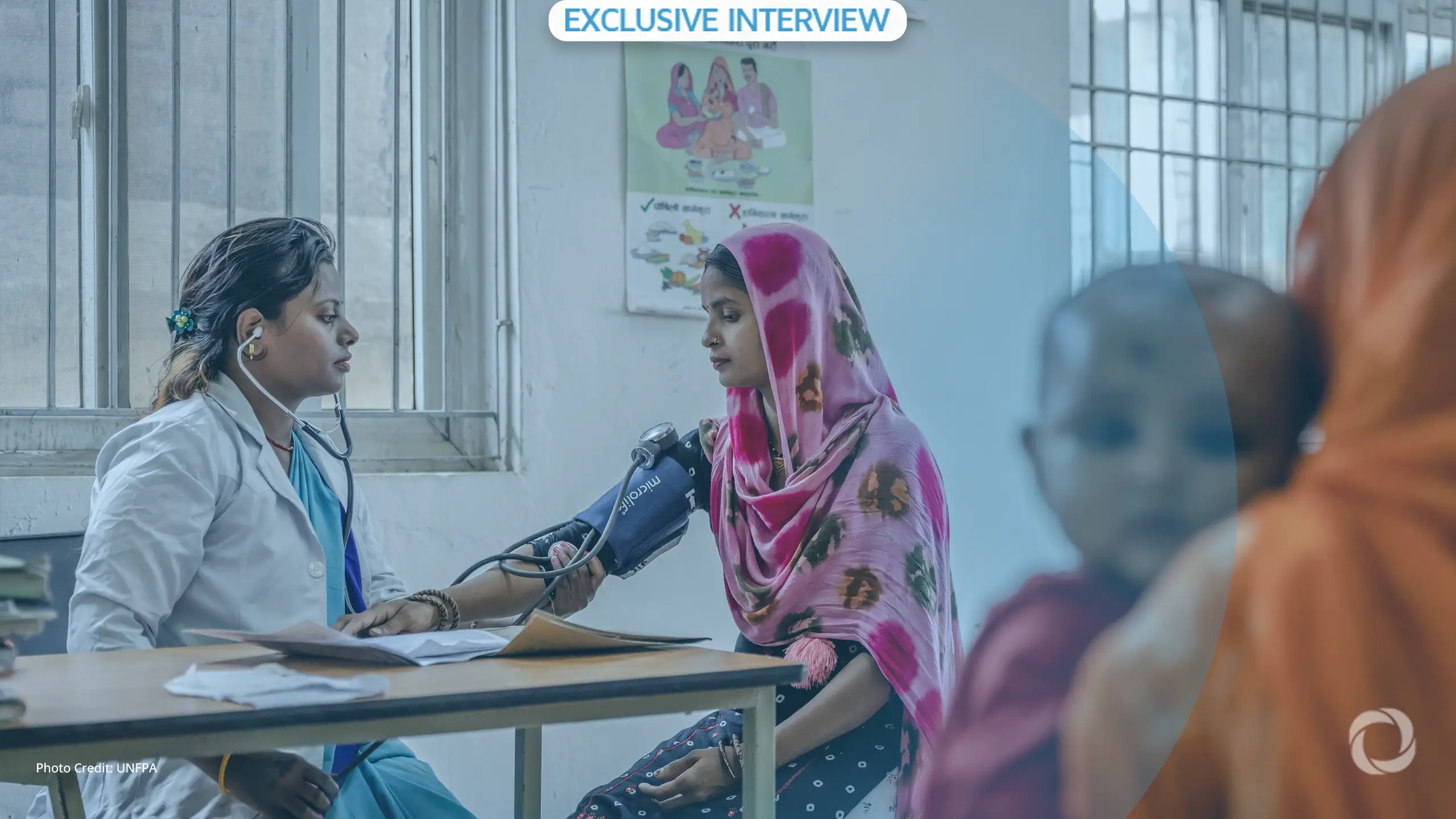
Nepal has made significant progress in maternal health and reproductive rights, but persistent inequalities, changing population dynamics and growing climate-related risks continue to expose gaps in healthcare, protection and social services. With development financing under pressure and the 2030 deadline for the Sustainable Development Goals approaching, the challenge is no longer just to expand access, but to ensure that services reach the most vulnerable, respond to changing needs and deliver lasting results.
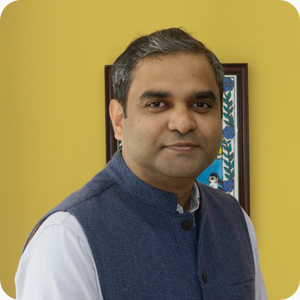 In this exclusive interview, DevelopmentAid journalist for South Asia Laxman Datt Pant speaks with Sriram Haridass, UNFPA Representative for Nepal, about what it will take to close these gaps. The discussion examines the implications of declining fertility, migration and population ageing for development planning, the need to strengthen adolescent health services and prevent gender-based violence, and the importance of investing in prevention, local capacity and disaster preparedness. It also explores how development organizations can make better use of data, adapt partnerships and funding models, and move beyond fragmented, project-based approaches to address interconnected challenges.
DevelopmentAid: Although Nepal has made substantial progress in reproductive health, including a major decline in maternal mortality, what are the biggest unfinished SRHR challenges today and what strategies and actions are needed to address them?
UNFPA Representative for Nepal: Fundamentally, Nepal faces three unfinished challenges. The first is equitable access: where a woman lives, her income, age, disability, caste or ethnicity can still influence whether she receives timely care. The second is quality: women need facilities that are functioning, staffed, equipped, and capable of providing quality care when an emergency occurs. The third is the continuing gap in reproductive choice. Modern contraceptive prevalence remains around 43% and unmet need remains significant at over 20%. We also need stronger adolescent-responsive services, comprehensive sexuality education, and reliable contraceptive supplies.
DevelopmentAid: Across maternal and adolescent health, GBV and demographic issues, where are needs changing most rapidly, and where does the development sector still need to adapt?
UNFPA Representative for Nepal: The issues we work on can no longer be treated in isolation.
Maternal health is increasingly affected by climate shocks, migration and changing settlement patterns, whereas Gender-based violence (GBV) is taking new forms, including technology-facilitated violence. Young people’s aspirations are changing rapidly, while education systems, labour markets and services do not always keep pace.
Demographic change is happening much faster than many of our institutions were designed to accommodate. In Nepal, fertility is now below replacement level, migration is reshaping communities, the population is ageing, and at the same time the country has a large generation of young people whose aspirations are very different from those of their parents. So the development sector needs to become much better at connecting the dots.
DevelopmentAid: Nepal’s maternal mortality ratio has fallen dramatically over the past two decades, but it was still estimated at 142 maternal deaths per 100,000 live births in 2025. What will it take to eliminate preventable maternal and newborn deaths, particularly in remote areas and among marginalized and vulnerable communities?
UNFPA Representative for Nepal: Nepal has come an extraordinary distance, but 142 still represents women dying from causes that in many cases are preventable. Further reductions will probably be harder to achieve because we increasingly have to reach women who are hardest to reach geographically, socially, or economically.
We need to address the classic three delays: the delay in deciding to seek care, the delay in reaching appropriate care, and the delay in receiving quality care once a woman reaches a facility. That means functioning round-the-clock emergency obstetric and newborn care, skilled health workers, reliable blood supplies and commodities, effective referral systems and transport, and much better connections between communities and facilities. It also means respectful maternity care and strong maternal and perinatal death surveillance, so every preventable death teaches us what needs to change.
DevelopmentAid: What does UNFPA look for in organizations it works with? What distinguishes effective implementing partners?
UNFPA Representative for Nepal: First and foremost, we look for organizations that share our commitment to human rights, gender equality and leaving no one behind, and that can deliver responsibly and accountably. For me, effective partnerships are about more than technical competence. The strongest partners understand the communities they serve. They listen. They have trusted relationships locally. They are willing to adapt when evidence shows that something isn’t working. And they take safeguarding, prevention of sexual exploitation and abuse, financial accountability and results seriously. We also look for robust monitoring and effective use of data, sound risk management, the ability to reach marginalized populations and a clear approach to ensuring sustainability beyond the life of an individual project.
DevelopmentAid: How is the current funding environment changing UNFPA’s priorities and the way it works with partners?
UNFPA Representative for Nepal: There is no question that the international development financing environment has become more constrained, while humanitarian and development needs are increasing. We are extremely grateful to the governments and other partners who continue to invest in this agenda. But the broader environment requires all of us to become much more disciplined about where limited resources can have the greatest impact.
For UNFPA, that means prioritizing interventions that strengthen national systems rather than creating parallel structures, leveraging domestic financing, broadening partnerships, and using data more rigorously to target investments. But there is also a risk. Prevention is often harder to finance because its success is less visible. Preventing maternal deaths, gender-based violence, and child marriage or preparing a health system before a disaster may attract less attention than responding after something has gone wrong. As prevention is usually more humane and more cost-effective, one challenge for the sector is to protect investment in prevention and resilience even when budgets are under pressure.
DevelopmentAid: What are development organizations underestimating about population ageing, declining fertility, migration and population growth?
UNFPA Representative for Nepal: I think we underestimate both the speed of demographic change and how differently it is unfolding within countries. There is no single global population story. Some countries still have rapidly growing populations and need enormous investment in education, health and employment for young people. Others are experiencing very low fertility and rapid ageing. Many, including Nepal, are navigating several transitions simultaneously.
And national averages can be misleading. One municipality may be losing young adults through migration while another is experiencing rapid population concentration. One community may need another school while another may increasingly need elderly care. The mistake is to treat demography simply as a question of population size. Demography affects labour markets, health systems, pensions, education, housing, urban planning and disaster preparedness.
DevelopmentAid: What needs to change to ensure adolescents are not simply recipients of programs but are genuinely able to make informed decisions about their bodies and futures?
UNFPA Representative for Nepal: The first thing is to stop seeing adolescents simply as beneficiaries. They are rights-holders and partners. Young people need accurate, age-appropriate information before they need it, not after a crisis has occurred. That means quality comprehensive sexuality education both in and out of school, adolescent-responsive health services, and safe opportunities to ask questions without stigma or judgement.
But information alone isn’t enough. A girl may know her rights and still be unable to exercise them if she is married at 15, pulled out of school, financially dependent, or unable to access confidential services. So empowerment has to connect information with services, education, protection and economic opportunity. And meaningful participation must go beyond consultation.
DevelopmentAid: What interventions can break the connection between child marriage, early pregnancy, interrupted education and limited economic opportunity?
UNFPA Representative for Nepal: Child marriage, early pregnancy, school dropout and limited economic opportunity reinforce each other. So tackling only one link in that chain will not be enough. We need girls to remain in secondary education. We need comprehensive sexuality education and adolescent-responsive SRH services. We need families and communities engaged in changing social norms. We need laws enforced. And crucially, girls need to see a viable economic future for themselves.
DevelopmentAid: Where do you see the greatest gaps today in combating gender-based violence, and what would meaningful progress look like?
UNFPA Representative for Nepal: Nepal has important laws, policies, and institutional mechanisms. The challenge is increasingly to translate those commitments into effective prevention and accessible, survivor-centered services at the local level. We also need to move further upstream. Responding effectively after violence occurs is essential, but meaningful progress means preventing violence in the first place. That requires changing discriminatory gender norms, engaging men and boys, working with young people early, strengthening women’s social and economic empowerment, and addressing emerging forms of violence, including technology-facilitated violence. Predictable local financing for both prevention and response is equally important.
DevelopmentAid: What SRHR and protection services must be guaranteed from the first days of an emergency? What has UNFPA learned from the recent disaster in Nepal?
UNFPA Representative for Nepal: The recent floods reminded us of something very simple: pregnancy does not stop because there is a disaster. Girls do not stop menstruating because they have been displaced. And unfortunately, the risk of violence often increases. From the first days of an emergency, we therefore need to ensure continuity of maternal and reproductive health care, emergency obstetric referrals, access to contraception, clinical management of sexual violence, menstrual health supplies, psychosocial support, and safe spaces and referral mechanisms for women and girls.
After the Bhotekoshi and Trishuli floods, roads, bridges, and health facilities were damaged and communities displaced. UNFPA deployed mobile health services, reproductive health supplies, dignity and adolescent kits, psychosocial support and women-friendly spaces. These interventions are guided by the Minimum Initial Service Package for Sexual and Reproductive Health in emergencies, which identifies the lifesaving SRH interventions that need to be in place from the onset of a crisis.
DevelopmentAid: What should be built into Nepal’s disaster-risk-reduction system before the next crisis?
UNFPA Representative for Nepal: The major lesson for me is that we cannot invent these systems after a disaster strikes. SRHR and GBV need to be built into preparedness plans, budgets, simulations and local disaster-management systems beforehand. That means pre-positioning reproductive health and dignity supplies; mapping functional emergency obstetric facilities and referral routes; training health workers in the Minimum Initial Service Package; establishing GBV referral pathways; identifying safe spaces; ensuring sex-, age- and disability-disaggregated data; and making sure local governments know exactly who does what when an emergency occurs.
Preparedness also extends beyond health and protection. Shelter, WASH and distribution systems should be designed from the outset to reduce GBV risks, including appropriate lighting, safe and lockable sanitation facilities and meaningful participation of women in site planning and management. Preparedness is much cheaper, faster and more dignified than improvisation after a crisis.
DevelopmentAid: What demographic trends are policymakers still underestimating, and how can Nepal turn population data into better resource allocation?
UNFPA Representative for Nepal: The 2021 census gave Nepal a strong evidence base, and UNFPA was privileged to support the Government of Nepal and the National Statistics Office in that process. Policymakers need to pay much more attention to diverging demographic realities within Nepal. Some communities are losing working-age populations through migration. The population is increasingly concentrated in urban centers and corridors. Fertility is declining. Today, roughly one in ten Nepalese is aged 60 or above. By 2060, it could be about one in five. At the same time, household structures are changing. That means yesterday’s formula for allocating a school, health facility or social service may not fit tomorrow’s population.
DevelopmentAid: With 2030 approaching, what should Nepal measure differently on SDG 3 on good health and well-being and SDG 5 on gender equality and where would additional investment make the greatest difference?
UNFPA Representative for Nepal: We need to look beyond national averages. A national maternal mortality figure tells us something important, but it does not tell us which women are dying, where they live, why they died, or whether the health system could have prevented their deaths. So, we need greater disaggregation by geography, age, disability and other dimensions of inequality. We need to measure quality and functionality, not just coverage. For GBV, we need to measure not only cases reported, but access to survivor-centered services, prevention and changes in harmful norms. We also need stronger civil registration, health information systems, maternal and perinatal death surveillance and GBV administrative data.
In terms of investment, I would emphasize the midwifery and primary health workforce, adolescent SRHR and education, family planning commodities, GBV prevention and survivor services, and stronger local data systems. Ultimately, the SDGs are about leaving no one behind. You cannot know who is being left behind if your data averages them out.
DevelopmentAid: If you could change one thing about how the international development sector approaches the issues UNFPA works on, what would it be?
UNFPA Representative for Nepal: I would like us to start much more often with the person or the development challenge, and then organize institutions and financing around solving it. Development cooperation is still too often organized around individual projects, funding windows, sectors and institutional mandates. Communities do not experience development that way.
A 16-year-old girl may simultaneously face pressure to marry, difficulty staying in school, limited employment prospects, inadequate reproductive health information, online harassment and the consequences of climate-related displacement. Giving each issue to a different project does not necessarily solve her problem.