
Add us as your preferred source on Google to see more of our content in Search.
 Add to Preferred Sources
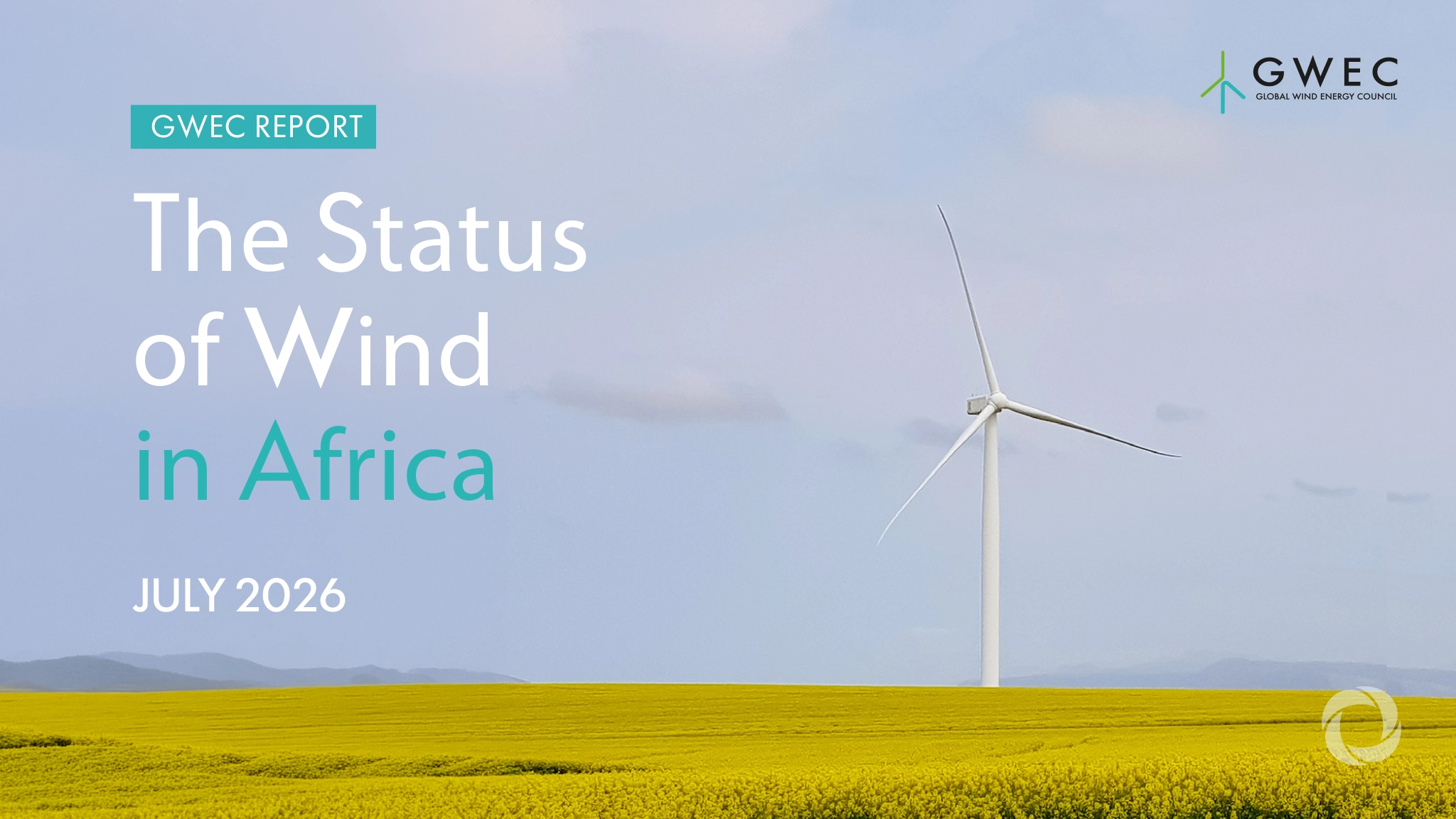
Africa’s wind sector is entering a new phase of expansion, with rising corporate and industrial demand driving a growing pipeline of bankable projects, according to a press release issued by the Global Wind Energy Council (GWEC) on 7 October 2026 in Cape Town. The announcement accompanies the publication of GWEC’s latest report, The Status of Wind in Africa. The report shows that the continent is moving from a story of potential to one of execution. Record annual installations, larger projects, new financing models and growing demand from industrial and corporate buyers are creating fresh opportunities to scale. GWEC estimates that Africa could reach 30–50 GW of installed wind capacity by 2035.
Africa’s installed wind capacity reached 11.1 GW in 2025, up from just under 9 GW in 2023, representing a rise of over 23% in two years. New installations hit 1.53 GW last year, driven largely by growth in South Africa, Morocco and Egypt. The continent now has 186 GW of planned wind capacity across 259 projects. The pipeline is significantly more geographically diverse than the existing fleet. New potential projects are emerging across Mauritania, Algeria, Tanzania, Zambia, Madagascar, Cameroon and Angola.
Wind development remains concentrated in a small number of established markets. South Africa, Egypt and Morocco together account for more than 85% of installed wind capacity, at around 4.2 GW, 3.2 GW and 2.2 GW respectively. Ethiopia, Kenya, Tunisia, Senegal and Mauritania are emerging as important secondary markets. Africa has an estimated 58,400 GW of technical onshore wind potential, yet less than 0.02% has been developed to date. Countries including Algeria, Libya and Sudan have so far developed relatively little wind capacity despite their strong resources.
Corporate power purchase agreements (PPAs) are opening a new route to investment. In South Africa, regulatory reforms have unlocked more than 3.3 GW of corporate-PPA wind in less than thirty months. Mines, cement producers, smelters and fertiliser companies are increasingly turning to wind to meet electricity needs. Egypt is leading large-scale development with projects above 500 MW, including the 1.1 GW Gulf of Suez wind farm under construction. “Africa’s wind story is no longer a story of potential. It is becoming a story of execution. The opportunity now is to ensure that policy, finance and grid infrastructure move at the pace required to unlock the continent’s extraordinary wind resources,” said Juliana Kainga, Director, Africa Wind Power, at GWEC.
Turbine technology is evolving rapidly, with the average turbine installed in Africa rising from around 0.85 MW in 2007 to more than 5 MW in 2025, while units of 6.5 MW and 8 MW are now being deployed. Hybrid projects pairing wind with solar and battery storage are expected to become more common. The report calls for ministries to publish longer-term auction calendars, utilities to honour contracts, transmission infrastructure to be built ahead of generation, banks and pension funds to expand local-currency lending, and industries to increase procurement of wind power. The Status of Wind in Africa 2026 provides a detailed assessment covering installed and planned projects, resource potential, critical success factors, emerging trends, policy levers and investment opportunities across Africa’s 54 countries. Achieving the 30–50 GW target by 2035 will depend on putting the necessary policy, financing and infrastructure conditions in place.