
Add us as your preferred source on Google to see more of our content in Search.
 Add to Preferred Sources
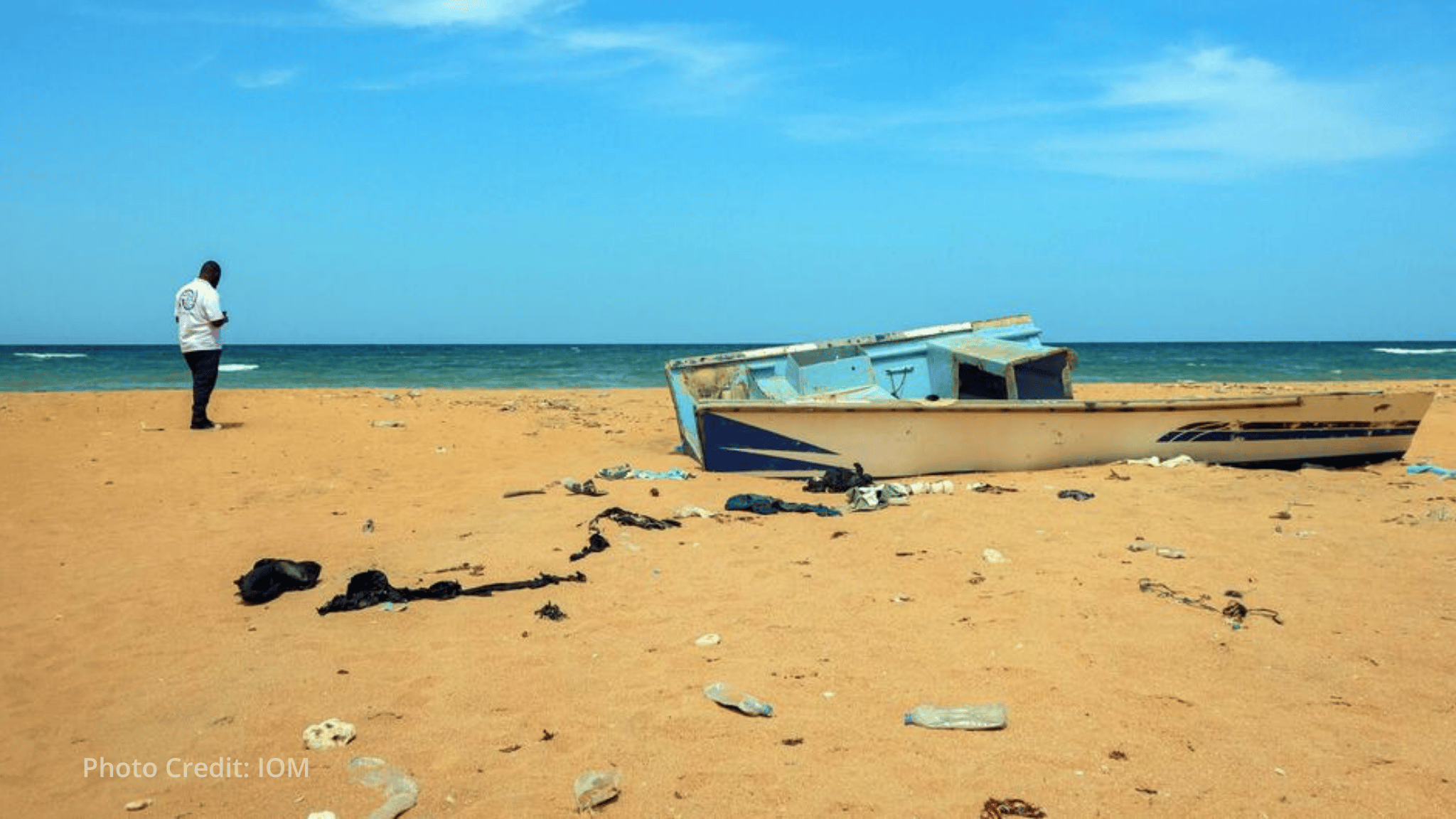
At least 139 migrants have died and 84 remain missing after their boat capsized off the coast of Djibouti, the International Organization for Migration (IOM) announced on Sunday, 11 October 2026, according to a press release by UN News. The vessel was carrying 305 people from Djibouti toward Yemen when it went down near Guehere, north of Obock, in the early hours of Friday. About 82 people survived the disaster, while search and rescue efforts continue along the Gulf of Aden. The toll rose from 109 after the bodies of 30 more people were recovered. IOM described it as one of the deadliest shipwrecks recorded on the Eastern Route, which runs from the Horn of Africa to the Arabian Peninsula.
The tragedy occurred as Djibouti grapples with continued migration traffic in both directions along one of the world’s busiest irregular migration corridors. Since 10 September, IOM’s Displacement Tracking Matrix has recorded more than 20,000 movements into the country from Ethiopia, with migrants heading for the Gulf despite the return to full-scale fighting in Yemen. Over roughly the same period, more than 3,700 refugees have arrived from Yemen, while 539 Ethiopian migrants have returned from there. The Gulf of Aden shores in Obock serve as both a departure point and arrival site for perilous sea journeys. These overlapping flows have strained response capacity in the small Horn of Africa nation.
Alexandre Coissac, IOM’s chief of mission in Djibouti, told journalists in Geneva on 6 October that the country was facing “overlapping emergencies.” He noted that Djibouti was confronting movements in both directions, with migrants increasingly becoming stranded along transit routes. More than 3,000 stranded migrants were observed along routes in Djibouti between 20 and 30 September, often without access to basic services. The scale of the latest shipwreck underscores the dangers facing those who attempt the crossing. Authorities are continuing search and recovery operations as fears grow for those still unaccounted for.
IOM Director General Amy Pope used the moment to call for urgent policy action.
“No one gets into a boat like that unless they believe there is no other safe way,” she said. “We cannot keep treating these deaths as normal. Safe and legal pathways save lives. I am asking governments and donors to act before the next boat goes down.”
IOM is providing emergency assistance to survivors at its Migrant Response Centre in Obock, including healthcare, psychosocial support, food, shelter, and protection services.
The UN Resident Coordinator in Djibouti, Jose Barahona, said he was deeply saddened by the loss of at least 139 lives, among them children.
“Our thoughts are with the victims, the survivors and the families waiting for news of their loved ones,” Mr. Barahona said on social media. “We express our solidarity and welcome the ongoing search and rescue efforts.”
He added that every life lost at sea is a tragedy, recalling the Secretary-General’s recent warning on the urgency of protecting people on the move. His statement reinforced calls for expanding safe migration pathways and strengthening international cooperation.