

Add us as your preferred source on Google to see more of our content in Search.
 Add to Preferred Sources
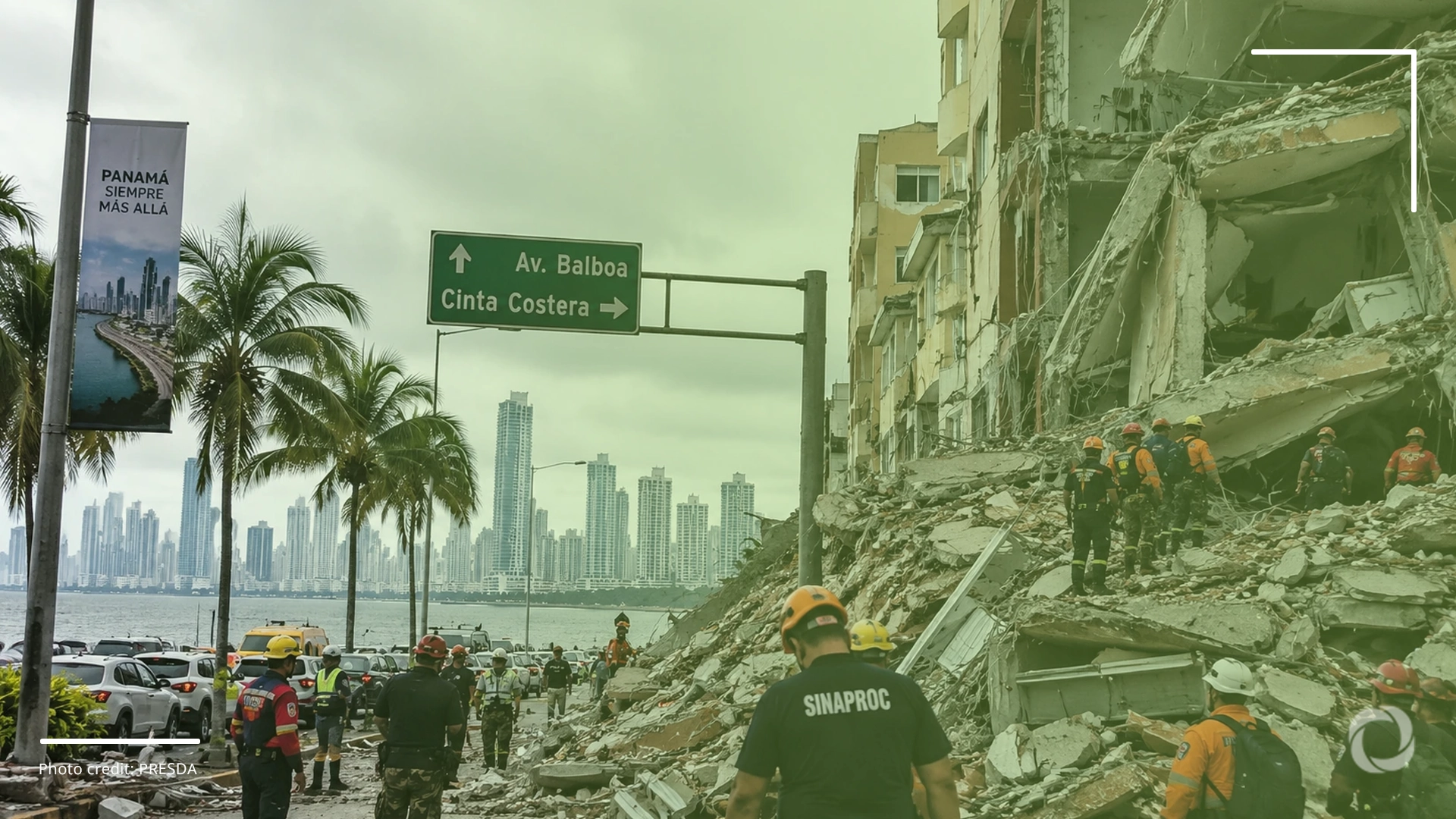
A powerful 7.7-magnitude earthquake hit Panama on October 9, injuring at least 27 people, damaging hundreds of buildings, and destroying roads. The authorities declared a state of emergency, allocating up to US$100 million to finance relief. Neighboring Costa Rica and Colombia, along with the United States, Venezuela, and UN agencies, have offered support.
Panama earthquake and aftershocks
A powerful earthquake hit Panama on Friday, October 9, 2026, at 12:56 PM local time (17:56 UTC). The quake measured 7.7 on the Richter scale, and its epicenter was kilometers west-southwest of Pitaloza Arriba on the Azuero Peninsula in central Herrera province, approximately 196 kilometers from Panama City. A second earthquake, measuring 6.6, struck Panama soon afterward, followed by more than 200 aftershocks, including ones measuring 5.8, 5.5, and 5.2.
The government of Panama immediately declared a state of emergency, announcing that homes, schools, hospitals, roads, and hotels had been damaged. The emergency declaration will allow the government to allocate up to US$100 million in relief immediately without exceeding its 2026 fiscal deficit target, said the country’s Minister of Economy and Finance, Felipe Chapman.
According to early reports from the country’s National Civil Protection Service (SINAPROC), at least 27 people were injured as a result of the earthquakes, and nearly 900 homes and public schools were damaged. No fatalities or officially missing persons were documented so far.
According to Omar Smith, the director of SINAPROC, the infrastructure damage from the earthquakes is concentrated in the central provinces of Veraguas, Herrera, and Los Santos, with no reports of any damage in the capital, Panama City. The Church of San Atanasio, a church in Los Santos province that was declared a National Historic Heritage Site in 1938, has collapsed.
The Panama Canal Authority reported damage to administrative facilities and to the Monte Esperanza water treatment plant in Colón province. No closures or difficulties with the global maritime waterway were reported, but the authority is conducting a further technical inspection.
International aid for Panama
UNICEF released a statement expressing solidarity with the children, adolescents, and families affected by the earthquake and announced it stands ready to support the government of Panama if requested to do so. The UN Children’s Fund estimates that 38,000 people, including 8,300 children, are in need of humanitarian assistance.
The United States’ military Southern Command (SOUTHCOM) said that it has sent two helicopters to deliver 900 kg of food to people affected by the earthquake. U.S. Secretary of State Marco Rubio said that the United States “stands with Panama.”
The U.S. Ambassador to Panama, Kevin Marino Cabrera, announced that the American government has authorized US$5 million in humanitarian assistance.
“The United States shows up when they are needed, and Panama is a close friend and partner, and we are here to help them. We’ve been able to leverage the folks we have here [in Panama] as part of SOUTHCOM’s security cooperation, and we’ve been helping with things such as this Chinook helicopter to transport supplies, personnel, and all sorts of things from Panama City to the areas most in need,” said Ambassador Cabrera during an interview on October 11. Ambassador Cabrera later personally visited Sona, Panama, to oversee relief efforts.
The U.S. Embassy in Panama issued a disaster alert following the earthquake, stating that there were potential tsunami threats for Costa Rica, El Salvador, Peru, Mexico, Guatemala, Panama, Nicaragua, Colombia, and Ecuador, although none were later confirmed. The earthquakes in Panama were reported to have been felt as far away as Colombia, which suffered its own devastating quake in August of this year that killed at least 331 people.
Colombian President Abelardo de la Espriella expressed his solidarity with the people of Panama and their government during these difficult times.
“Panama is not alone! You can count on the brotherly nation of Colombia’s support and our full willingness to provide whatever assistance is needed,” wrote de la Espriella (in Spanish) on social media.
Acting president of Venezuela, Delcy Rodriguez, President Laura Fernandez Delgado of Costa Rica, and Ecuadorian President Daniel Noboa also offered assistance.
Panamanian President Jose Raul Mulino visited several of the quake-struck areas to deliver aid and oversee relief efforts, saying “The disaster we are facing is massive.” President Mulino thanked his fellow Latin American leaders for their support, saying he had personally spoken with the presidents of Chile, Uruguay, Peru, and Guatemala, amongst others.
According to the latest bulletin from SINAPROC, a total of 31.5 tons of humanitarian assistance along with 240 tons of water have been delivered to the affected areas.
The earthquake that struck Panama is the fifth one this year surpassing 7.0 in magnitude to strike Latin America, following two back-to-back earthquakes in Venezuela in June, one in Mexico in July, and the one in western Colombia in August.