

Add us as your preferred source on Google to see more of our content in Search.
 Add to Preferred Sources
Key reasons to read this article
- Understand why economic growth does not automatically create room for development projects.
- Compare what the budgets of Kenya, Zambia and Ghana actually show – and what they do not prove.
- Discover how debt restructuring, loan disbursements and project execution can affect public services.
- Learn which warning signs donors, NGOs and contractors should watch out for before committing resources.
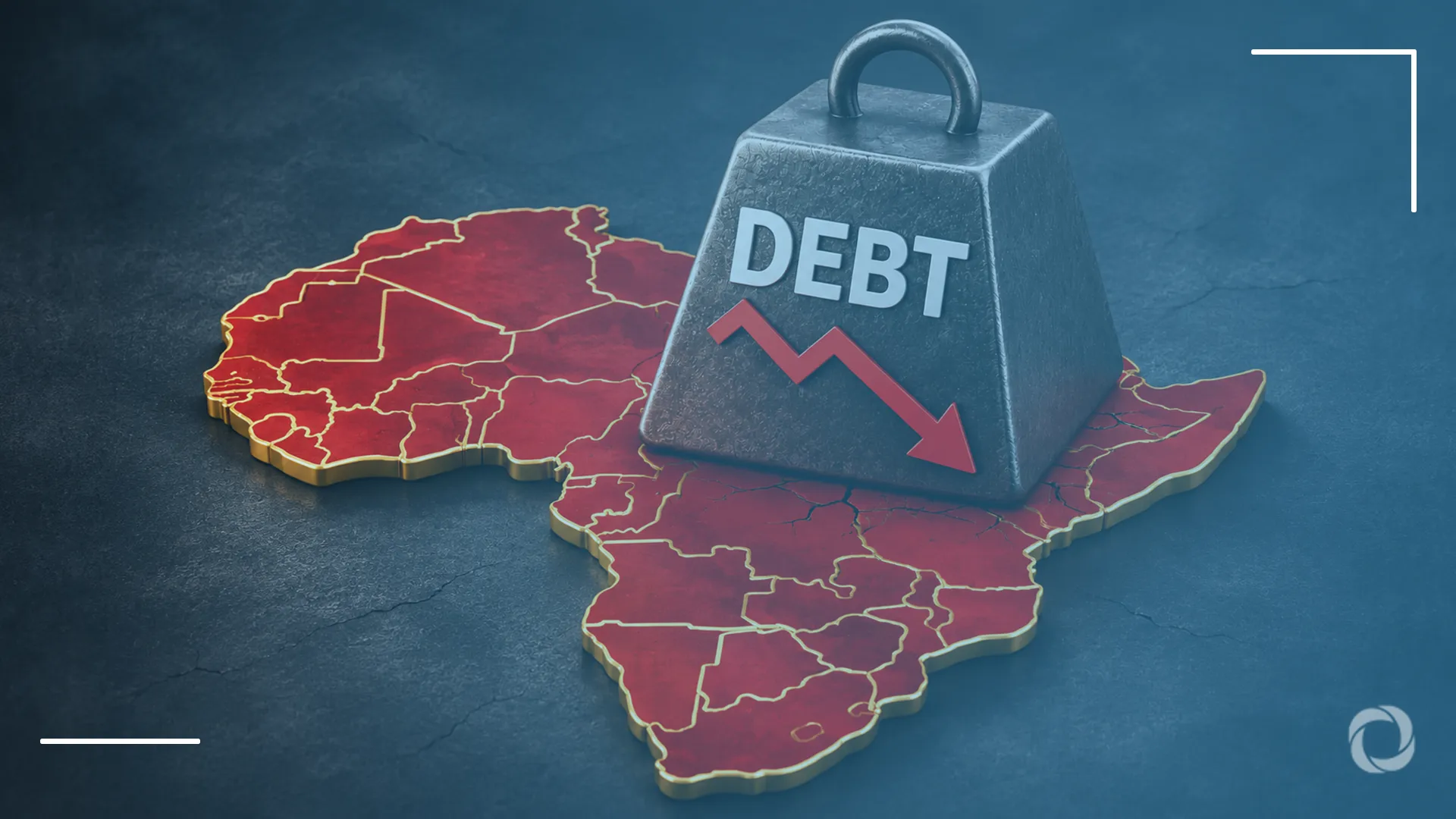
Despite forecasts of stronger economic growth, high debt-servicing costs and competing financing demands are putting pressure on the capacity of African governments to fund healthcare, education and infrastructure. The IMF’s October regional outlook, presented at the IMF–World Bank Annual Meetings in Bangkok, projected 4.5% growth in sub-Saharan Africa for 2026 and 2027, while warning of high interest costs, falling aid contributions and limited fiscal buffers.
The scale of these constraints become clearer when national budgets are examined. In Kenya, interest payments on public debt are budgeted to exceed ministerial development spending in 2026/27. In Zambia, the interest allocation is almost as high as the combined health and education budgets. Ghana has lowered some debt pressures through restructuring, but delays in financing have disrupted public projects.
These are national-currency budget estimates. USD equivalents are indicative, converted at reference rates on 23rd October 2026 (KES129.89, ZMW20.1203 and GHS11.6500 per US$1).
Kenya: the gap between budget approval and delivery
According to Kenya’s parliamentary budget breakdown, domestic-debt interest is projected to be KSh986.7 billion and external interest KSh267.5 billion for the financial year 2026/27. Combined, this is nearly 1.5 times the KSh844.4 billion ministerial development allocation.
Budget execution presents a separate problem. Raphael Muya, a public-finance analyst and the author of an independent budget-execution review, reported development expenditure of KSh276.9 billion in the first half of FY 2025/26, up from KSh200.3 billion a year earlier. Despite this increase, only about 36% of the development budget had been used by mid-year. Muya pointed to delayed paperwork, procurement bottlenecks and slow payments to contractors as possible obstacles.
For project implementers, this means that an approved budget allocation does not guarantee that the funds will be released or invoices paid on time. Rising expenditure compared with the previous year also warns against describing Kenya as experiencing an across-the-board reduction in investment.
Zambia: higher allocations, unfinished needs
Zambia’s 2026 budget allocated K58.6 billion to interest payments, compared with K33 billion to education and K26.2 billion to health. Although both sectors received higher nominal allocations, social-sector analysis found that education’s budget share actually declined from 14.5% to 13.1% while health remained K21 billion below Zambia’s international commitment under the Abuja Declaration.
Unlike the Kenya figures, which demonstrate the scale of debt obligations alongside implementation issues, Zambia has explicit government evidence of spending constraints. While presenting the 2026 budget, Finance Minister Situmbeko Musokotwane stated that rising domestic debt-servicing costs had limited the government’s ability to spend on roads, while outlining plans to use public-private partnerships for suitable projects.
Unfortunately, the rise in the cost of servicing domestic debt limits us as to what we can do this time round.
— Situmbeko Musokotwane, Zambia’s finance minister, source statement
The human-development challenge is equally obvious. A 2026 mid-year assessment found that revenue had fallen below target and spending was uneven. Zali Bryson Chikuba, Executive Director at the Zambia Institute for Policy Analysis and Research, argued that economic stabilization must translate into resilient human capital, while UNICEF’s country representative, Saja Farooq Abdullah, stressed that recovery must benefit children.
Ghana: debt restructuring and projects caught in between
Ghana’s debt structuring has improved debt-sustainability indicators, but translating that progress into development spending remains a challenge. In January 2025, all 25 countries participating in Ghana’s Official Creditors Committee signed a memorandum of understanding on debt treatment, marking a key milestone in the restructuring process.
Yet the 2026 budget illustrates the continuing pressure on public finances with the GH¢57.7 billion allocated to interest payments almost matching the GH¢57.5 billion planned for capital spending. Although the IMF’s 2026 assessment acknowledges improvements in debt indicators, these allocations demonstrate that interest obligations remain significant relative to planned public investment.
The Ghanaian government reported that in the first nine months of 2025, capital expenditure was GH¢10.9 billion against a GH¢26.6 billion target, a shortfall of 59%. It attributed this gap partly to investment reprioritization and delayed foreign financing associated with bilateral debt restructuring.
The move also affected individual projects. In the 2025 budget statement to Parliament, Finance Minister Cassiel Ato Forson stated that 55 projects had been halted during bilateral debt restructuring, including the Effia Nkwanta Regional Hospital and major road works. The subsequent IMF country review recognised improvements in debt sustainability while pointing to the continued importance of protecting development and social spending.
What this means for development organizations
These three countries face different constraints, but each illustrates a gap between public financing plans and delivery. In Kenya, slow budget execution raises questions about whether approved funding will translate into payments. In Zambia, the government has explicitly acknowledged that debt-servicing costs constrain spending on roads in the country. In Ghana, debt restructuring has interrupted project funding.
For development organizations, the three cases highlight the importance of looking beyond approved budgets and headline debt indicators. Donors must establish whether governments can meet their co-financing commitments. NGOs must consider how delays in public spending could affect essential services. Contractors, meanwhile, have to assess whether approved projects have secured funding and whether outstanding invoices are likely to be paid.
Ultimately, the key question is whether improvements in fiscal conditions will translate into funds reaching projects and public services. Budget execution, disbursement delays and outstanding government payments offer practical indicators of whether that is happening.