
Add us as your preferred source on Google to see more of our content in Search.
 Add to Preferred Sources
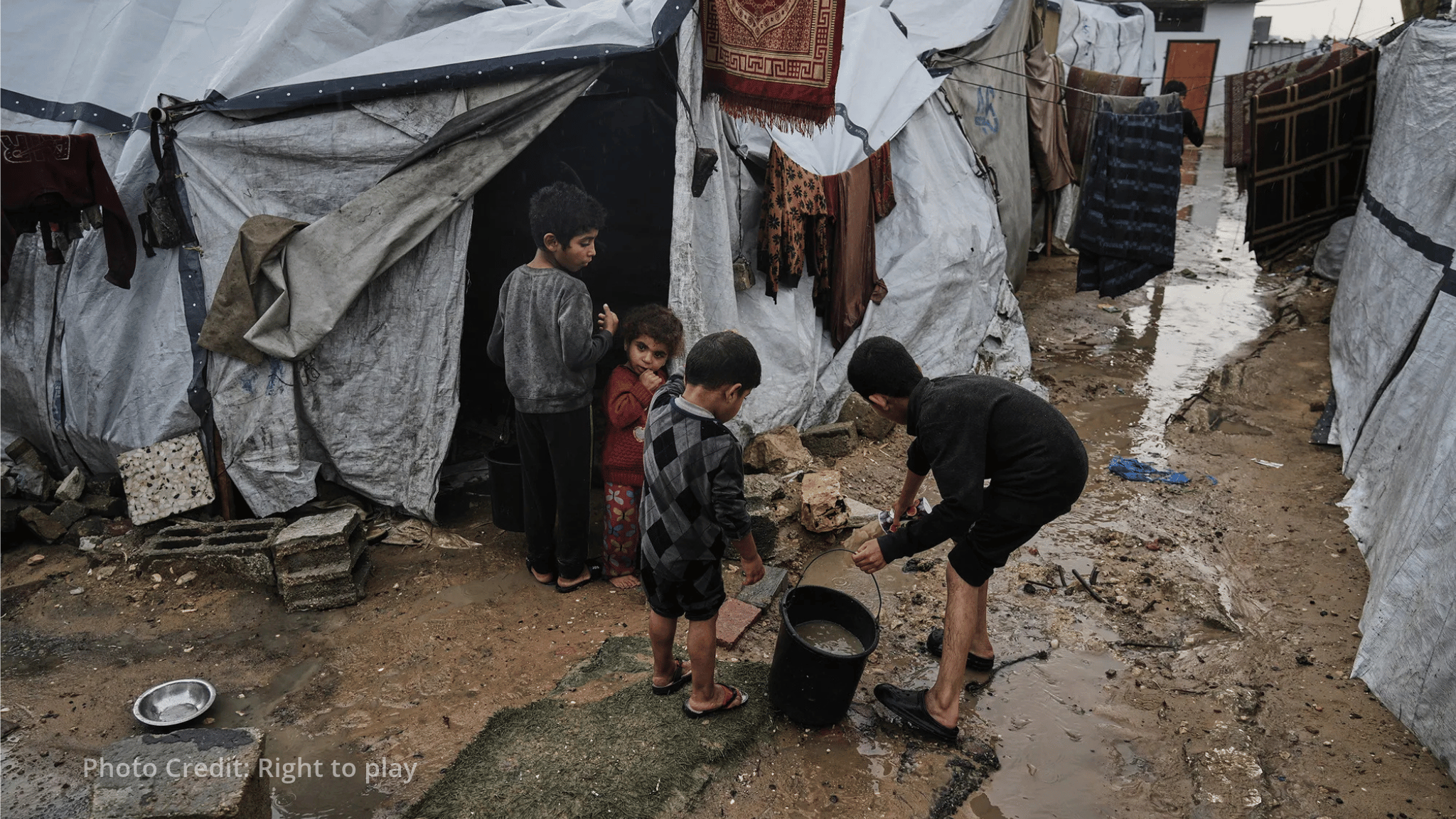
More than half a million children in Gaza are facing their fourth winter in torn tents or makeshift shelters after the territory’s first winter storm flooded around 70,000 tents in a single day, according to a press release issued by Save the Children on November 8, 2026. Families fled waterlogged camps at night as Civil Defense received more than 1,500 distress calls. The organization warned that Israel’s restrictions continue to block the entry of materials needed to protect children from the cold and flooding. Many families are burning garbage to stay warm. Temperatures have dropped to as low as 41 degrees Fahrenheit, with more winter storms approaching.
A recent assessment from the Palestine Shelter Cluster found that about 58% of people in Gaza, or 1.2 million people, including over 560,000 children, are currently living in “critical or catastrophic” shelter conditions. Many families are crowded into flimsy tents or improvised shelters that have deteriorated after years of exposure to harsh weather, repeated dismantling, and constant rebuilding. The ceasefire announced over a year ago stipulated the entry of caravans as a more durable alternative to tents. However, Israeli authorities have repeatedly blocked their entry into Gaza. Save the Children has worked in the occupied Palestinian territory since 1953, with a permanent presence since 1973.
Nearly half, or 48%, of families surveyed by the Shelter Cluster said they are resorting to burning plastic, tires, garbage, or cardboard to cook, while 84% reported having no effective way to heat their shelters. The toxic fumes released by burning these materials can cause respiratory illnesses, smoke inhalation, carbon monoxide poisoning, fires, and burns. In crowded camps and poorly ventilated shelters, children are particularly vulnerable. Last year, 11 children were reported to have died from hypothermia, with many more suffering from respiratory infections, worsening malnutrition, and chronic illnesses. Over 464,000 people live in displacement sites at high risk of flooding.
Restrictions imposed by the Israeli government have also limited the entry of tents, tarpaulins, plastic sheeting, insulation materials, blankets, fuel, cooking gas, heating equipment, and construction materials needed to repair damaged shelters. More than a million people in Gaza need winter clothing, but supplies cover just 1% of the need. Meanwhile, 60% of the $283 million required for winter preparedness remains unfunded.
Ahmad Alhendawi, Regional Director for the Middle East, North Africa and Eastern Europe at Save the Children International, stated: “This is not simply the result of bad weather. Tents, shelter kits and fuel are waiting at Gaza’s borders while children sleep in floodwater, because the Israeli authorities are blocking their entry.”
Alhendawi added that “more than a year into the so-called ceasefire, it has failed to protect Palestinian children.” Save the Children urged the international community to exert meaningful pressure on Israeli authorities to open all crossings and allow tents, shelter materials, fuel, and winter clothing to enter without restriction. The organization also called on donors to urgently scale up support, including for UNRWA, described as the backbone of the humanitarian response. Save the Children works with partners in the occupied Palestinian territory to provide healthcare and nutrition services, education, child protection, early childhood development support, cash assistance, and humanitarian aid. The organization warned that without immediate action, children in Gaza will continue to face life-threatening conditions this winter.