
Add us as your preferred source on Google to see more of our content in Search.
 Add to Preferred Sources
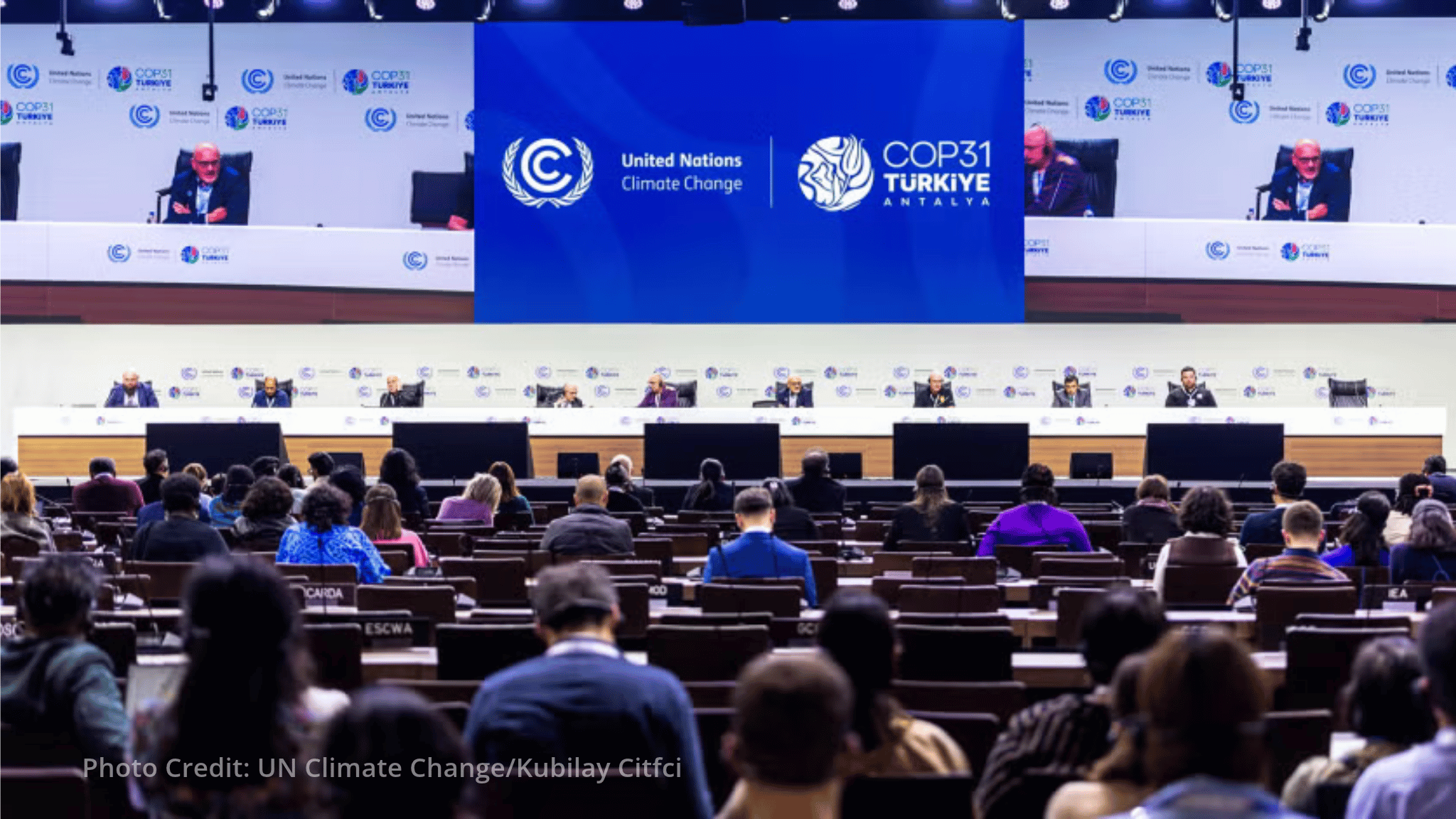
COP31 opened this week in Antalya with a focus on accelerating climate solutions as countries and businesses push to turn investments into results on the road to 2030, according to a feature story by the Global Environment Facility (GEF). The GEF, whose ninth funding cycle also runs through 2030, is working to help countries move from national priorities to action by combining finance with policy support, technology, stronger institutions, and partnerships. The UN’s latest Emissions Gap Report finds that full implementation of current national climate commitments would cut global greenhouse gas emissions by only 11–15 percent by 2035 compared with 2025 levels. A pathway keeping the overshoot of 1.5°C as limited and short as possible would require a reduction of around 45 percent in the same period. COP31 marks the start of GEF-9, a new four-year funding cycle aligned with the goals of the Paris Agreement.
Developing countries are estimated to need around $305 billion a year for adaptation by 2035, while international public adaptation finance reached only one-tenth of that level in 2024. The GEF is scaling up solutions through the Least Developed Countries Fund (LDCF), the Special Climate Change Fund (SCCF), and blended finance projects. COP31 marks 25 years of dedicated adaptation finance for the world’s Least Developed Countries through the LDCF. Almost $2.5 billion in funding has been disbursed across 51 countries since the fund’s inception. The anniversary is a chance to look back at what that support has enabled and to focus on what comes next.
On mitigation, projects approved between 2014 and 2026 are expected to reduce greenhouse gas emissions by more than 6.9 billion metric tons of carbon dioxide equivalent. That figure is roughly equal to the annual emissions of 1.5 billion gasoline-powered cars. In GEF-9, the family of funds will make greater use of blended finance, using public resources to reduce risk and attract private capital. The goal is to program as much as a quarter of total GEF Trust Fund resources with blended finance in GEF-9. In the previous four-year cycle, every dollar of GEF financing mobilized $8.20 in co-financing on average, rising to $18.50 in blended-finance operations.
Through the SCCF, the GEF is introducing non-grant instruments for the first time in GEF-9, alongside support for innovative business models and financing approaches. Grants from the LDCF and SCCF remain essential, particularly in the poorest and most climate-vulnerable countries. In his opening remarks to COP31, UNFCCC Executive Secretary Simon Stiell called for the COP to deliver solutions across the Action Agenda and the negotiations. “Progress is nowhere near far enough or fair enough,” he told the plenary, urging countries to move beyond setting targets and “supercharge solutions” that can make a difference on the ground. The GEF’s engagement in Antalya will span discussions with heads of other multilateral climate funds, sessions on blended finance, institutional capacity and adaptation, and efforts to build renewed support for the LDCF and SCCF.
COP31 also comes at a significant moment for the GEF, with a new CEO, Diego Mesa Puyo, who has set out a vision focused on three priorities: integrate, catalyze, and deliver. GEF climate investments advance environmental and development priorities together, including low-carbon and resilient growth, food security, and improved livelihoods. No single institution can close the climate finance gap, as grants, concessional finance, development banks, and private investors all have different roles. The challenge is to bring these sources together to support country priorities and turn plans into action. The focus now is on scaling up this work on the short remaining road to 2030.