
Add us as your preferred source on Google to see more of our content in Search.
 Add to Preferred Sources
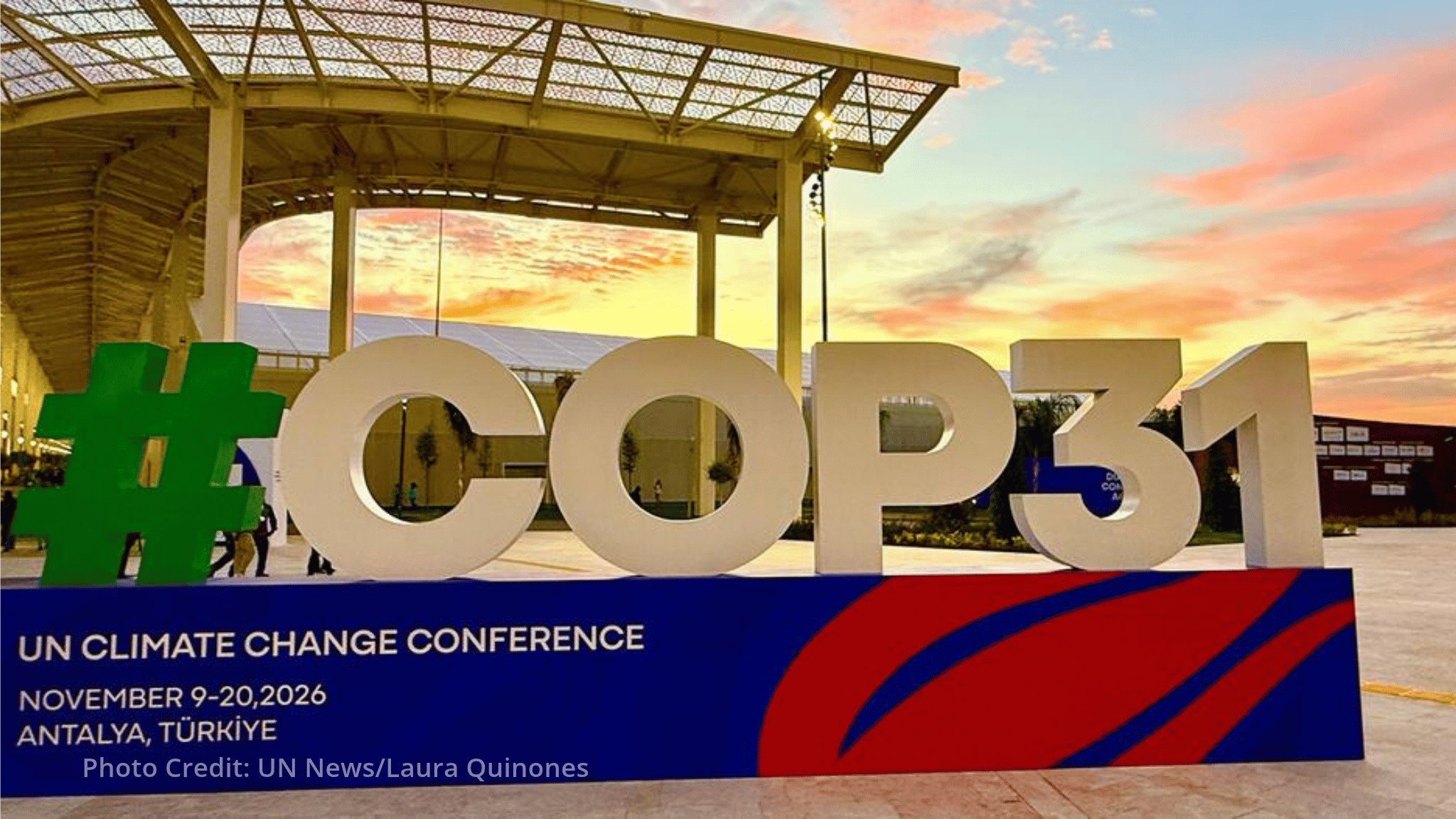
The United Nations Industrial Development Organization (UNIDO) used the second day of the UNFCCC COP31 in Antalya, Türkiye, on 10 November 2026 to advance partnerships aimed at accelerating industrial decarbonization, mobilizing climate finance and strengthening resilience, according to a press release by UNIDO. Director General Gerd Müller held engagements with governments, international organizations and businesses designed to turn climate ambition into development results. The agenda spanned minerals, finance, electrification and urban-industrial cooperation. New agreements and coalitions were announced across the day. Each initiative connected global partnerships with country-level priorities.
The International Council on Mining and Metals joined UNIDO’s Global Alliance for Responsible and Green Minerals during a Pavilion event opened by the Director General. Discussions emphasized that mineral supply chains must protect nature and human rights while creating opportunities for developing countries in processing, manufacturing and recycling. Director General Müller engaged Sweden’s Climate Ambassador and private sector partners, including SSAB and Tetra Pak, on green industrialization in the Global South. He also met Chizuru Aoki, Manager of the Conventions and Funds Division and Head of its COP31 Delegation, to discuss strengthening UNIDO–GEF cooperation. The GEF commended UNIDO’s project portfolio in climate mitigation, adaptation, and chemicals and waste.
In a courtesy exchange with Mafalda Duarte, Executive Director of the Green Climate Fund (GCF), Müller outlined plans to expand cooperation with the GCF. They discussed the Transformation Pathways Initiative, a blended finance programme jointly designed by UNIDO and Finance in Motion and recently approved by the GCF Board. Müller also spoke with representatives of the Climate Investment Funds (CIF) on the Global Decarbonization Investment Accelerator. The UNIDO-led, GEF-financed pilot will help turn cement decarbonization goals into investment plans in Colombia, Ethiopia, Kenya and Uganda. At its Pavilion, UNIDO presented the Electrification Readiness Index, establishing an initial baseline across 143 countries ahead of the full release planned for 2027.
UNIDO and partners launched the Sustainable Industry Finance Coalition, with technology consultancy CGI, MUFG, and Marsh’s people and investments business (formerly Mercer), announced as its first members. The Coalition will support investment-ready projects, better information for investors and conditions that help innovative climate solutions attract finance and expand. UNIDO and the United Nations Human Settlements Programme (UN-Habitat) renewed their partnership through a Memorandum of Understanding signed on the sidelines of COP31. Building on cooperation established in 2013, the agreement will advance inclusive, resilient and net-zero urban-industrial development through UNIDO’s City–Industry–Climate Nexus approach. The focus will be on Africa and progress towards SDGs 9, 11 and 13.
A discussion with the International Solar Alliance examined how skills, testing, quality standards and entrepreneurship support can unlock solar energy for productive and industrial uses. At the Namibian Pavilion, UNIDO joined the Namibian Agronomic Board’s discussion on investment in climate-resilient crop production. At Japan’s MIDORI∞INFINITY event, UNIDO emphasized local enterprises, cooperatives and lenders as partners in bringing climate technologies to African farmers. UNIDO representatives also met Türkiye’s Ministry of Industry and Technology to advance cooperation on innovation and technology transfer. Across these engagements, UNIDO connected international partnerships with country priorities, investment opportunities and practical industrial solutions.