
Add us as your preferred source on Google to see more of our content in Search.
 Add to Preferred Sources
An ambitious drive to solarize primary health care facilities, backed by an investment of more than US$30 million from Gavi, the Vaccine Alliance, is helping unlock benefits for more than 140 million people in underserved communities across Africa and Asia, according to a press release issued on 11 November 2026 from Geneva. By solarizing more than 1,700 facilities across Ethiopia, Nigeria, Pakistan, Uganda and Zambia, the initiative addresses one of the most persistent barriers to equitable immunization, unreliable access to electricity at frontline health facilities. The milestone coincides with COP31 in Türkiye, where governments, development partners, climate experts and civil society are convening. Discussions there are expected to focus on practical solutions that strengthen community resilience while advancing climate and development goals. The initiative also represents a long-term investment in health care service delivery.
Energy gaps have long undermined efforts to expand immunization programs, leading to missed vaccination opportunities and persistent inequities in access to care. Solarization provides clean, reliable and sustainable energy to health facilities that are far from power grids, or where power is expensive or only available for part of the day. With dependable electricity, clinics can better maintain vaccine cold chains and extend service hours. Reliable power also enables night-time and emergency services and supports the operation of essential medical equipment, including diagnostics. These improvements assist health workers in challenging environments and offer safer, more consistent care for communities.
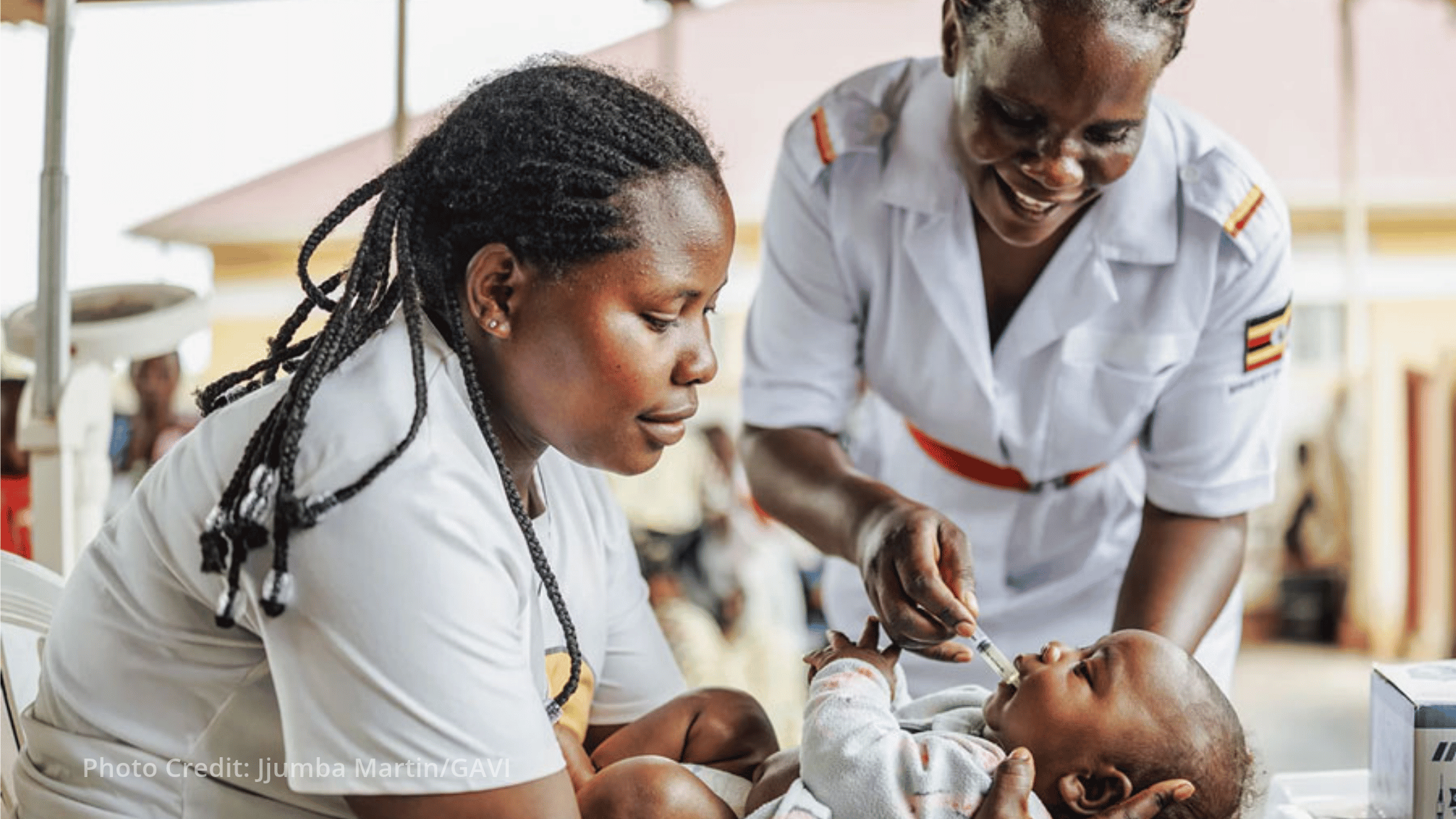
Across the five countries, the investments are improving health services for tens of millions of people. In Nigeria, the solarization of 371 primary health care facilities is strengthening access to vaccines and basic health services for an estimated 115 million people through an investment of approximately US$9 million. In Ethiopia, 380 facilities have been solarized, serving about 8.6 million people through an investment of US$6.39 million. Pakistan has equipped 398 health facilities with solar power, extending services to around 12.4 million people through US$6.67 million in support. In Uganda, 250 facilities have been upgraded, serving approximately 3.1 million people through an investment of US$4.25 million, while in Zambia, the solarization of 296 facilities is improving access to care for an estimated 1.3 million people, supported by US$4.17 million.
Reliable electricity is critical to maintaining vaccines at safe temperatures, as without dependable power, vaccines risk heat exposure leading to wastage and disruption of immunization services. Alongside this solarization push, Gavi has spent more than two decades investing in cold chain across lower-income countries. The Gavi-supported deployment of more than 66,400 solar direct drive (SDD) vaccine refrigerators across multiple lower-income countries has strengthened immunization systems and is projected to avert up to 153,024 tons of CO₂-equivalent emissions over a 10-year operational period.
Ian MacTavish, Director, Vaccine Forecasting and Supply Management at Gavi, the Vaccine Alliance, said: “By investing in solar energy for primary healthcare facilities, Gavi is removing a critical bottleneck to vaccine equity while helping countries build stronger, more sustainable and climate-friendly health systems.”
He added that solar-powered clinics ensure vaccines remain safe, health workers can deliver services consistently, and communities in far-flung areas can access life-saving vaccines and essential health services.
These efforts to solarize the vaccine and healthcare supply chain demonstrate how investments in clean energy can simultaneously improve health outcomes and vaccine equity. They also strengthen immunization and health systems for some of the world’s most underserved communities. At the same time, they reduce emissions while increasing sustainability. The initiative links climate action with equitable access to primary health care across five countries in Africa and Asia. Together, these results underscore the role of reliable energy in advancing both health and climate goals.