
Add us as your preferred source on Google to see more of our content in Search.
 Add to Preferred Sources
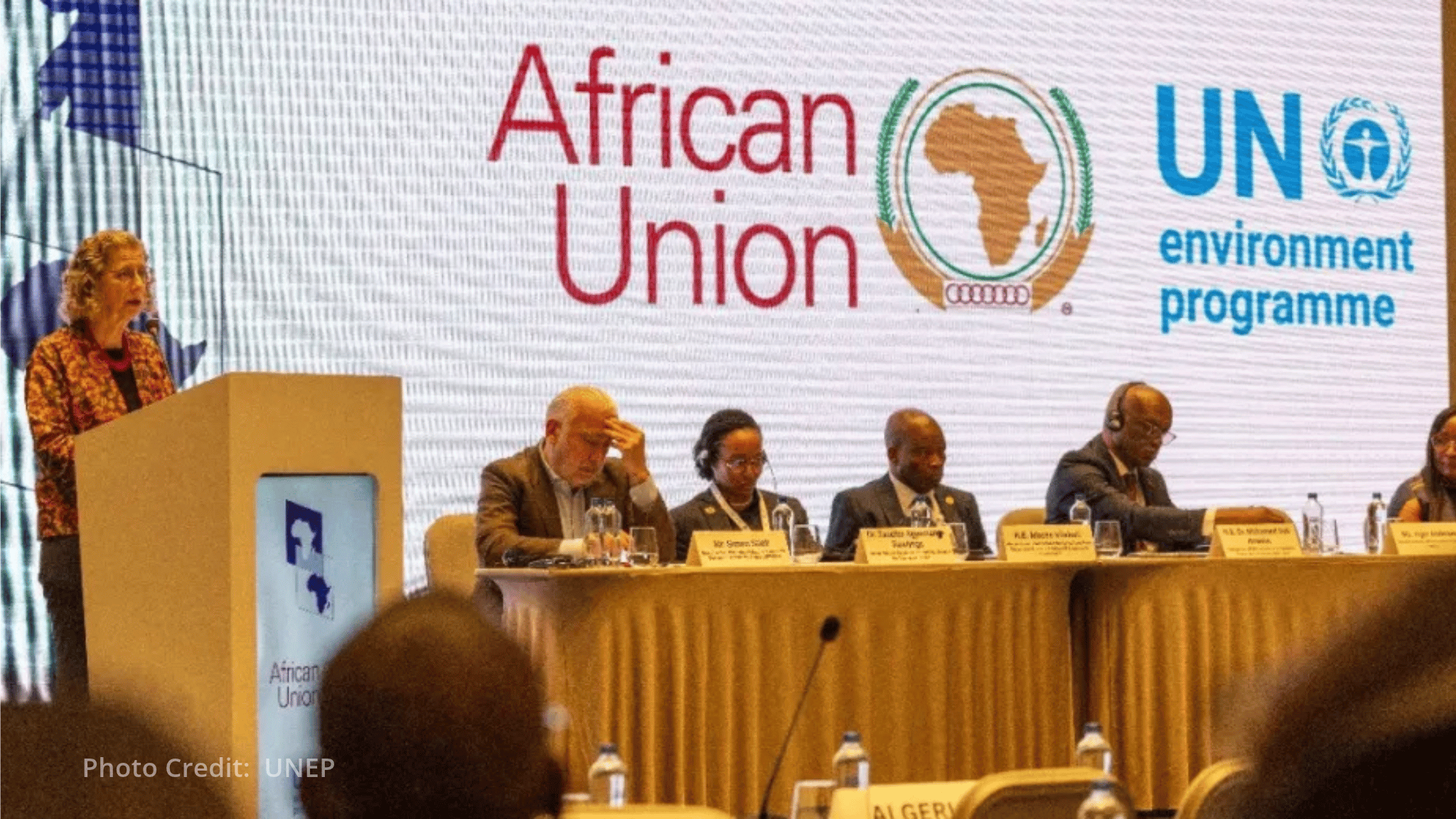
African nations have put forward a common, clear and consistent position at COP31 in Antalya, Türkiye, with the United Nations Environment Programme (UNEP) Executive Director Inger Andersen commending their unity during the AMCEN Ministerial held on 15 November 2026, according to a speech delivered by the UN Environment Programme. Andersen thanked Dr Mohamed Sidi Ibrahim for his leadership of the African Ministerial Conference on the Environment (AMCEN) and acknowledged ongoing collaboration with the African Union Commission through Moses Vilakati. She noted that decisions taken in Antalya will shape the road to COP32 in Addis Ababa in November 2027. The AMCEN agenda includes preparations for the 21st Ordinary Session next March in Addis Ababa. Andersen emphasized the urgency of advancing adaptation finance, loss and damage, and means of implementation.
Africa is home to the highest number of least developed countries, half of the world’s landlocked developing countries, and a significant share of small island developing states. These nations face heightened climatic vulnerability that continues to imperil lives, livelihoods and infrastructure. Yet they bear the least responsibility for the climate crisis. UNEP serves as the host of the AMCEN Secretariat, supporting the continent’s engagement in global climate talks. The AMCEN Ministerial takes place as the international community enters a period of overshoot of 1.5°C.
UNEP’s Emissions Gap Report 2026: The Point of Return indicates that a return from overshoot is possible through a ‘lowest possible’ 1.5°C overshoot scenario, limiting peak warming to 1.7-1.8°C by around the middle of the century. Achieving this would require increasing use of Carbon Dioxide Removal to assist in a return to 1.5°C. Nations most responsible for the climate crisis must go far beyond current Nationally Determined Contributions and slash greenhouse gas emissions. UNEP’s Adaptation Gap Report 2026: Ready? Not. shows that current adaptation measures fall short for the communities that need them most. International public adaptation finance from developed to developing countries grew by US$1 billion between 2023 and 2024, though needs reach around US$305 billion per year in the coming decade.
The initial funding round envelope of the Fund for responding to Loss and Damage stood at US$342 million, while developing country requests totalled roughly eight times that amount. Since 2020, Africa has added more than 20 GW of renewable energy capacity, bringing total installed renewable power capacity to approximately 82 GW by the end of 2025. Growth has been driven by investments in solar, wind and hydropower. The African Development Bank has established initiatives including the Sustainable Energy Fund for Africa, the Africa Green Bank Initiative, Desert to Power and Mission 300. Andersen stated that the findings “reinforce Africa’s justified call for scaled-up, accessible and predominantly grant-based support for adaptation and losses and damages.”
Sub-Saharan Africa remains home to more than 560 million people without access to electricity and around 970 million people without access to clean cooking. The continent holds over 60 per cent of the world’s solar potential, framing the gap as one of investment, implementation and access rather than resources. Andersen reaffirmed UNEP’s commitment to support Ethiopia’s Presidency and the wider African effort to make COP32 deliver for people and planet. The agency will implement priorities set at AMCEN 20, including the pathway toward the joint AMCEN21 and Conference of Ministers of Finance in Addis Ababa in March 2027. UNEP will continue delivering projects that build resilience, restore ecosystems, expand clean energy access and create decent green jobs.