
Add us as your preferred source on Google to see more of our content in Search.
 Add to Preferred Sources
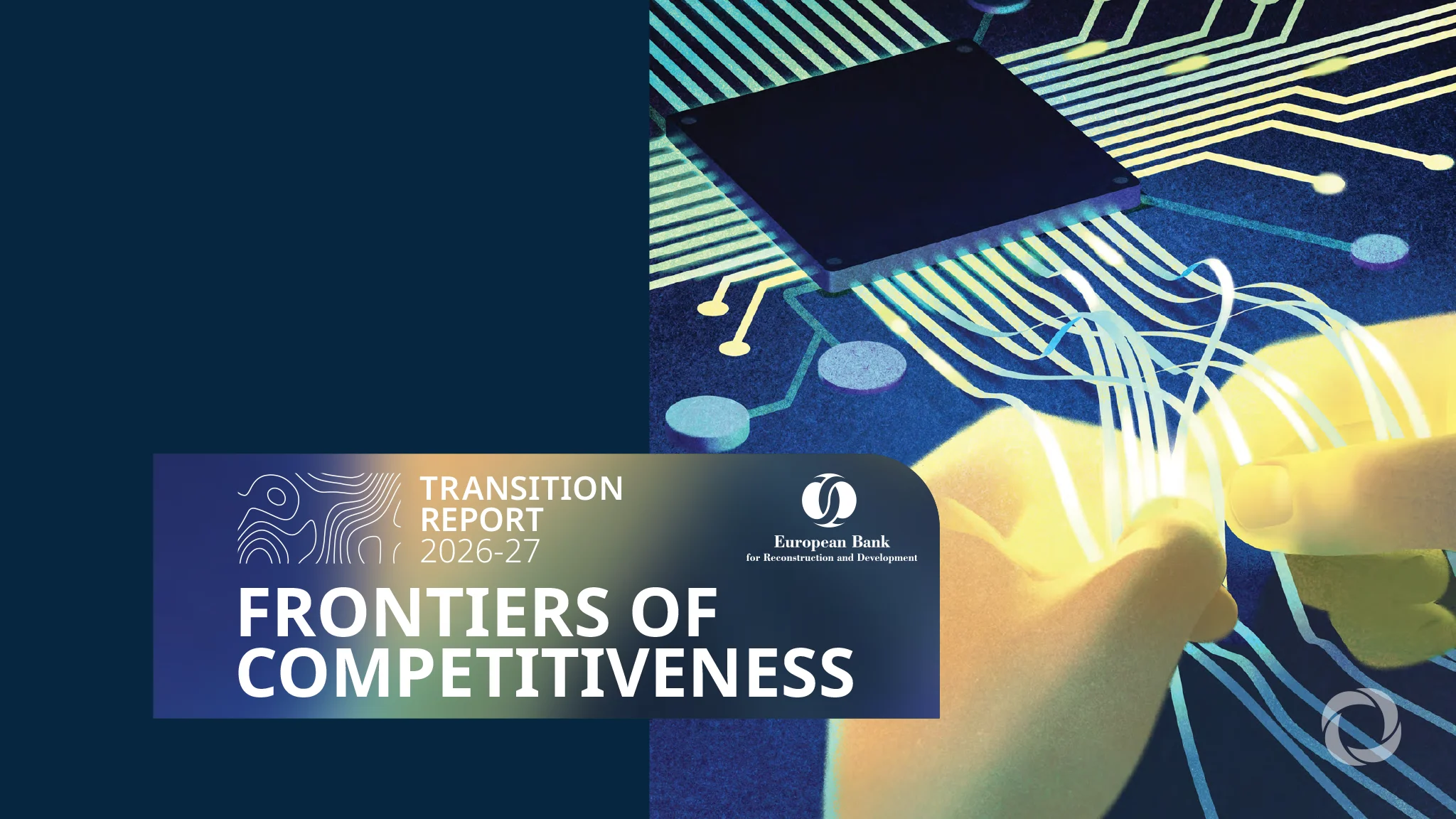
The global economy is undergoing profound changes, creating fresh opportunities and challenges for countries working to strengthen their competitiveness and build new export industries, according to a press release by the European Bank for Reconstruction and Development (EBRD). Published on 17 November 2026, the Transition Report 2026-27: Frontiers of competitiveness examines how technological advances and shifting geopolitical priorities are reshaping global demand. It focuses on three key areas: the rapid expansion of artificial intelligence (AI), rising defence spending and the potential for entrepreneurship to drive economic growth. The report finds that while AI and defence spending offer export opportunities, turning them into competitive industries will be challenging. It also warns that limited access to finance is holding startups back from becoming globally competitive.
For three decades, most EBRD economies benefited from globalisation, relatively predictable technological catch-up and closer integration with international markets. In a typical EBRD economy today, around 35 per cent of the total value of exports in which the economy specialises comes from products that were not widely exported 25 years ago. Those favourable conditions are now fading, however. Geopolitical fragmentation and new technologies are reshaping the landscape. The report argues that reinvention, rather than self-sufficiency, is the goal for economies in the EBRD regions.
In the area of AI, economies in the EBRD regions have a limited presence in upstream segments of the global supply chain, which is dominated by a handful of countries and companies producing advanced chips, data infrastructure and frontier AI models. The EBRD regions supply just 0.8 per cent of global exports of AI-related products, despite accounting for around 8 per cent of total global goods exports. Power constraints also limit countries’ ability to host large-scale data centres. Under a moderate adoption scenario, AI could add up to 0.7 percentage points to annual labour productivity growth across the EBRD regions over the coming decade. Realising these gains will require investment in digital infrastructure, skills and access to computing capacity, alongside effective data governance and international cooperation.
The report notes that rising geopolitical tensions have brought the post-Cold War “peace dividend” to an end, with governments increasing defence expenditure. The analysis estimates that a €1 increase in defence spending in the EBRD regions is associated, on average, with a subsequent €1.47 increase in gross domestic product. However, most EBRD economies remain highly dependent on imported military equipment and technology.
“Geopolitical fragmentation, rising defence needs and advances in AI are creating new opportunities and challenges for the EBRD regions. Yet capitalising on these opportunities is far from straightforward: countries’ export baskets tend to remain stable over time, and diversification into complex products involves considerable trial and error,” said Beata Javorcik, the EBRD’s Chief Economist.
She added that many economies have successfully reinvented themselves before and are well placed to do so again.
The report also highlights the potential of entrepreneurship, noting that many founders of startups in the EBRD regions have international experience and develop products outside their countries’ traditional export specialisations. Yet relatively few startups manage to scale up successfully, with venture-capital funding remaining limited and geographically concentrated. Later-stage investment is particularly dependent on foreign investors, especially from the United States, the United Kingdom and other advanced European economies. Prioritising skills, research infrastructure, access to finance and integration into international supply chains is key, while guarantees, co-investment and deeper domestic and regional capital markets can help mobilise private investment. The report emphasises that the prize for the EBRD regions is turning ideas and capabilities into globally competitive businesses that support sustainable growth at home.