
Add us as your preferred source on Google to see more of our content in Search.
 Add to Preferred Sources
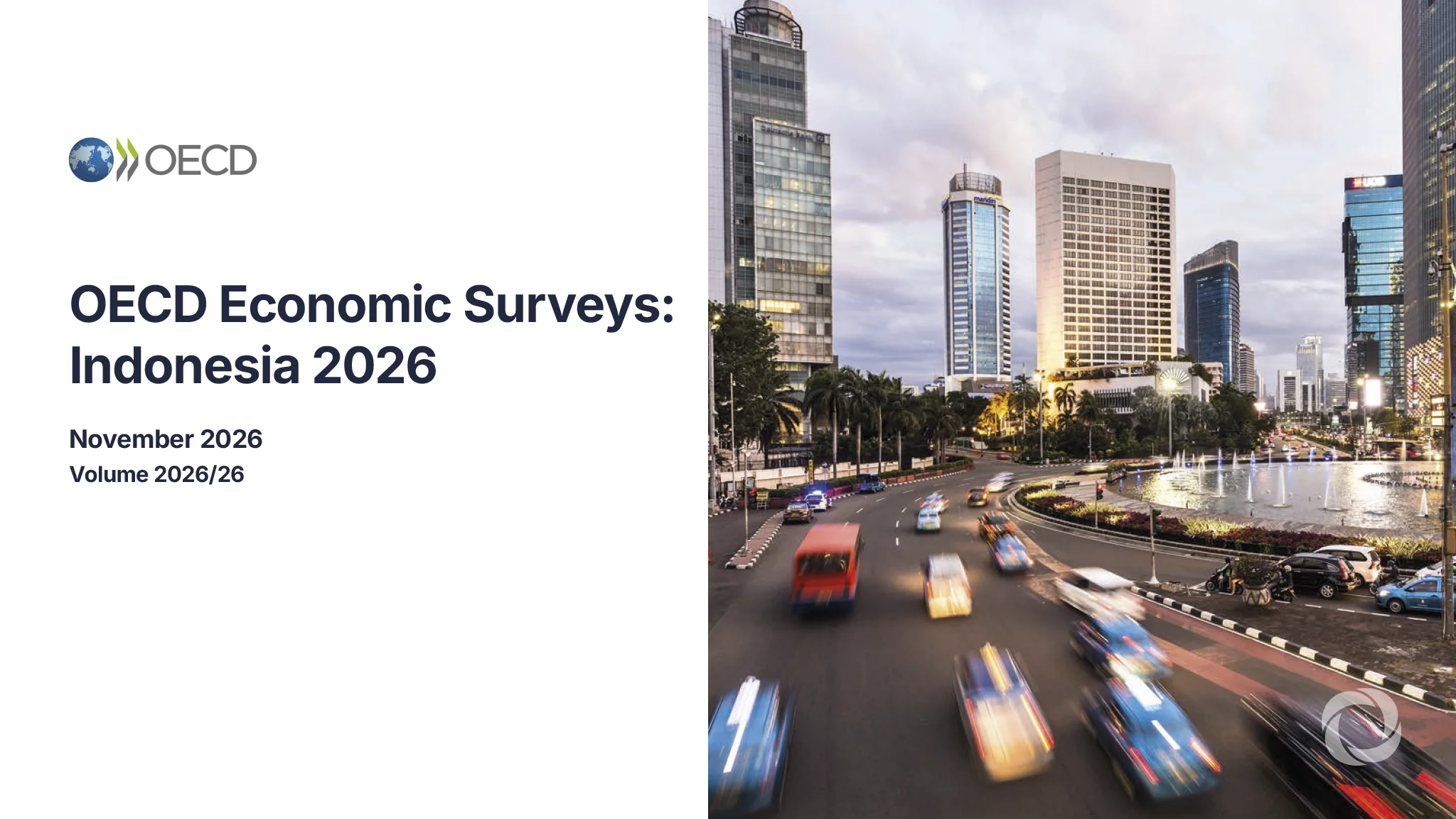
Indonesia will need significantly stronger productivity growth to achieve high-income status by 2045, especially as its population ages, according to a press release by the Organisation for Economic Co-operation and Development (OECD). The organization notes that although the country’s economy has more than doubled since 2010, current productivity trends are insufficient to meet that ambition. The latest OECD Economic Survey of Indonesia was presented in Jakarta on 26 November 2026. It projects GDP growth of 5.4% this year and 5.3% in both 2027 and 2028. Inflation is expected to reach 3.3% in 2026, easing to 3.0% in 2027 and 2.5% in 2028.
To meet the 2045 target, growth would need to average 5.8% per year over the next two decades, yet on current productivity trends it would slow to around 3.5%. Since 2010, incomes in Indonesia have risen by around 70% and poverty has fallen by around 30%. Indonesia has been an OECD Key Partner since 2007, with an office opened in Jakarta in 2015. In February 2024, it became the first accession candidate country from Southeast Asia. A Roadmap for the Accession Process of Indonesia was adopted by the OECD Council in March 2024.
The Survey identifies several priority reforms, including deeper integration into global supply chains, stronger skills, more women in work, and a tougher fight against corruption. Maintaining sound public finances remains central, with recommendations to let subsidised fuel prices rise gradually when global oil prices increase, while using targeted cash transfers to protect low-income households. Revenue could be raised by lowering the value-added tax registration threshold, rationalising exemptions, and leveraging the Coretax system, a new integrated digital tax platform. Phasing out export restrictions gradually, while using export taxes as a transitional measure, would preserve incentives for domestic processing of raw materials. Lowering minimum capital requirements for foreign investors and reducing regulatory inconsistencies between central and regional governments could further encourage foreign direct investment.
OECD Secretary-General Mathias Cormann presented the Survey alongside Indonesia’s Minister of Finance Suahasil Nazara and Minister of National Development Planning Rachmat Pambudy.
“Indonesia has made remarkable progress. Its economy has more than doubled since 2010, incomes are up by around 70% and poverty has fallen by around 30%,” Cormann said.
He added that as the population ages, Indonesia can no longer rely on more workers to drive growth. He emphasized that lowering barriers to trade and investment, building stronger skills, bringing more women into work, and strengthening the fight against corruption can put Indonesia’s 2045 ambition within reach. These reforms, he noted, will also align Indonesia with OECD standards as it advances on its path to membership.
The Survey also highlights the need to strengthen healthcare and skills, expand subsidised healthcare coverage, improve access to primary care, and raise educational outcomes through higher and more effective spending. Indonesia faces growing exposure to floods and other climate risks, requiring greater investment in prevention, including better urban drainage systems. Integrating climate risks into public investment decisions and narrowing the insurance protection gap between urban and rural areas would help strengthen climate resilience. On 25 November, the OECD also released Promoting the Development of the Semiconductor Ecosystem in Indonesia, noting that exports of goods relevant to semiconductor production rose by around 66% between 2012 and 2024 in real terms. The report recommends focusing policy efforts on priority segments such as assembly, testing, and packaging, where Indonesia already has firms and a training base to build on.