
Add us as your preferred source on Google to see more of our content in Search.
 Add to Preferred Sources
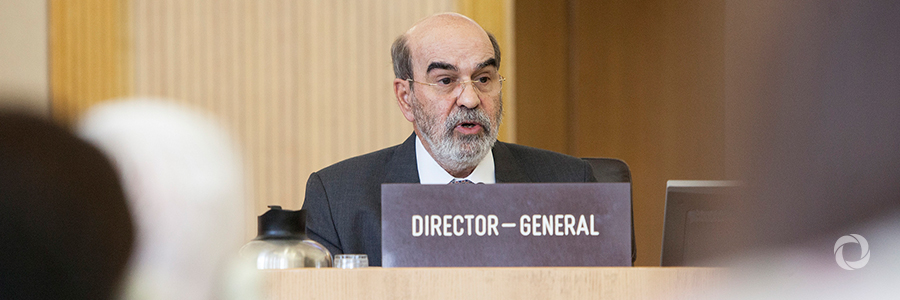
FAO Director-General José Graziano da Silva in an opening address to the organization’s executive, the Council, stressed the role of wars and conflict as drivers of global hunger, while lamenting an increase in military spending.
“Countries should bear in mind that sustained peace and the end of conflicts are fundamental to bring the numbers of hunger down again. As head of a UN organization, allow me to say that it is indeed very frustrating to see that FAO’s regular budget has been flat for the last seven years, while global military expenditure continues to increase,” he said.
Recent figures show that after almost a decade of decline, the number of people affected by hunger in the world has started to increase, with 815 million chronically undernourished in 2016. In 2017, some 124 million required life and livelihoods saving support to avoid the risk of drifting in a famine situation compared with 108 million in 2016.
More efficient and effective
Graziano da Silva noted that during a series of recent FAO Regional Conferences, member countries expressed their satisfaction with the close alignment between the agency’s work and the Sustainable Development Goals, in particular, SDG2, which aims to eradicate hunger by 2030.
“Let me stress that FAO can continue to be highly committed to increasing efficiency and giving value for money. But please bear in mind that it will be difficult to do more and more with less and less resources in our regular budget,” he added.
Bringing its work closer to the member countries
Graziano da Silva underscored that in the last biennium, FAO was able to compensate its flat regular budget with an increase in the mobilization of extra-budgetary resources by 1 percent up to $2.1 billion dollars and that 80 percent of this amount was mobilized to the country, sub-regional and regional projects.
“This is a direct result of the decentralization effort to bring FAO and its work increasingly closer to Members,” he said.
Original source: FAO
Published on 04 June 2018