
Add us as your preferred source on Google to see more of our content in Search.
 Add to Preferred Sources
Close to 300 people currently work in the Argentine province of Jujuy’s landfill sites. Around 50% are women who sort the 200 000 tonnes of waste reaching these open-air rubbish dumps with no selective treatment capacity. These recuperadoras (female waste collectors) overcome insecurity and harsh working conditions to gather the resources they need to support their families.
To bring an end to this situation, the Government of Jujuy, with the support of the EU, has implemented the integrated solid urban waste management plan (GIRSU plan). The infrastructure to be developed under this initiative will create new economic and social opportunities for women. Part of the EU financing will be used to support initiatives to train those already working at the landfill sites, and particularly the social integration of the recuperadoras via new job opportunities. The Government of Jujuy calculates that this project will make it possible to create 650 new jobs, with half of those created in the environmental centres going to the recuperadoras. This project will enable them to receive the necessary training for a new job helping them to improve their income and to avoid the risks they encounter in the rubbish dumps.
The EU is co-financing the development of this plan with a EUR 42.2m loan from the European Investment Bank (EIB) provided in March, and a EUR 11.3m non-repayable grant from the Latin America Investment Facility (LAIF). The EU support will make it possible to provide the province with a biogas plant, collection and environmental centres, and the equipment needed to improve the waste collection sorting and recycling services offered by local governments.
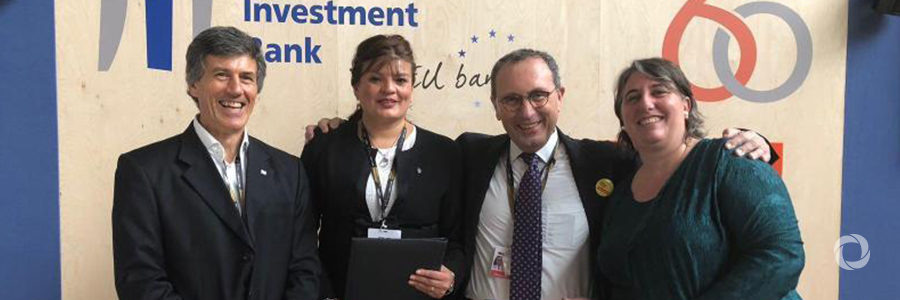
The EIB and the Government of Jujuy took a new step to strengthen their cooperation regarding this project with an agreement on the implementation of the grant provided by LAIF and the EU. This agreement was signed by the EIB Director for Operations in the region, María Shaw-Barragán, and the Jujuy Provincial Environment Minister, María Inés Zigarán. The signature took place in Brussels as part of the European Development Days (EDD), the EU’s main international cooperation and development forum. The EIB is taking part in this event organised by the European Commission to promote a global strategy based on fostering the economic and social inclusion of women.
The new urban waste management plan is part of the Jujuy Verde Carbono Neutral 2030 (Green Jujuy Carbon Neutral 2030) initiative and will also create new opportunities for the province’s indigenous population, facilitating their incorporation into the waste management process and lending an intercultural approach to environmental policy.
Jujuy Provincial Governor Gerardo Morales said: “The route we are taking with the European Investment Bank and the European Union is very important for our province. The waste management project is part of Jujuy Verde – a focus for our government – and also includes concrete steps towards a province dedicated to promoting environmental preservation, sustainable development, social equality, intergenerational equality, gender mainstreaming and an intercultural approach.”
The Inter-American Development Bank (IDB) is also supporting the provincial waste project with a EUR 14m loan managed by the national Ministry for the Environment and Sustainable Development relating to the Chanchillos I and II projects currently being finalised.
Original source: EIB
Published on 05 June 2018