
Add us as your preferred source on Google to see more of our content in Search.
 Add to Preferred Sources
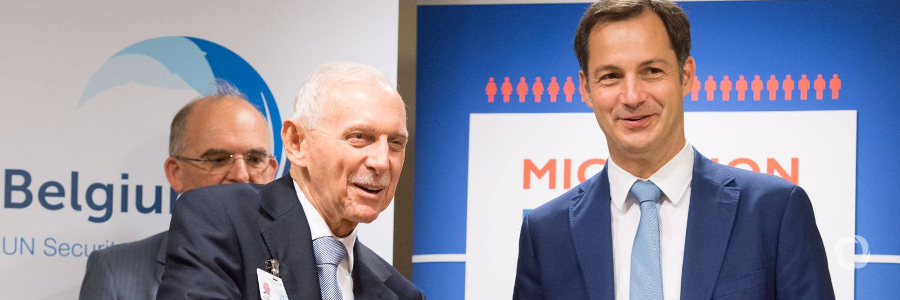
Belgian Deputy Prime Minister and Minister of Development Cooperation Alexander De Croo joins forces with IOM, the UN Migration Agency, to build a comprehensive price comparison app for international money transfers (remittances).
Belgium will support the development of MigApp: an app that provides objective information to migrants about migration, and includes a price comparison tool for international money transfers. Remittances are the private funds that migrants send to their home countries. At the request of Minister De Croo, IOM is expanding the app so that services from all fourteen partner countries of the Belgian Development Cooperation can be integrated in the price comparison tool. This extension has been made possible thanks to a new partnership between IOM and RemitRadar, an online financial technology provider active in the field of remittances. With the app, users will be able to assess the cheapest service provider options for sending money home. Belgium is one of the four pilot countries where the app has been launched. Other EU pilot countries include Greece, Ireland, and The Netherlands.
Minister De Croo said: “The new price comparison tool should contribute to a decrease in the rates [of remittances], which are much too high at the moment. In some cases, one can even speak about extortionate prices. By giving an easy access for the users to information about the cheapest and fastest option, we aim at stimulating the competition. More and more [financial technology] enterprises are investing in mobile money, whose rates are on average half of the classic money transfers compared to the main popular players.”
According to World Bank figures, migrants sent USD 466 billion to developing countries in 2017, an amount that exceeds the amount of official development aid three times over. As such, migrants contribute greatly to the economy of developing countries. However, the problem with remittances resides in their high transfer costs. On average, the cost of sending the money is equal to 7,1 percent of the amount being sent; for remittances to Sub-Saharan Africa this transfer costs are 9.4 percent on average, and even higher in some cases. The UN has, in the framework of the Sustainable Development Goals, agreed to lower the costs of remittances to an average of 3 percent by 2030.
William Lacy Swing, IOM Director General, has recognized remittance flows as ‘economic lifelines’ for migrant families. Remittances reduce poverty, provide better health care and access to nutrition and increase educational opportunities for children.
Original source: IOM
Published on 18 June 2018