
Add us as your preferred source on Google to see more of our content in Search.
 Add to Preferred Sources
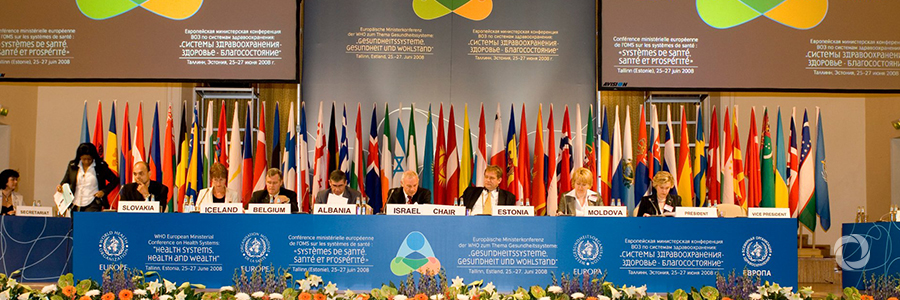
“Investment in health is an investment in future human development, and well-functioning health systems are so essential to improve societies’ health in general.” President Kersti Kaljulaid of Estonia delivered this message in a speech at the opening of the high-level meeting Health Systems for Prosperity and Solidarity: leaving no one behind, which took place in Tallinn, Estonia, on 13–14 June 2018.
In her opening address, WHO Regional Director for Europe Dr. Zsuzsanna Jakab acknowledged that European countries have made important strides towards improving health and extending health services to the entire population. But she also challenged countries of the Region to strive for more, saying, “We can do better. With our knowledge and experience of what works and new opportunities provided by technology, we should not wait decades to narrow the health gap between countries with high and low outcomes. Faster health gain is possible.”
Throughout the event, a range of policy-makers and international experts shared their experience and ideas of how to deliver on the commitments and values of the Tallinn Charter. They reaffirmed that European health systems should be built upon the key principles of solidarity and equity, even in an environment that has changed dramatically in the 10 years since the Charter was signed.
The event, which brought together 235 participants from 41 countries of the WHO European Region, was designed around 3 main themes: include, invest and innovate.
As the meeting came to a close, Dr. Hans Kluge, Director of the Division of Health Systems and Public Health at WHO/Europe, summarized the event. He concluded that the major take-home message from the 2 days in Tallinn was the irrefutable commitment of European countries to building health systems based on solidarity.
Dr. Kluge outlined 3 key ways that countries of the Region can take action on this commitment:
- redouble efforts to achieve universal health coverage;
- work harder to put people-centeredness into practice; and
- think and plan ahead to ensure health systems are prepared to deal with any crisis or shock.
Original source: WHO
Published on 18 June 2018