
Add us as your preferred source on Google to see more of our content in Search.
 Add to Preferred Sources
The World Meteorological Organization and the China Meteorological Administration have set up a trust fund to underpin regional cooperation on the so-called Belt and Road Initiative.
The trust fund will facilitate implementation of an agreement signed in 2017 to promote meteorological support for the initiative. This includes work in disaster risk reduction, climate services, integrated observation, research, and capacity development by reinforcing regional meteorological exchanges and collaboration, to upgrade regional disaster monitoring, forecasting and early warning capabilities and resilience to combat climate change.
The trust fund agreement was signed by CMA Administrator Liu Yaming and WMO Secretary-General Petteri Taalas during the WMO Executive Council session.
The Silk Road Economic Belt and the 21st-century Maritime Silk Road is a development strategy proposed by China, which seeks to increase connectivity, trade, and cooperation.
Along Belt and Road regions, rainstorms, flooding, typhoons, heat waves and drought, low temperature and cold waves are frequent. All countries are faced with shared challenges such as meteorological disaster prevention and reduction, and response to climate change.
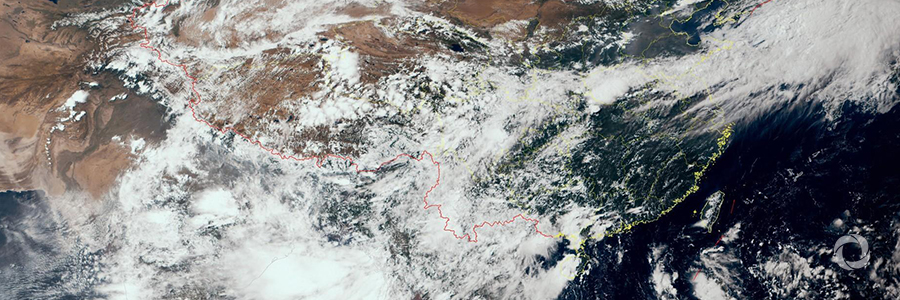
As part of the meteorological cooperation, China on 5 June launched the Fengyun-2H meteorological satellite. As the westernmost on-duty satellite in geostationary meteorological satellites layout of China, FY-2H can provide custom-made services for countries along Belt and Road regions, and data support for weather prediction and disaster prevention and mitigation.
Mr. Taalas said that the establishment of the Trust Fund for meteorological support for the Belt and Road initiative was the latest example of China sharing its expertise with other countries. He cited CMA’s education and training programmes for developing countries.
WMO can also benefit from China’s experience with urban services and air quality, multi-hazard early warning systems and impact based forecasts, as well as engagement with the private sector, Mr. Taalas said.
Original source: WMO
Published on 23 June 2018