
Add us as your preferred source on Google to see more of our content in Search.
 Add to Preferred Sources
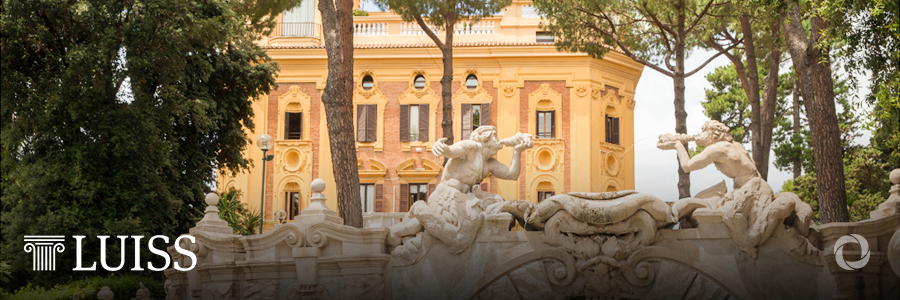
The EU bank is supporting the five-year investment plan of the Italian LUISS University with95 million euros. A first loan tranche of 50 million euro has been signed in Rome in the presence of EIB Vice-President Dario Scannapieco, the LUISS Managing Director Giovanni Lo Storto and the Dean of the university, Andrea Prencipe.
The European Investment Bank (EIB) loan will co-finance over 70% of the LUISS’s investment plan, including the modernisation and expansion of the University’s facilities in Rome and of the Milan-based innovation hub. State-of-the-art and energy efficient classrooms, libraries and residences for students and professors will be built. LUISS is one of Italy’s leading private universities, specialized in economics and finance, business and management, law and political science, taught both in Italian and in English. The investment plan has the aim to increase attractiveness for international students and to apply new technologies in teaching.
“The operation with LUISS follows the EIB support to universities of Trento, Bologna, Verona, La Sapienza and Bocconi, among others. In the recent years, the EIB financed Italian universities with almost EUR 1 billion. Investing on education is the best way to increase our country’s competitiveness and to give our youngsters the tools to face and overcome their future challenges. This is why we are very proud of the operation signed today”, said the EIB Vice-President Dario Scannapieco.
Giovanni Lo Storto, LUISS Director-General added: “Today’s agreement with the EIB, one of the major European institutions, reinforces our commitment to promote internationalisation and to improve our students’ access to services and facilities. The LUISS University faces these challenges through strategic projects and investment in digital technologies and new programs”.
Original source: EIB
Published on 4 July 2018