
Add us as your preferred source on Google to see more of our content in Search.
 Add to Preferred Sources
Kiribati is an Island Nation in the Pacific under increasing pressure from the drastic effects of climate change. Kiribati is made up of 32 atolls spreading over 3,500,000 square kilometres. Of the 32 atolls, only 20 are inhabited. None of these atolls has significant mountains or hills making rising sea levels a growing challenge for the residents. Sources of water such as wells have shown increased levels of salt deposits over the years gradually worsening the availability of safe drinking water.
In 2011, The European Union, in partnership with the Pacific Community, UNICEF and the Government of Kiribati, initiated the Water and Sanitation in the Outer Islands of the Republic of Kiribati (KIRIWATSAN I) as well as reducing water, sanitation, and hygiene-related diseases. The EU funded project has two phases planned, with the second phase of the project, KIRIWATSAN II, targeting 35 villages across the 16 islands of the Gilbert Group.
Pauline Komolong, Project Coordinator, Kiribati Water and Sanitation in Outer Islands (KIRIWATSAN) Phase 2 Project, highlighted the struggles of local villagers.
“I’ve actually been around all those 35 villages across the eight islands and I think some of the challenges that they face, like some of the drinking water sources, are located away from the village and kids helping their parents to go get water, often they are late for school, you know such things like that,” Komolong said.
Safe drinking water for daily consumption in Abaiang is becoming a scarce resource and the ability to receive and store clean drinking water has become a daily struggle. Families are forced to collect drinking water from neighboring villages and some villagers have to travel long distances to source water for basic needs.
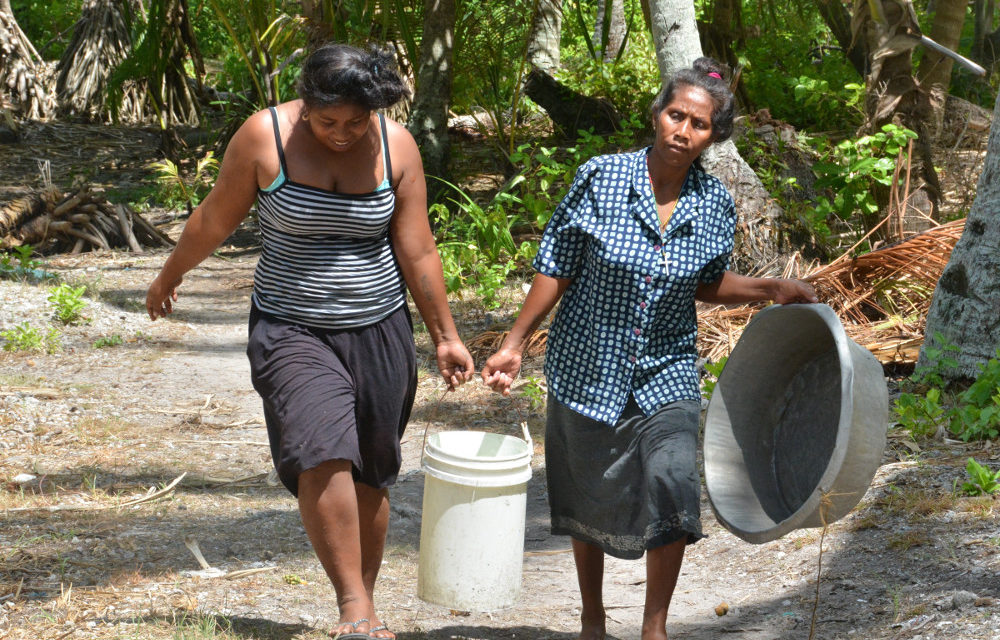
Ianetama Kaigitaake, Mayor of Abaiang Island, is also worried about the lack of rainfall over the years and the quality of drinking water available for the residents to consume on the atoll.
“You know this time we are facing a heavy drought, so one of the major, basic needs of the people is water and sanitation, especially on water, because we are having less, very small rainfall and so the people are having problems with drinking water, because you know, in some of the villages in Abaiang they have bad water standard, they need, they need help to get water from somewhere from places where they have good water.”
The Pacific Community (SPC) is currently working with various stakeholders in Kiribati to instill hygienic practices amongst the villagers. Kaigitaake, Mayor of Abaiang Island, is relieved by SPC’s efforts to combat these hygiene challenges being faced by Kiribati residents.
“Already in schools we have the WASH program coordinated by UNICEF, in every school the children have been taught about how to look after their water and their shower room and their toilet room and the taps. We are lucky that we are already covering that and our students and our children have learned how to look after them well,” he said.
The two objectives of KIRIWATSAN II, as highlighted by the project coordinator Pauline Komolong, are improving access to clean drinking water and appropriate sanitation, and local capacity building.
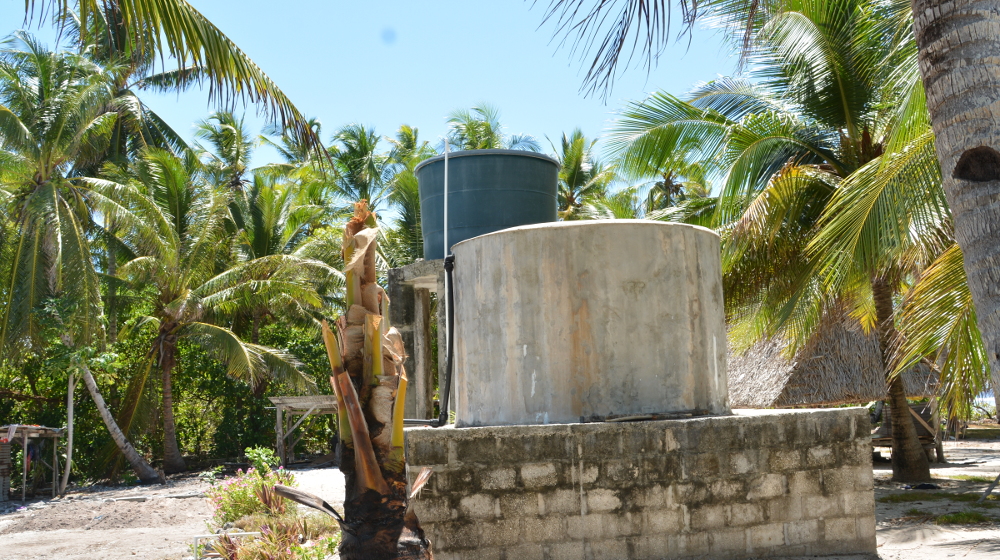
Each of the 35 villages will have either rainwater harvesting tanks, communal wells or individual well improvements with Tamana pumps or village reticulated wells using low yielding solar submersible powered pumps to provide water. However, this too will have measures in place to be maintained and monitored by the village.
Original source: SPC
Published on 12 July 2018