
Add us as your preferred source on Google to see more of our content in Search.
 Add to Preferred Sources
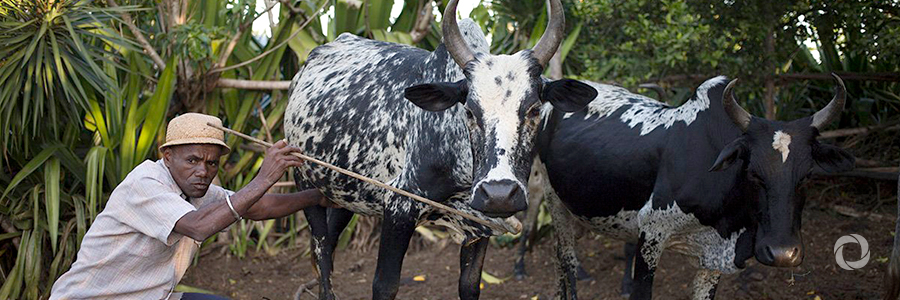
Backed by a $7 million IFC loan and extensive advisory support from IFC and the World Bank, BoViMa—short for Bonne Viande de Madagascar—is building a modern feedlot and slaughterhouse close to Tolanaro in Madagascar’s impoverished South. The feedlot will source zebu and animal feed from local breeders and farmers, supporting a wide network of jobs and trade.
BoViMa, a member of the SMTP Group, plans to produce zebu meat for domestic and foreign consumption, including the fast-growing Gulf markets of the United Arab Emirates and Saudi Arabia. Danil Ismael, the company’s founder and chief executive officer, expects it will provide a much-needed economic boost for Madagascar, where unemployment is high and 60 percent of rural families rely on livestock for their income.
“I think the BoViMa project will completely change the South,” Ismael says. “We will buy the animals from farmers across the South and will need between 90,000 to 120,000 tons of animal feed annually, which we will also buy from local farmers. In the end, we will be working with a network of not less than 12,000 farmers and breeders.”
The construction site is already buzzing with activity as roughly 250 workers lay bricks and pour concrete for BoViMa’s office, slaughterhouse, and feedlot. For most, it’s their first formal job. Once the facility is operational, it will be the area’s largest employer.
Project coordinators will also work closely with farmers, honoring their traditional practices while introducing modern, sustainable techniques to grow their herds and their incomes. IFC is helping BoViMa create a robust supply chain with a livestock management system and a program to assist smallholder herders and farmers.
BoViMa’s strategy will help formalize Madagascar’s animal husbandry sector and increase food security by delivering protein-rich hides and offal to the local market.
The company also plans to build a renewable energy system using solar, wind, and biogas. The goal is to become energy self-sufficient about five years after production begins in 2019. The Ifaho River, which flows near the future feedlot and slaughterhouse, will be used for irrigation, taking advantage of an untapped resource.
Agriculture is a mainstay of Madagascar’s economy, accounting for more than a quarter of its gross domestic product. Once up and running, BoViMa’s new facilities are expected to make a significant contribution to economic growth by supporting local farmers and breeders and attracting infrastructure investment.
Original source: IFC
Published on 10 July 2018